
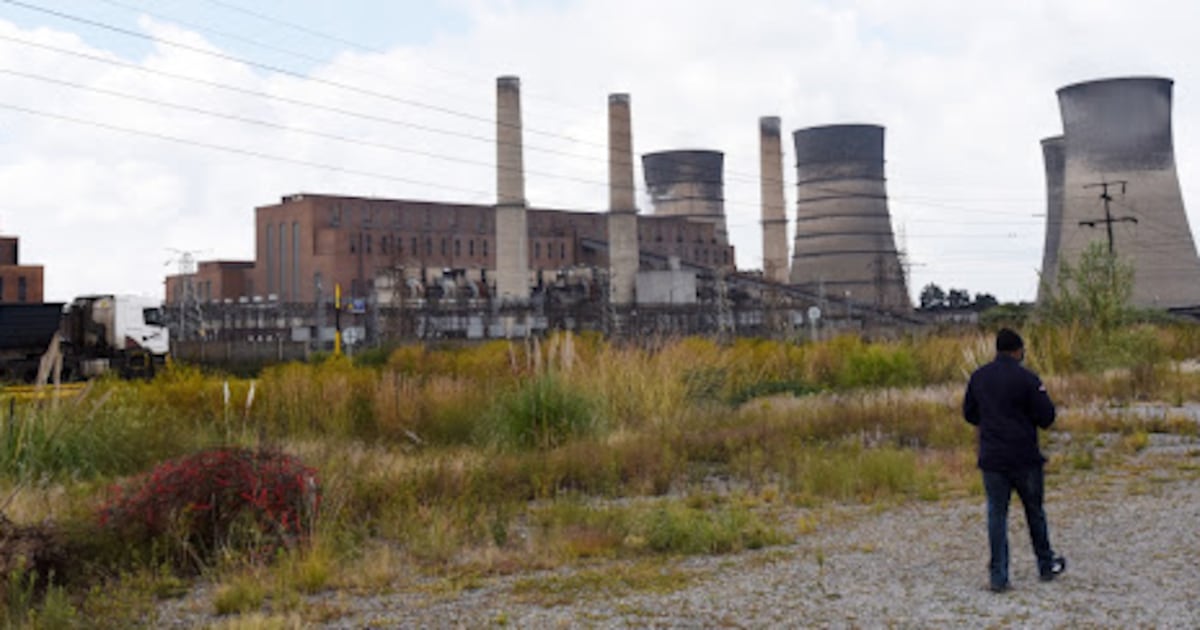
Why does the City of Johannesburg want to buy the Kelvin Power Station and Egoli Gas, and where will it get the money?
A few weeks ago the city announced that it is exploring buying these assets through City Power. The city said it is doing this to reduce reliance on Eskom, diversify supply and reduce tariffs. But this makes no sense at all, for several reasons.
First, Johannesburg does not have the money to buy these multibillion-rand assets. It does not even have the money to fix leaks or maintain its infrastructure. The auditor-general’s most recent report pointed to a serious financial crisis in the city. It said Johannesburg is so cash-strapped that it pays its bills after an average delay of 311 days.
It is so cash-strapped that it spends only 0.5% of asset value on repairs and maintenance of its infrastructure, despite a Treasury guideline of 8%. It is so cash-strapped that it has cut its capital expenditure to the bone and deferred the replacement of ageing infrastructure. Yet it can find the money to purchase large assets?
Second, buying these companies will not reduce reliance on Eskom and nor will it diversify supply. Kelvin Power Station already supplies all of its output to the city and would have few options for alternative customers given that it is an old, coal-fired station that produces expensive, carbon-emitting energy. The city is able to buy every kilowatt Kelvin produces through a simple contract, no ownership required.
It is also untrue that buying Kelvin would allow City Power to reduce costs. Is the city going to run Kelvin more efficiently than the present owners? City Power is a distributor and has no expertise in generation. Aside from this, Kelvin is an old station that is in need of major reinvestment. Aside from the purchase price, the city would have to find more money for refurbishment and manage the rebuild.
Even then, its power is likely to be more expensive than renewable alternatives that would be available to City Power without any upfront costs. No South African city has to rely entirely on Eskom anymore because they are able to procure directly from independent power producers (IPPs), just like Eskom can.
Several cities have entered contracts with IPPs at attractive price points. City Power has itself appointed four independent producers, but each of these is small, with a combined output of less than 100MW.
Then there is the environmental impact. Kelvin is a coal-fired, carbon-emitting station that has serious issues with its environmental permits due to air quality impact. It may even have to close if these issues cannot be resolved. While some coal is inevitable in the mix, Johannesburg’s independent supply should favour renewables, not only because they are cheaper but also for the environment.
Then there is the environmental impact. Kelvin is a coal-fired, carbon-emitting station that has serious issues with its environmental permits due to air quality impact. It may even have to close if these issues cannot be resolved. While some coal is inevitable in the mix, Johannesburg’s independent supply should favour renewables, not only because they are cheaper but also for the environment.
Buying Kelvin will not diversify Johannesburg’s energy mix, it will not reduce the tariff and it will require significant cash. And yet the city prefers this to procuring large-scale, long-term renewable power, which is cheaper, requires no upfront costs and carries no refurbishment risk.
Buying Egoli Gas makes even less sense. Egoli supplies households and businesses, not the city. While it is a valuable part of the energy mix, it can continue to play this role without being owned by the city. And there is the added problem that Egoli may soon lose its main gas supplier. Why would the city take on this risk?
What is going on here? Is this a good faith, if misguided, attempt at energy planning or are there other motives behind this announcement?
• Bethlehem is an economic development specialist and partner at Genesis Analytics. She has worked in the forestry, renewable energy, housing and property sectors as well as in local and national government. She writes in her personal capacity.