
Weaving together a tapestry of heritage, history
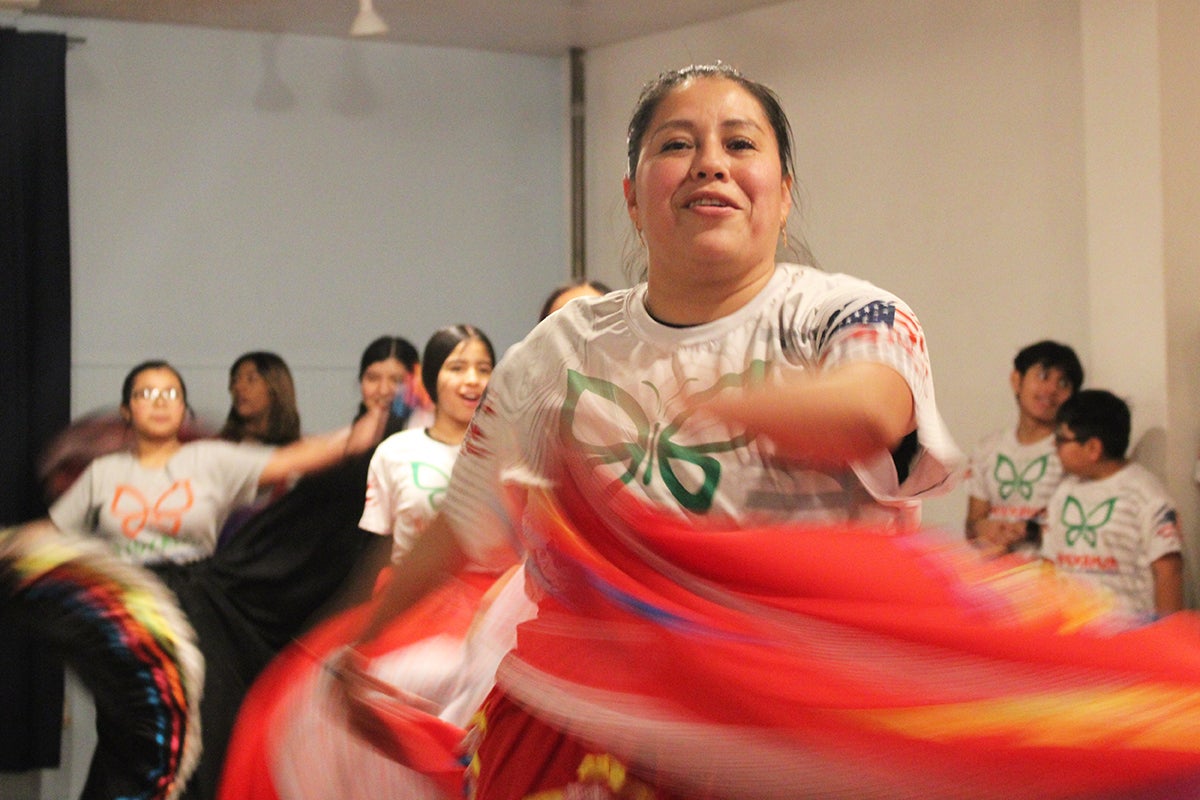
García Espinal, Penyami Storms and Chrakravotry all use dance to show the many different traditions within their countries of origin.
“In my class, we talk about … why [do] we do this dance a certain way?” Penyami Storms said. “Why do we wear certain costumes? What is the story behind the dance? So we don’t just come and dance, but we talk about the Indonesian values, Indonesian philosophies, and I think they really appreciate that.”
Part of that cultural education, she said, is emphasizing that Indonesia is not a monolith.
“We have over 300 ethnic groups, [each] with its own traditions and culture,” Penyami Storms said.
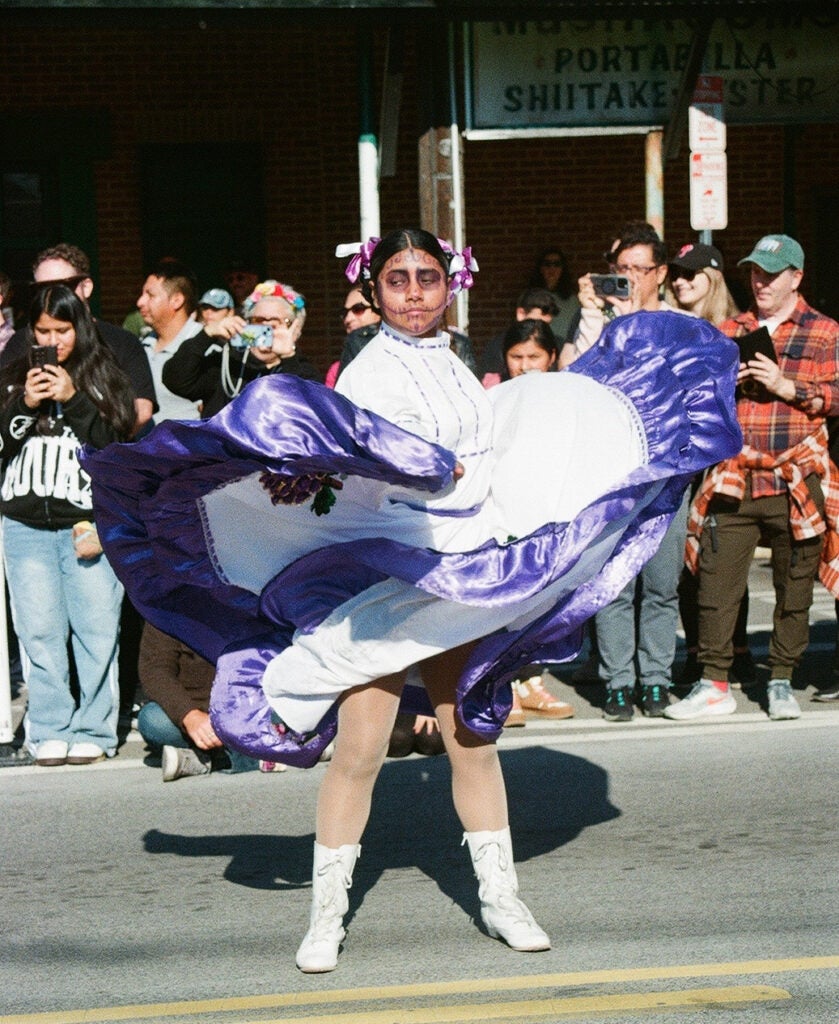 Performers with Ñuuxakun perform Mexican folkloric dance at a celebration for a Día de los Muertos celebration on 9th Street in South Philadelphia on Nov. 1, 2025. (Karina Aime Montes; Courtesy: Ñuuxakun)
Penyami Storms said she teaches the traditions she’s been trained in, from Sulawesi, the island where she was born, and the Balinese dance tradition.
“I’m not going to pretend that I know everything about Indonesia, either,” she said. “So that’s what I’m passing down to the students and the values … Like, how we should be in the community? How do we talk to each other with respect?”
That inclusivity extends to gender identity as well, she said. Some ethnic groups in Indonesia recognize five genders, and in traditional dances, everyone has to learn the dances for both male and female dancers.
For Courtyard Dancers, Chakravorty ensures both the Islamic and Hindu elements of Kathak dance are recognized and celebrated, and her students represent a range of South Asian countries and ethnicities.
“[Kathak dance] has elements that will allow people to talk about things that might be uncomfortable at their own homes,” she said. “Because if it’s majority Hindu population in the U.S., and even in the Courtyard, we are doing something that has deep Islamic roots. So, that’s going to just be part of what we dance. And these conversations are not going to be just limited in the classroom.”
García Espinal said she also seeks to explain traditional clothing, dances and stories from different Indigenous communities throughout Mexico. It’s important knowledge that not all of the parents have the time or resources to pass on on their own, she added.
“I began to realize that it’s not just dance, it’s also language, it’s family ties, it’s the values that we have as Mexicans and as Latinos in general,” she said.
A $50,000 grant from Mid Atlantic Arts that the group received for this year is a “dream come true,” García Espinal said. She hopes to use the funds to pay for practice space and expand classes in the coming year.
“It’s a little complicated because of all of the situations that we have to manage, but we’re working hard on that and that gives me a lot of joy,” she said.
Editor’s Note: Interviews with Andrea García Espinal, Magalí Cruz, and Noemi Cortés were conducted in Spanish and translated for this article.