

Data centers aren’t always ginormous: Lafayette College has its own in the basement of Pardee Hall. But proposals for hyperscale data centers — the massive campuses used to support artificial intelligence, data storage and more — are emerging in the Lehigh Valley.
Where are data centers being proposed?
Hyperscale data center proposals in Lehigh County are slogging along through local legislation and have received concerns and recommendations from the Lehigh Valley Planning Commission.
“The Lehigh Valley is surfacing as an attractive area for data centers thanks to strong energy and transmission infrastructure, nearby major population centers and space available for development,” the commission’s Chief Community and Regional Planner Jill Seitz told Lehigh Valley Live.
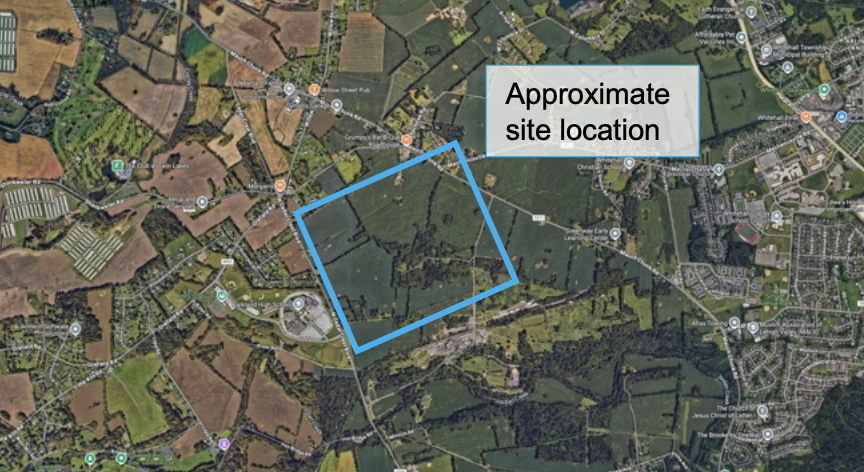 The approximate site location of the proposed South Whitehall data center. (Photo courtesy of Lehigh Valley Planning Commission)
A proposed 5-million-square-foot data center in South Whitehall, to be built on undeveloped agricultural land across the street from a high school, has been met with local resistance. South Whitehall’s planning commission intended to review the proposal during its Feb. 12 meeting, which was cancelled; the next scheduled meeting is on March 12.
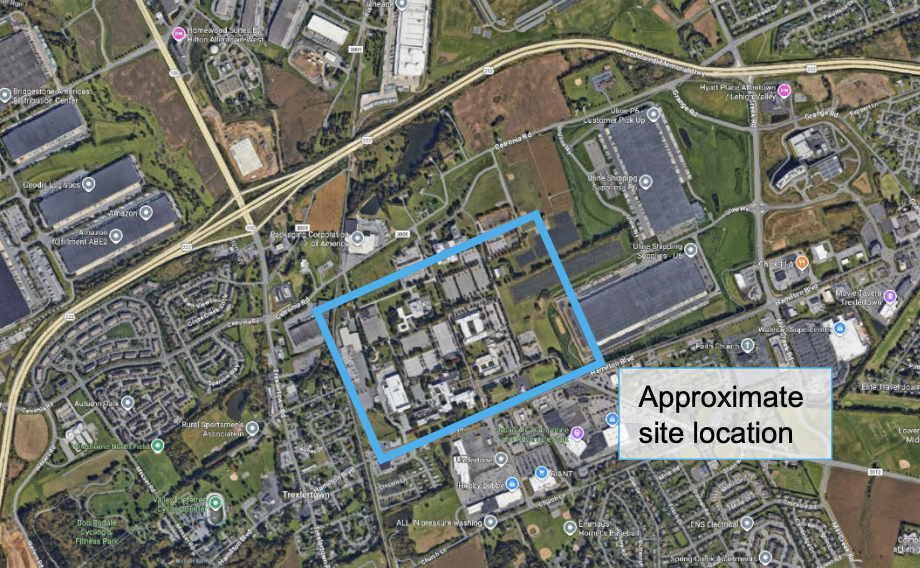 The approximate site location of the proposed Upper Macungie data center. (Photo courtesy of Lehigh Valley Planning Commission)
Meanwhile, a 2.6-million-square-foot proposal at the former site of an Air Products corporate headquarters is under review in Upper Macungie. The plan, adapted from a previously-approved warehouse proposal, was slated for the Upper Macungie zoning board on Wednesday, but deliberation was postponed to May.
Earlier this month, Lower Mount Bethel also received a data center proposal, drawing community backlash despite no formal plan released. Upper Mount Bethel was also the site of a failed Amazon data center deal last spring.
There are approximately 54 active data centers and another 52 proposed in Pennsylvania, according to one citizen-run data center proposal tracker.
“Since doing the other states now, I realized that Pennsylvania is especially getting hit with these proposals,” said the developer of the tracker, Emilia Doda. Her project shows New York, New Jersey, Maryland and West Virginia with just a combined 26 active and proposed centers. Virginia, meanwhile — the data center capital of the world — has a whopping 570.
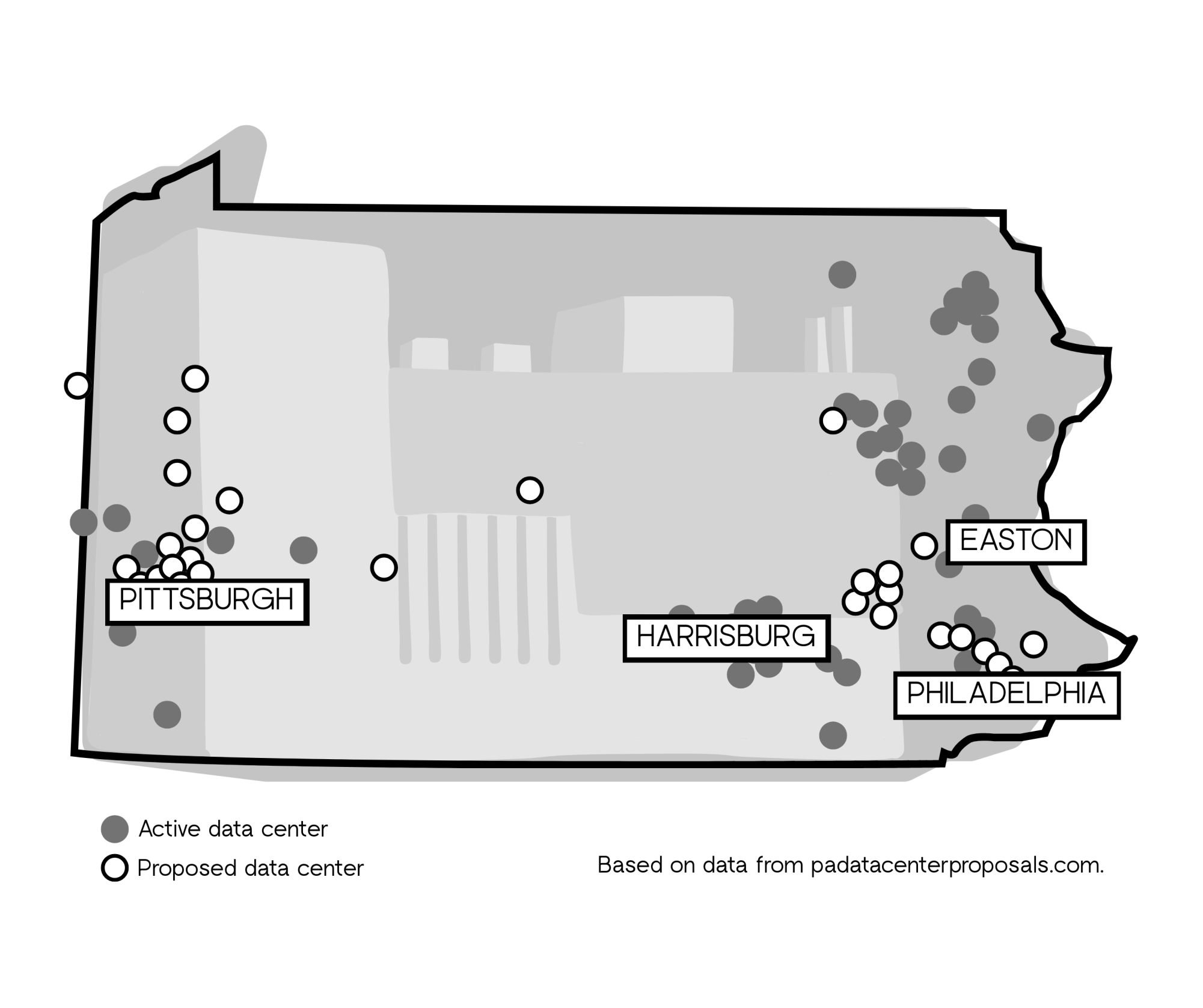 A map of data centers in Pennsylvania using data from https://www.padatacenterproposals.com/state/pennsylvania. (Graphic courtesy of Selma O’Malley ’26)
What about Easton?
Easton has yet to announce any formal data center proposals, but the city is working to be prepared.
“We want to take the right approach,” said the city’s planning commission chairman Ken Greene.
The commission has discussed the topic in its past few meetings, as members consult regional recommendations and examples from surrounding townships. Councilwoman Rose Crystal is working on proper language to draft an ordinance to regulate data center development.
The term “data center” is not presently found in city legislation, but Greene highlighted that “it’s not just data centers” that the city has to consider with modern land use.
“We need to be prepared for any type of land use, and knowing that these are hot commodities, developers are going to get creative about how to find ways to build them,” he said.
The city is still dealing with its most recent large industrial proposal after prospective warehouse developers sued. Despite the city’s urban nature, there are still opportunities for developers to propose centers in Easton that could put pressure on utility usage, according to Greene.
“But it wouldn’t be the wide, spread-out mega centers that you see in other places,” he said.
Planning commissioner Hubert Etchinson wrote in a message that the group will likely formalize its recommendations on data centers at its meeting next Wednesday.
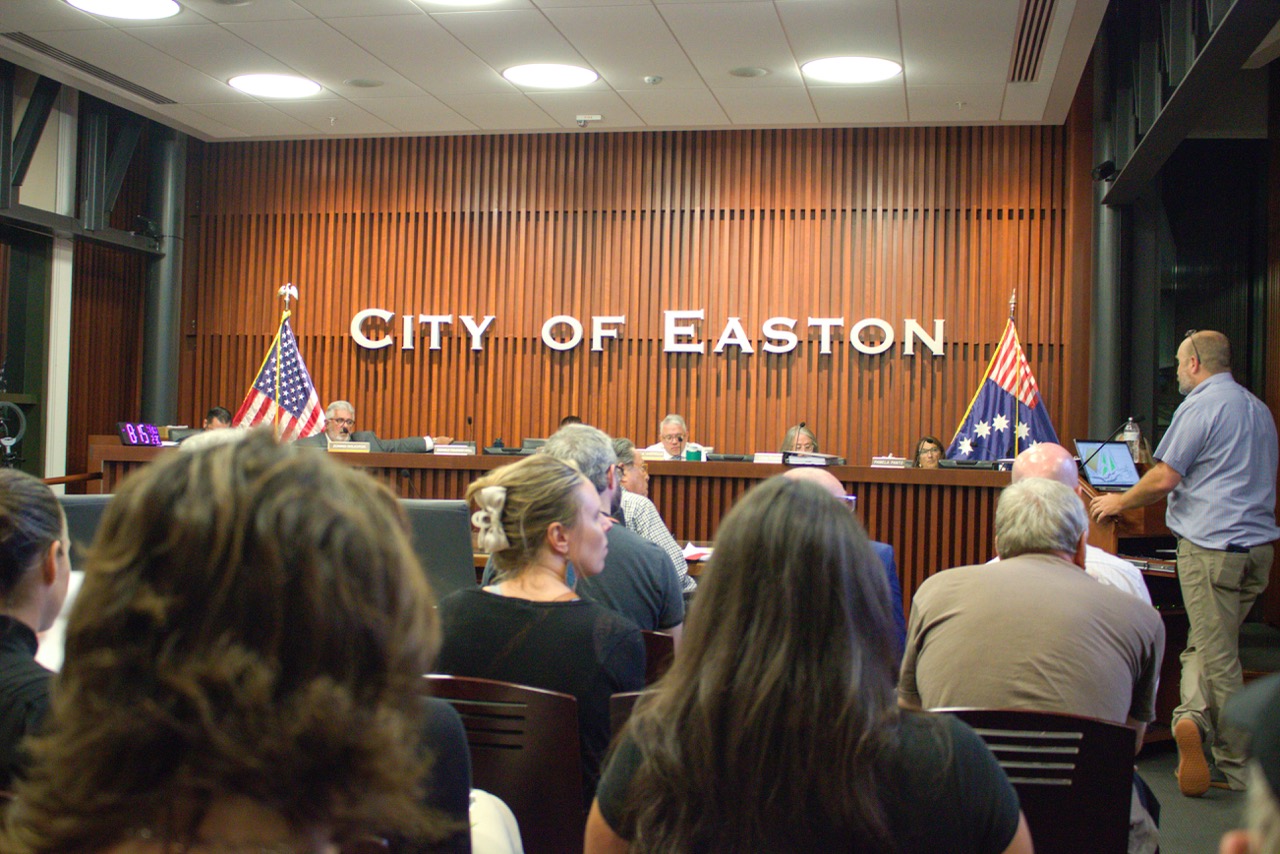 The Easton Planning Commission cannot codify city laws, but can make recommendations to city council. (Photo by Clara Witmer)
What’s the potential impact?
As hyperscale data centers pop up around the country, the nation is grappling with both the costs and the benefits of the infrastructure.
Data centers can contribute to increased electricity demand in their surrounding areas, driving up energy costs. In Pennsylvania, the average price of electricity has risen by 7.4% since 2019, according to the U.S. Energy Information Administration.
“If they are maintaining the current level of supply and just the demand increases, then that could increase the price of electricity that we use,” explained environmental economist and economics professor Hongxing Liu. She said that improving infrastructure to generate more electricity can boost supply and prevent rising costs.
In President Donald Trump’s State of the Union speech earlier this week, he pledged to work with tech companies for lower energy costs for households.
PJM Interconnection, which oversees the regional electric grid, has been working to accommodate data centers across its region as it faces pressure from state legislatures on rising energy costs and increased electricity demand. Meanwhile, the Pennsylvania Public Utility Commission announced proposed guidelines in November to protect customers from data center energy costs.
The environmental cost of massive data centers has also been widely panned, with metaphors for AI utility usage abound: One conversation with ChatGPT uses approximately one plastic bottle of water and enough electricity to power a light bulb for 20 minutes.
According to the International Energy Agency, data centers are responsible for just 1% of current electricity use and 0.5% of carbon dioxide emissions globally. But researchers at Cornell University also hypothesized that the current growth rate of AI would annually release the carbon dioxide emissions equal to that of 5-10 million more cars on the road and the water usage of about 6-10 million Americans.
Suggestions for cutting resource costs of data centers are widespread, but whether tech companies will follow is another question. To explain why data centers can be so resource-intensive, computer science professor Sofia Serrano, who researches AI, likened them to a massive calculator.
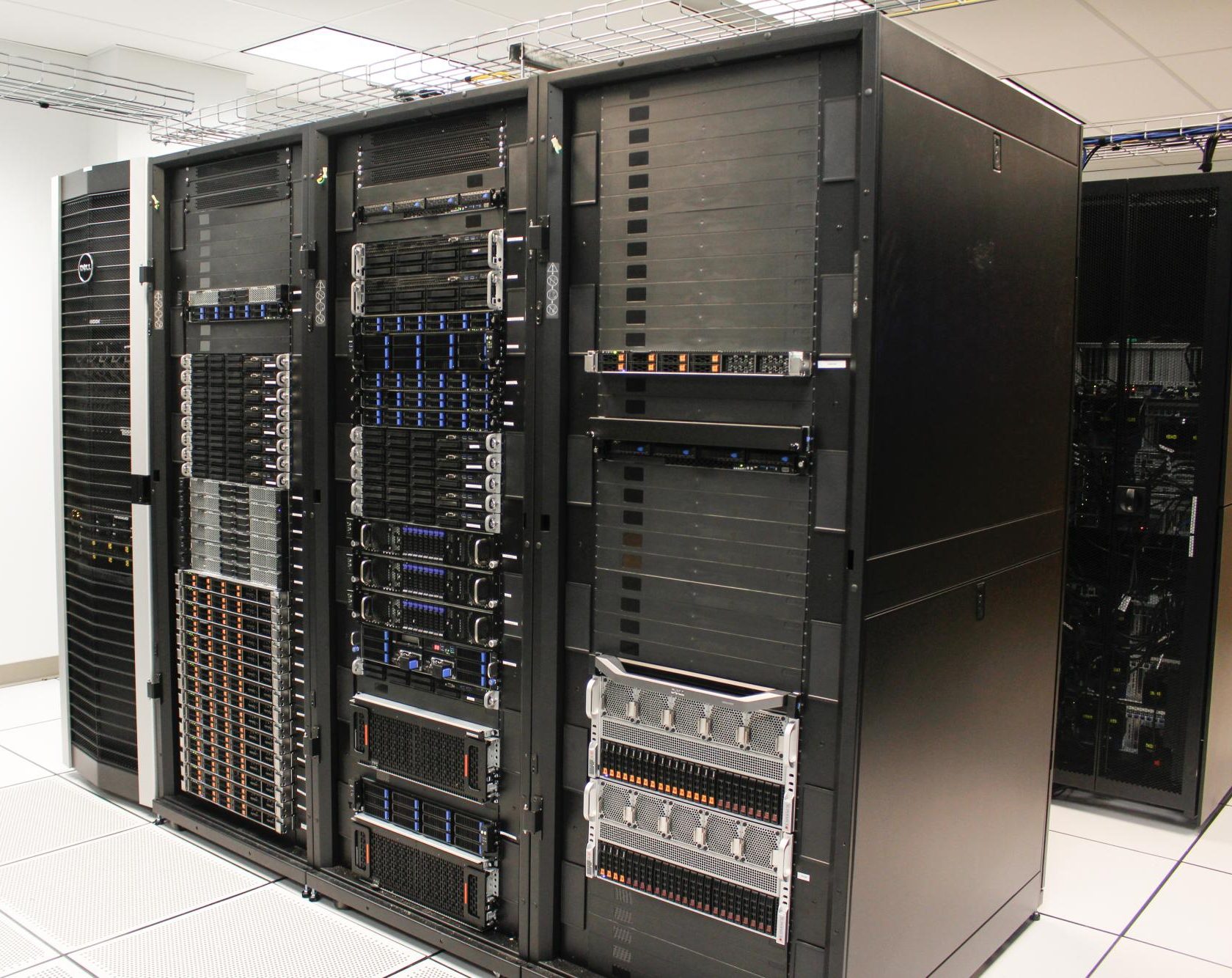 Lafayette College has its own small-scale data center in the basement of Pardee Hall. (Photo by Selma O’Malley)
Small handheld calculators, which do simple math, are powered by a battery or a small solar panel. AI chatbots, on the other hand, are essentially a “giant mathematical function” used to convert text queries to numbers that a computer can understand, Serrano said, which requires a whole lot more energy and electricity.
“That doesn’t just happen by magic,” Serrano said. “It’s a machine doing billions of calculations.”
Last year, the electricity demand of only data centers in the U.S. was comparable to that of the entire country of Pakistan, according to the Pew Research Center.
Water, meanwhile, is used in massive amounts to keep machinery cool, as heat does not naturally dissipate fast enough to avoid damage.
“If you run any kind of serious machine” — for example, a car, or even your laptop — “it gets hot,” Serrano said. This water is drawn directly from its surrounding region, putting pressure on local communities and aggravating pollution in some cases.
Aside from electricity and water, other environmental considerations with large data centers are rare element mining, noise pollution, traffic during construction and land permeability.
It’s not a question that data centers hold up digital infrastructure and the ever-booming tech industry, but economic benefits for their surrounding local communities — often in rural and suburban areas — are a different story.
Data centers have the potential to bring in lots of revenue in property taxes from tech giants, improving property values in surrounding neighborhoods. They can also produce a large workforce in tech, construction and operations, but that doesn’t always materialize. The job opportunities of a “typical large data center” are much larger in the construction phase than in its annual operation, according to the U.S. Chamber of Commerce. Still, there are plenty of avenues for tech companies to improve their economic benefits to the communities from which they purchase land.
“We are not really understanding the whole tech company or tech trend right now, so we don’t know how AI is gonna change, not even in the next year,” Liu said. “That raises the question of whether this could actually realize all these benefits of attracting tech companies.”