
Visit the Goldmine store — it is a music collector’s one-stop shop of vinyl, CDs, box sets, collectibles, collecting supplies, audio equipment, music history books and Goldmine-only exclusives. Click HERE!
.
.
By TONE Scott
So much has come out of the Pittsburgh, Pennsylvania, metro area since the advent of the Industrial Revolution that America and the world are thankful for. Monikered as ‘Steel City,’ having been acknowledged as the world’s largest producer of steel alloy and steel products, however, Pittsburgh is more than just a worldwide leader in manufacturing. With regard to what is most important to fans of music, while not noted as an official musical epicenter, Pittsburgh has produced some of the best names in recorded music across the multi-genre spectrum. Notable artists in the realm of pop and rock such as Perry Como, Bobby Vinton, The Vogues, Christina Aguilera, Shanice Wilson, Trent Reznor (Nine Inch Nails), Bret Michaels (Poison), The Clarks, Anti-Flag and The Cynics; hip hop stars Wiz Khalifa and Mac Miller; and jazz icons George Benson, Billy Eckstine, Art Blakey, Ahmad Jamal and Earle Gardner have all called the greater Pittsburg area their home.
In the mid to late 1970s, another short-lived but notable name in the rock game came to prominence out of the City of Steel. Starting in 1974 with the release of their self-titled debut and over the next half-decade, the band would release three hard-rocking albums that, while maybe only remembered by Gen-X’ers who lived through the era as well as die-hard music collectors, would burn the band and their name into the pages of the annals of rock music history. Diamond Reo didn’t start their professional recorded music adventure via some no-name corner store record label either. The band was picked up in the early mid-’70s by Big Tree Records — the Atlantic Records subsidiary which hosted legends such as Lobo, Johnny Rivers, Brownsville Station, April Wine, Hot Chocolate and England Dan & John Ford Coley — through whom their 1975 debut self-titled LP would be released. The band achieved national success with their debut, assisted by a hard rock cover of the Marvin Gaye song “Ain’t That Peculiar” as their single, which achieved Billboard charting status.
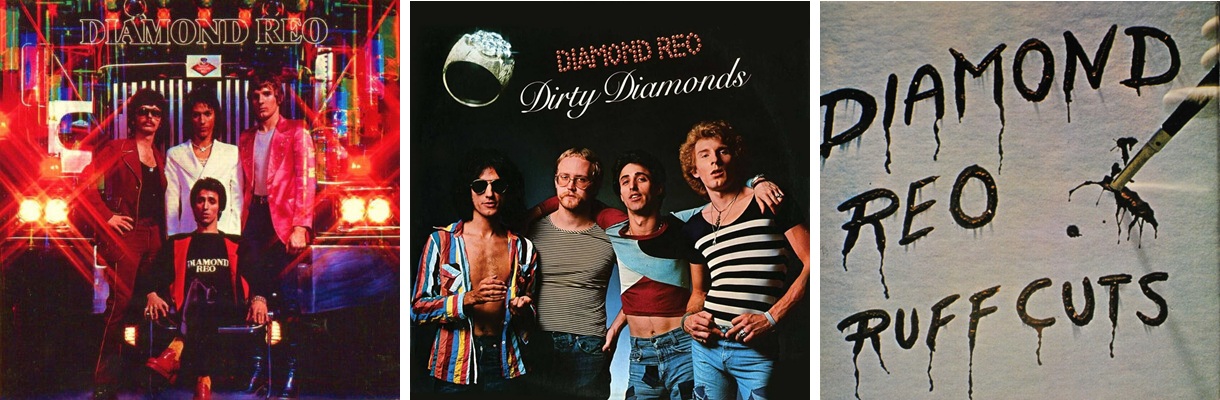 Diamond Reo’s three studio albums: (L to R) 1975 Self-titled; 1976 Dirty Diamonds; 1978 Ruff Cuts
Ultimately, the success of the album and the single would afford the band the opportunity to tour in support of the likes of Aerosmith and KISS, and in fact, it was Diamond Reo who were billed as the opening act for KISS during at least one of the live performance nights recorded for KISS’ 1975 premier live album, Alive. Reo’s 1976 sophomore studio effort Dirty Diamonds followed, however, with a change in record labels, being released via the iconic Buddah Records, and this time produced by Adrian Barber, whose previous accomplishments came by the likes of his production work with everyone from Vanilla Fudge, The Velvet Underground, The Allman Brothers, Duane Allman, Aerosmith and others. This resulted in a more commercial and polished-sounding record, not negating their gritty hard rock ideology whatsoever, but incorporated melodies and arrangements that rode the fence of arena rock and/or AOR. As it often happens with bands that are climbing their way to bigger success than maybe expected, pitfalls and disruptions internally sometimes plague a good thing. Double that with the crap politics of the music business and sometimes things take a turn in a different direction. The band’s follow up album, 1978’s Ruff Cuts (Mad Dog Records), would be the result of taking ‘that turn,’ becoming a self-produced effort, returning to a more rudimentary and gritty sonic character, with material that still exemplified the band’s hard rock nature, infused with slight glam undertones and incorporating a sound likened to the explosion of the burgeoning raw power pop of the time. Unfortunately for the band and its dedicated fanbase, this would result in the final studio effort from Diamond Reo, and in 1979, we would see the group beginning to unravel and ultimately disband.
.
.
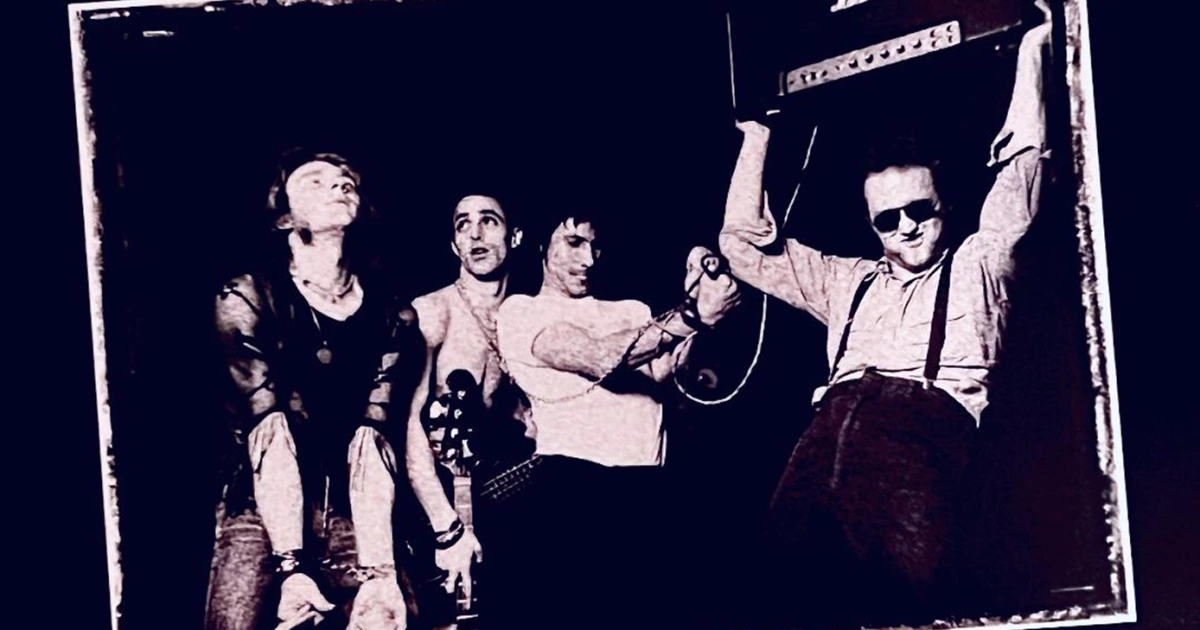
DIAMOND REO — The Diamonds
As music fans and even more, as music collectors in modern days and times, we have been blessed with a rush in popularity of a format simply referred to as ‘the archival album’ — bodies of musical works that were long ago recorded and either shelved, lost or forgotten with never a plan to make them commercially available.
During the self-produced sessions for the final Diamond Reo album, as is common (and sometimes even protocol) when making a record, more material is recorded than needed and then selections for an album are chosen in what is called a ‘final cut.’ During those sessions collaborative efforts were made between the band’s founding member, bassist, vocalist, producer and arranger, Norman Nardini, and friend/producer Steve Acri whose combined efforts produced several completed songs, though never released. As happens often, those productions remained in hibernation for decades, not knowing if the snow would ever melt for them to be awakened into the springtime of a new musical life.
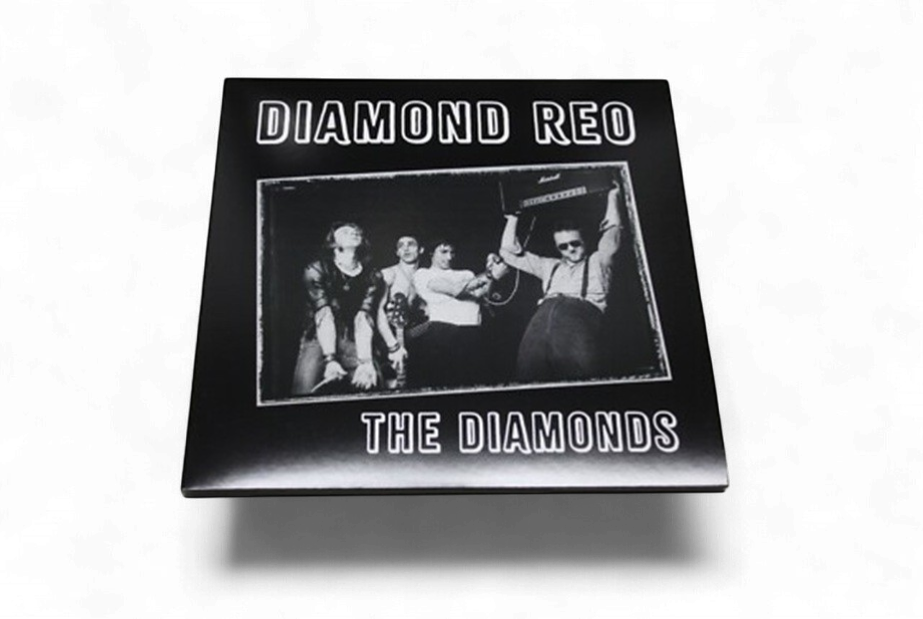
Nevertheless, timing is often the key, and executive producer Steve Acri, alongside Nardini, would make the move to resurrect the shelved but not forgotten material and give life back to Diamond Reo for one final studio album with all the aspects and intrigue of a fantastic classic rock era archival discovery. Goldmine was recently made privy to a copy of The Diamonds (2025, Transport Records) and we couldn’t be any more excited about it and equally as impressed. Being this fortunate, there were no second thoughts about being self-persuaded to take it further and expose the intrigues of this album to Goldmine readers.
The Diamonds introduces itself with “Live Wire,” the only previously released selection on the album. While not included on the original 1978 release of Ruff Cuts, it was included as an addition to the album’s track list the following year on a reissue of the album by the reissue label, Pic-A-Dilly Records. The track presents itself as the perfect choice for an intro, with Nardini’s heavy riding deep bass guitar cadence, which lays the foundation for the raw bluesy electric guitar riffing that carries the grit and hard rock essence throughout the song into an incendiary solo, all by guitarist Warren King. This is foundational slow riding ’70s hard rock, the kind that defined the decade. There are a small handful of additional selections that still exemplify the band’s early sound and identity. For example, “Skin and Bone” resonates all the essences of earlier ’70s hard and heavy, with a nod to pure unadulterated blues rock. Selections such as “Shake Down,” as well as the bonus track (found only on the compact disc) “Burning Love,” also reverberate the band’s earliest sounds, with hints toward proto-punk and glam.
In other parts of the album’s spectrum, there are elemental hints toward the sounds of the time with regard to when these sessions actually took place. Pure and foundational punk rock had been coming to its peak, and the more commercially sounding power pop was making its segue. Tracks such as “Dangerous Stranger” and “Satisfied” are definite nods toward the latter, giving off a clearer sense of melodic and hook-driven vocals, chord progressions and arrangements. Then, with regard to the former, “Gone Dead Train” and “Johnny Too Bad” may very well be reminiscent in like to the sounds of The Buzzcocks, early Clash, and The Jam. Overall, while there is a cornucopia of various classic rock sounds swirling around the album, you have to take into consideration that the selections within were never meant to be housed into one album project consciously, and it is a blessing that this archival material is even being made available, and what better than to have them all available together and presented as a single studio album.
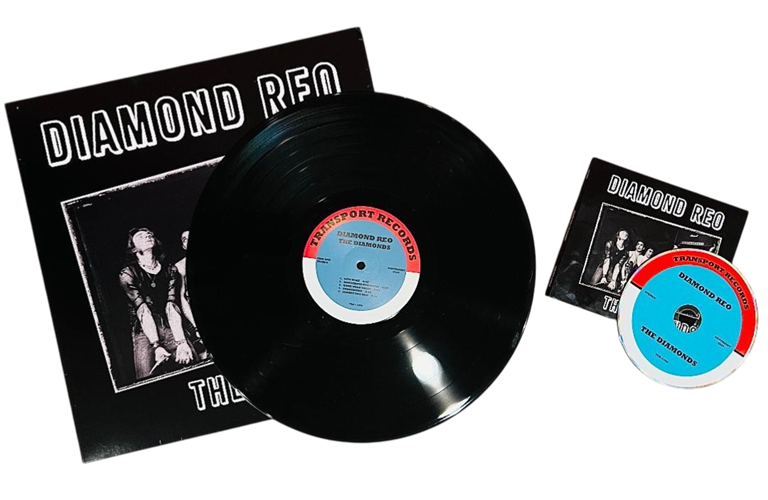
Aside from the fascination of experiencing an incredible selection of never-before-heard productions by a once-revered classic hard rock lineup from Pittsburgh, PA, the intrigue with coming face to face with the album is fortified further and goes beyond simply the album’s song sequence. First, the album’s original analog studio tapes were pulled from of the vaults and transferred in multi-track to a digital master, meticulously by Jeree Studios in New Brighton, Pennsylvania. From there, the album was remixed by Brice Foster and mastered to modern standards, and for all intents and purposes, sounds more than pretty damn good. Even more so, the LP variant of the album, which contains 10 full tracks (one less track than the compact disc), comes well-pressed on what feels like 180 grams of heavyweight vinyl, assisting in making this wax variant playback as sweetly as possible. As well, the compact disc album resonates obviously with a more detailed sonically oriented dynamic, still without losing the organic feel of the album, and also includes “Burning Love,” the CD variant’s additional track. Remember, what you have here is not some audiophile presentation of long-lost material, and so as good as the restoration of these songs turned out, what you are really after is the intrigue of simply being able to own and experience the music. What collector doesn’t love to discover a new album for the first time, which contains material that existed ‘somewhere’ for a long period of time, yet never has seen the light of day until now … we think that would be virtually everybody. If getting your hands on a true archival classic rock album floats your boat, we recommend getting yourselves a copy and setting sail. —GM
Get your copy on LP or CD at Get Hip Records, (HERE)
.
.
.
Contact TONE Scott at [email protected]. Please put Adventures of a Music Collector (Diamond Reo) in the subject line.
.
Find a selection of our WINTER 2025 print issues with your choice of collectors covers, in the official Goldmine store: (Click below)
.
.
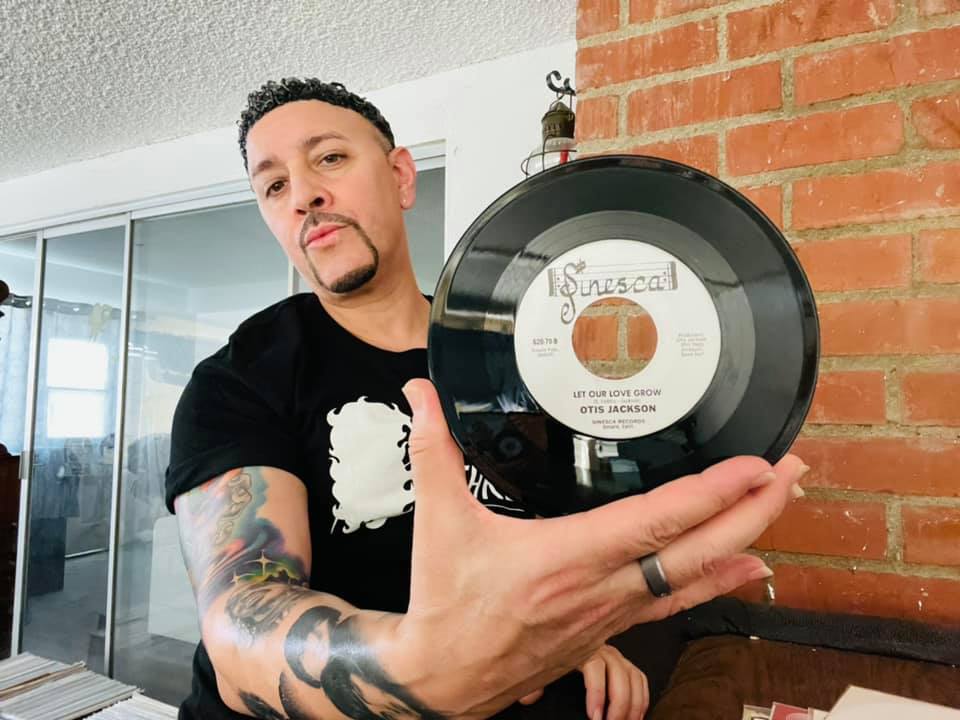
TONE Scott is a career-long American music industry professional. As a Grammy Award nominated, platinum selling songwriter/ composer/ producer/ vocal arranger, he has worked with some of the world’s most renowned recording artists. As a published music journalist, he has been a feature writer for many internationally accredited music publications. Currently on staff at Goldmine magazine, he is Senior Contributing Editor with four reoccurring online columns — The TONE of Soul, Adventures of a Music Collector, Eclectic Discoveries and Jazzology — as well as a prominent feature-article writer for the magazine’s print edition, including the reoccurring article series — Modern Music Must-Haves. He is an acknowledged music historian, having contributed liner notes for many album releases, as well as an expert record collector with over three decades of dedicated music collecting experience. As a content creator he hosts his own YouTube channel – TONE Scott – were he produces vlogs revolving around his music industry career and his life as a music collector. He is also the host of Record Store Spotlight; an online show that highlights independent record stores everywhere. Follow TONE Scott on all social media, including his YouTube channel by visiting his Linktree page, HERE.