
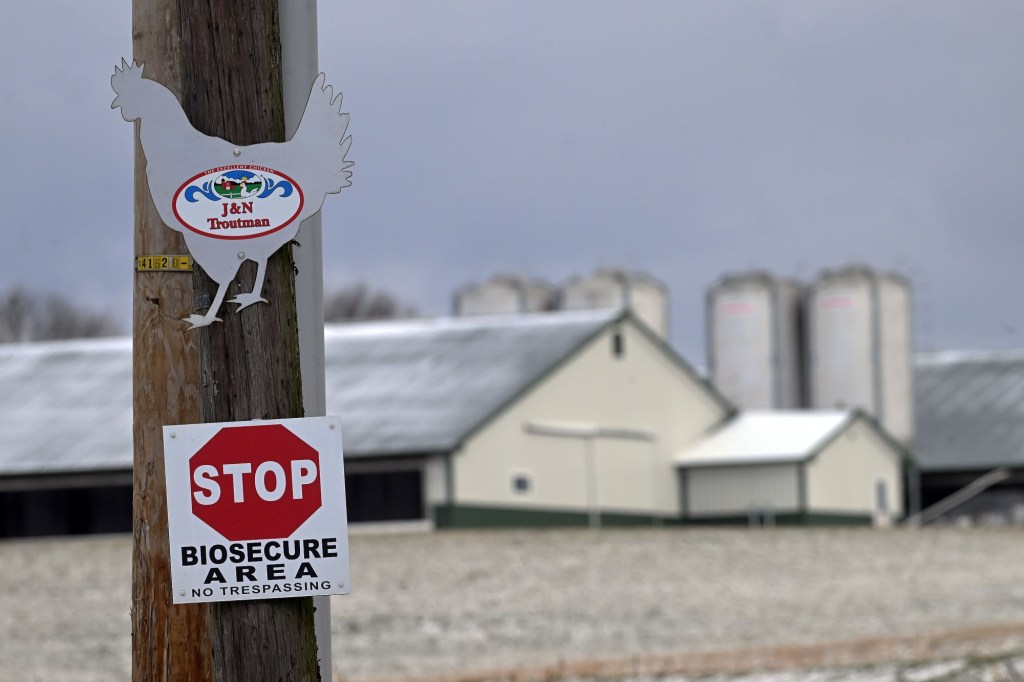
Pennsylvania is battling one of the most serious avian flu outbreaks in decades, threatening to devastate its multibillion-dollar poultry industry.
This week, state officials met with farmers, poultry producers and key agricultural industry leaders for a roundtable discussion in Lancaster County about the response to the ongoing surge of the highly contagious disease.
State Sen. Judy Schwank was among the state officials who attended the meeting.
As chairwoman of the Senate Agriculture & Rural Affairs Committee, the Wyomissing Democrat said she remains in close communication with the Pennsylvania Department of Agriculture and is staying up to date on the issue.
“Our poultry industry contributes $7.1 billion to Pennsylvania’s economy and supports thousands of farm families,” she said. “When a flock is lost to this virus, it is not just a business setback. It’s personally and financially devastating for the farmers.”
While there are no known cases in Berks County at this time, state officials said the commonwealth has lost more than 7.6 million birds since the start of this year.
Poultry is the largest sector of the state’s $132.5 billion agriculture industry, supporting nearly 48,800 farms and almost 600,000 jobs across the state.
Schwank said she has learned that strict biosecurity is the key to stopping the spread of the avian flu.
“Commercial producers are taking extraordinary precautions, and backyard poultry hobbyists must play a role as well,” she said. “Anyone with a backyard flock should closely monitor their birds for signs of illness and report suspected cases immediately to the department of agriculture.”
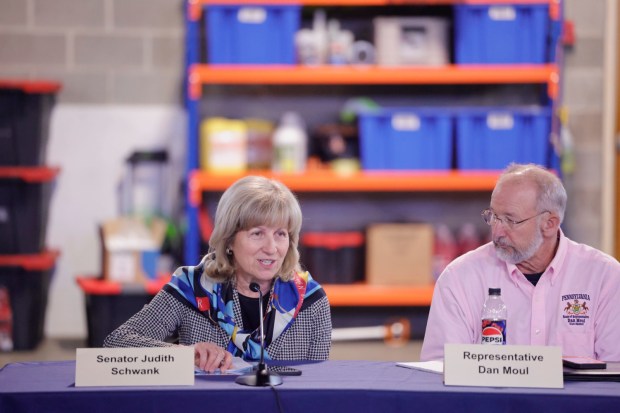 State Sen. Judy Schwank spoke with poultry producers and industry leaders for a roundtable discussion on the ongoing surge in avian flu infections.at the Lancaster County Rapid Response Center Feb. 24. (Courtesy of Commonwealth Media Services)
Gov. Josh Shapiro has directed his administration to mobilize additional personnel, expand testing capacity and coordinate closely with the federal government.
“Pennsylvania’s farmers are the backbone of our communities and I know many are worried about the recent rise in cases,” he said during the meeting this week. “My administration is working around the clock to expand our rapid response efforts and mitigate this surge.”
Pennsylvania remains the only state in the nation with a dedicated avian flu recovery fund, designed to help poultry producers stabilize and recover from losses. Since 2022, officials said $75 million has been committed to the fund.
To date, officials said 302 poultry businesses have received $15.6 million in grants to offset losses, sustain operations and strengthen biosecurity protections — 150 of those receiving farms have implemented enhanced disease-prevention improvements.
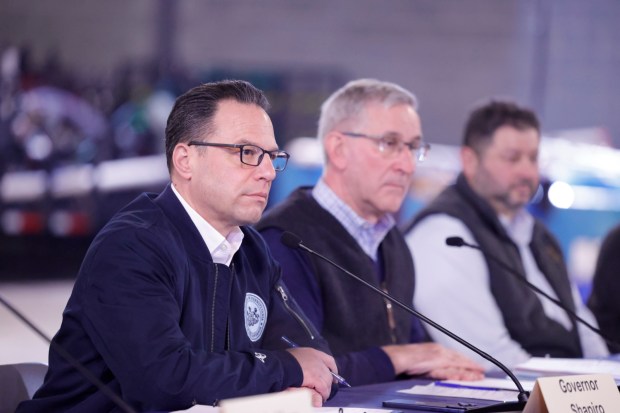 Gov. Josh Shapiro and Pennsylvania Department of Agriculture Secretary Russell Redding hosted poultry producers and industry leaders for a roundtable discussion on the ongoing surge in avian flu infections at the Lancaster County Rapid Response Center Feb. 24. (Courtesy of Commonwealth Media Services)
While the situation remains serious, Schwank said the avian flu presents a very low risk to the general public. Poultry products remain safe to consume when properly handled and cooked, she said.
“I’ve made inquiries about egg availability heading into Easter and Passover, and I’m pleased to report that Pennsylvania does not anticipate a shortage,” she said. “Families can expect a safe, plentiful and affordable supply of fresh eggs for the holidays.”
What agricultural producers can do
The Pennsylvania Department of Agriculture continues to emphasize the importance of strict adherence to biosecurity plans to combat avian flu and reduce the risk of disease.
With wild bird migration increasing seasonal risk, the department is urging all poultry producers — commercial and backyard — to reinforce preventative measures:
• Limit and track farm access.
• Require protective clothing and footwear for anyone entering poultry areas.
• Clean and disinfect vehicles and equipment.
• Prevent contact between domestic flocks and wild birds.
• Monitor flock health closely and report unexplained illness or death.
Producers should report sick birds or unexplained deaths to 717-772-2852. Anyone encountering sick or dead wild birds should contact the Pennsylvania Game Commission at 1-833-PGC-WILD.