
When a young woman comes to an emergency room carrying an expensive designer purse and wearing high-end jewelry, medical personnel should take note.
The high-priced trappings may mean nothing, but it could also be a sign the woman is being trafficked, Wyoming County District Attorney Joe Peters told senior nursing students at the University of Scranton recently.
Those moments in the emergency room, when a victim of human trafficking can be separated from her traffickers, can be life changing, Faculty Specialist Anna Grippi said.
Grippi, who coordinates the program’s clinical rotation, worked with the NEPA Task Force Against Human Trafficking to bring an hourlong training to senior students soon to start their careers.
Grippi said senior students typically conclude the year going out to various sites in the community related to community and public heath.
But, with human trafficking becoming an increasingly pervasive problem, she believes it was important for students to learn about it before graduation.
Peters and Michele Minor Wolf, co-chairman of the task force, led the workshop, encouraged by the students’ interest and response to the issue of human trafficking.
Wolf, CEO of the Victims Resource Center, said the training helps nurses to recognize red flags, including a controlling companion, branding tattoos and signs of abuse.
It equips the student nurses with strategies such as separating a patient from a controlling companion and asking open-ended questions rather than posing specific question after question, she said.
Should a nurse suspect a patient is being trafficked, they can contact the Victims Resource Center or the police, she said.
Peters pointed out that, after the hourlong training, students remained for over 30 minutes, asking additional questions, showing deep interest in the topic.
Peters and Wolf provided students with specific situations that surprised some of them.
No one scenario fits all victims, they told students. For example, some victims still live at home.
A 12-year-old, for example, might meet a trafficker online or even at a school event. She might originally consider the trafficker a boyfriend and accept gifts from him.
He then might ask if she would pose for some sexually themed photos, which she had not previously been comfortable with.
“But, every night, she’s still going back home,” Wolf said.
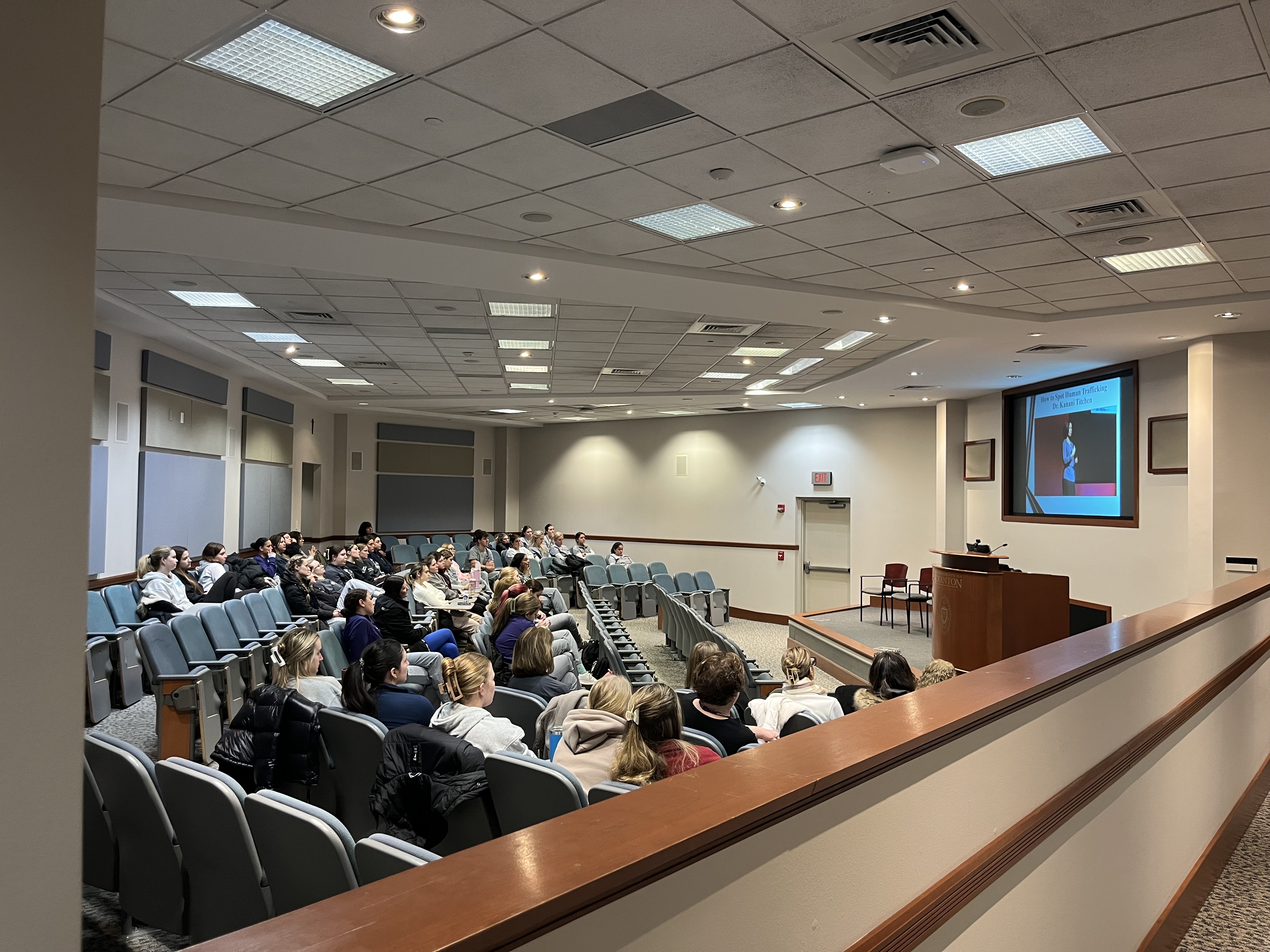
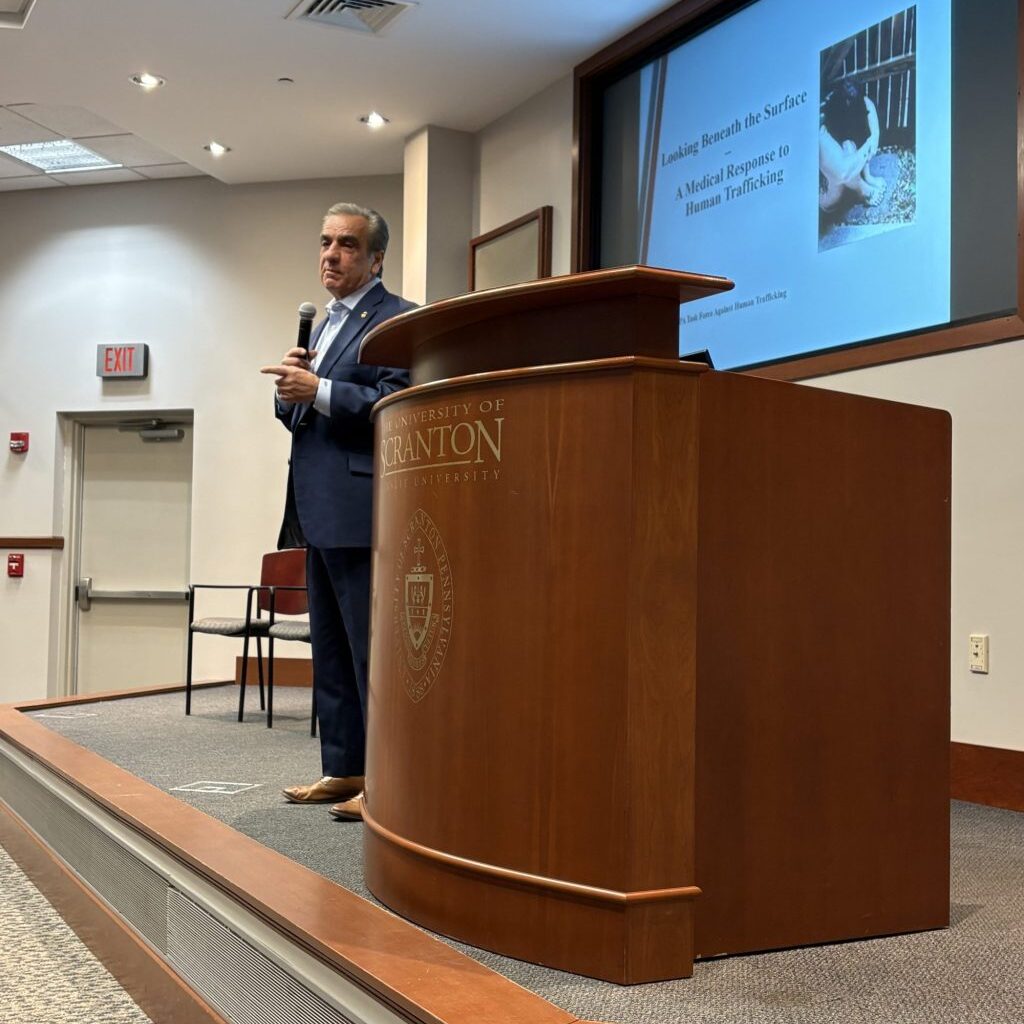
Last week Wyoming County District Attorney Joe Peters conducted a training program with classes from the University of Scranton’s Nursing program and in conjunction with the NEPA Task Force Against Human Trafficking. (SUBMITTED)
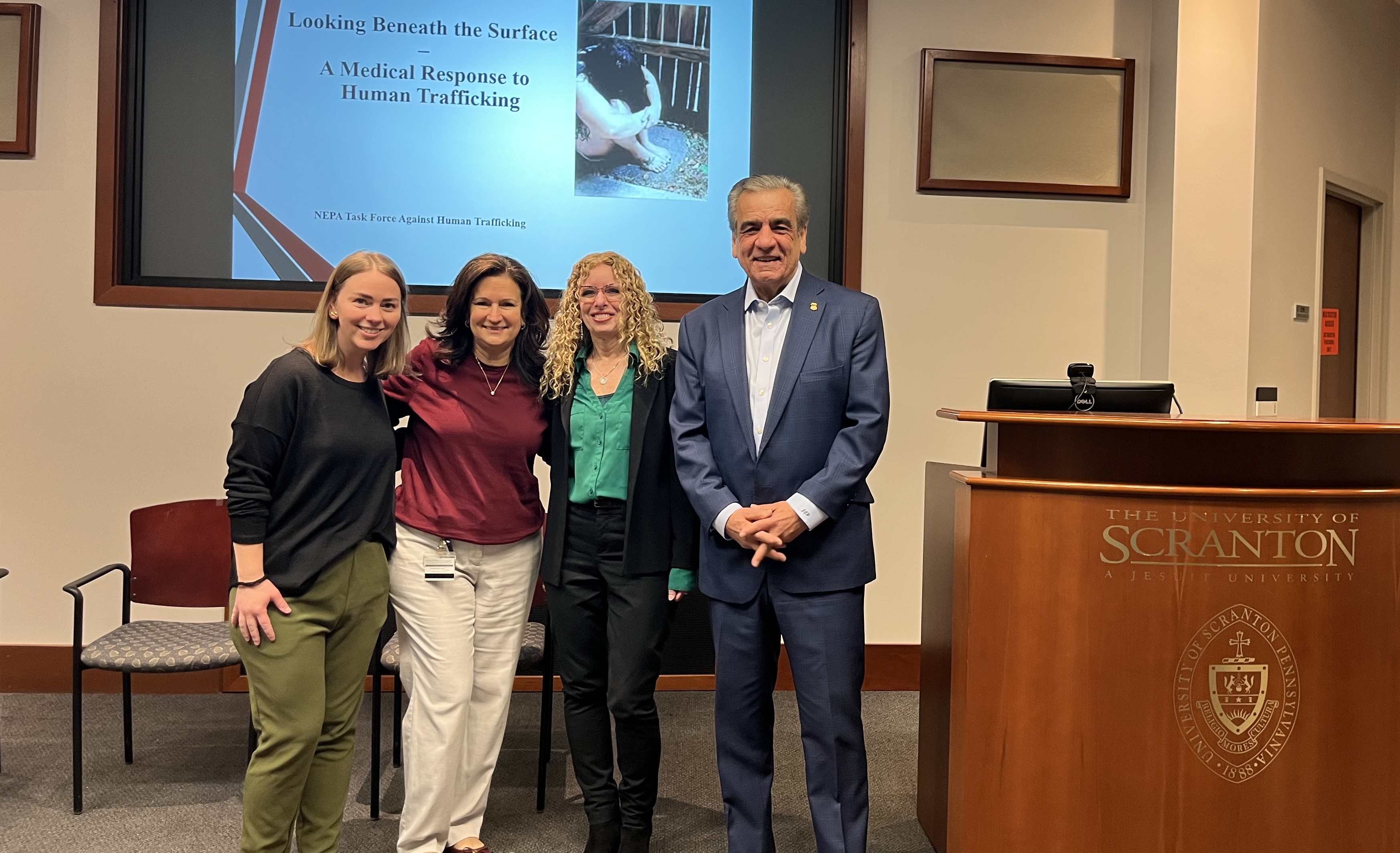
Last week Wyoming County District Attorney Joe Peters conducted a training program with classes from the University of Scranton’s Nursing program and in conjunction with the NEPA Task Force Against Human Trafficking. Left to right: Clinical coordinator for community health clinical rotation Anna Grippi; Michelle Van Pelt, director of nursing clinical operations; Michele Minor Wolf, co-chair of NEPA Task Force Against Human Trafficking and Wyoming County District Attorney Joe Peters . (SUBMITTED)
Show Caption
1 of 2
Last week Wyoming County District Attorney Joe Peters conducted a training program with classes from the University of Scranton’s Nursing program and in conjunction with the NEPA Task Force Against Human Trafficking. (SUBMITTED)
Often these 12- to 14-year-old girls are groomed by older men, believing their relationship is romantic. As the relationship moves forward, the girls are often in too deep to be able to get out, either because they believe they’re in love or because the older man has naked photos that will embarrass them.
Peters said the older man will then extort the girl to turn tricks or to perform commercial sex acts after school behind a warehouse or at a nearby hotel.
“And that little girl is home for dinner with mom and dad, who think she was at the high school with her friends or at gymnastics and nobody knows any different,” Peters said. “That’s the face of human trafficking in our area.”
Peters is working to destroy the myth depicted on television and in the movies that human trafficking is about being kidnapped in a van going down the street in your neighborhood.
“It’s paradoxically hidden in the shadows but in plain sight,” he said.
Grippi said the seminar changed the mindset of student participants.
“I think they were surprised that it can really happen anywhere,” she said. “I think many times you assume it takes place in other countries or big cities. It might look different here but it still happens.”
Those with concerns about potential human trafficking can call the National Human Trafficking Hotline at 1-888-373-7888 or the Victims Resource Hotline at 570-823-0765.