
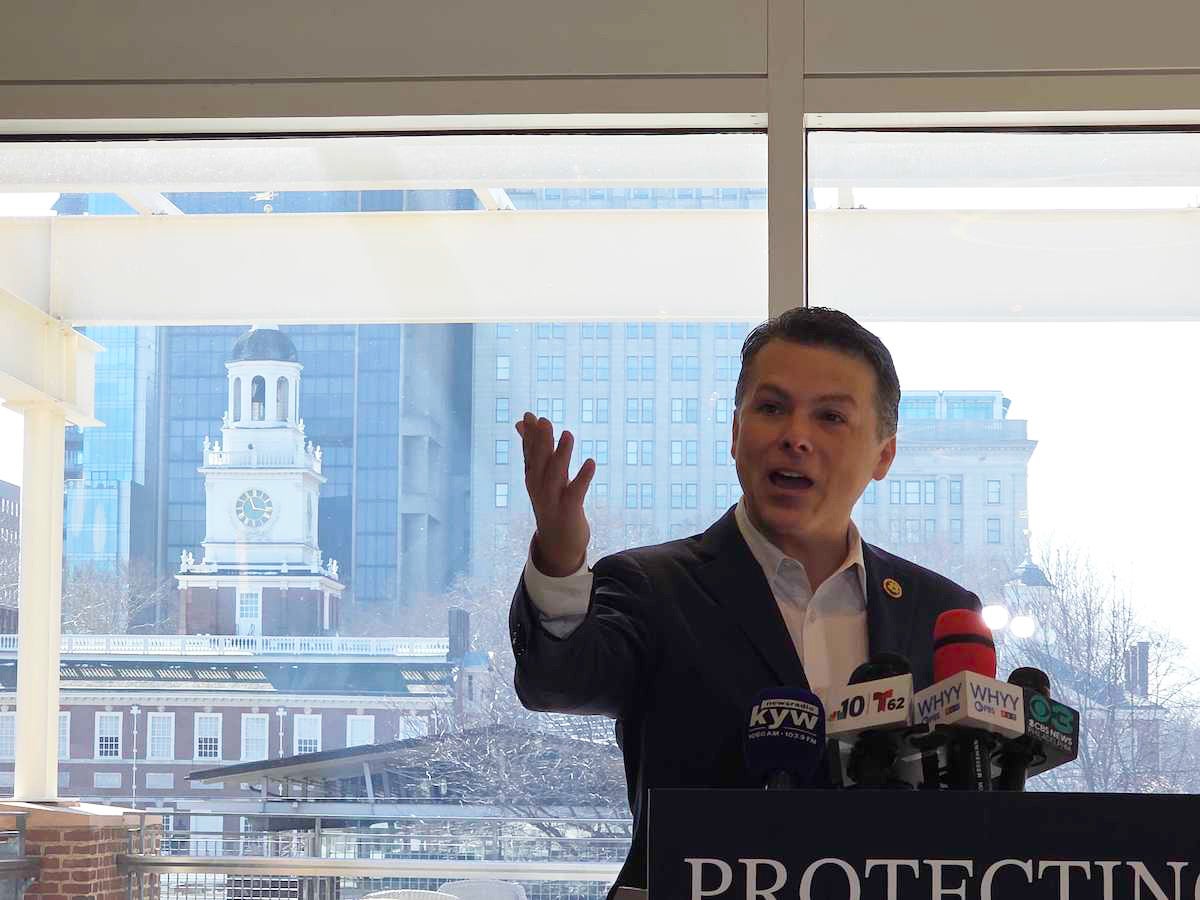
Beth Hessel, executive director of the Athenaeum of Philadelphia, a 200-year-old cultural institution that serves as a library, museum and forum for books, writers and ideas, said “It was congressional action in 1947 that said that the President’s House should celebrate and commemorate the eminent personages who lived and worked in that house, which includes not just the president, but also all of those enslaved people who helped make his work possible.”
Hessel added that the President’s House Site is historically and culturally important.
“On my many visits to the President’s House memorial exhibition, I am struck by its careful historical and archaeological documentation and the powerful symbolism of the open framework of the house, whose back door leads to what had been the President’s House slave quarters and is now the entrance to the Liberty Bell Center,” she said.
Hessel went on to explain why the exhibits are important.
“On my many visits to the President’s House Memorial Exhibition, I am struck by its careful historical and archaeological documentation and the powerful symbolism of the open framework of the house whose back door leads to what had been the President’s House slave quarters and is now the entrance to the Liberty Bell Center,” she said.
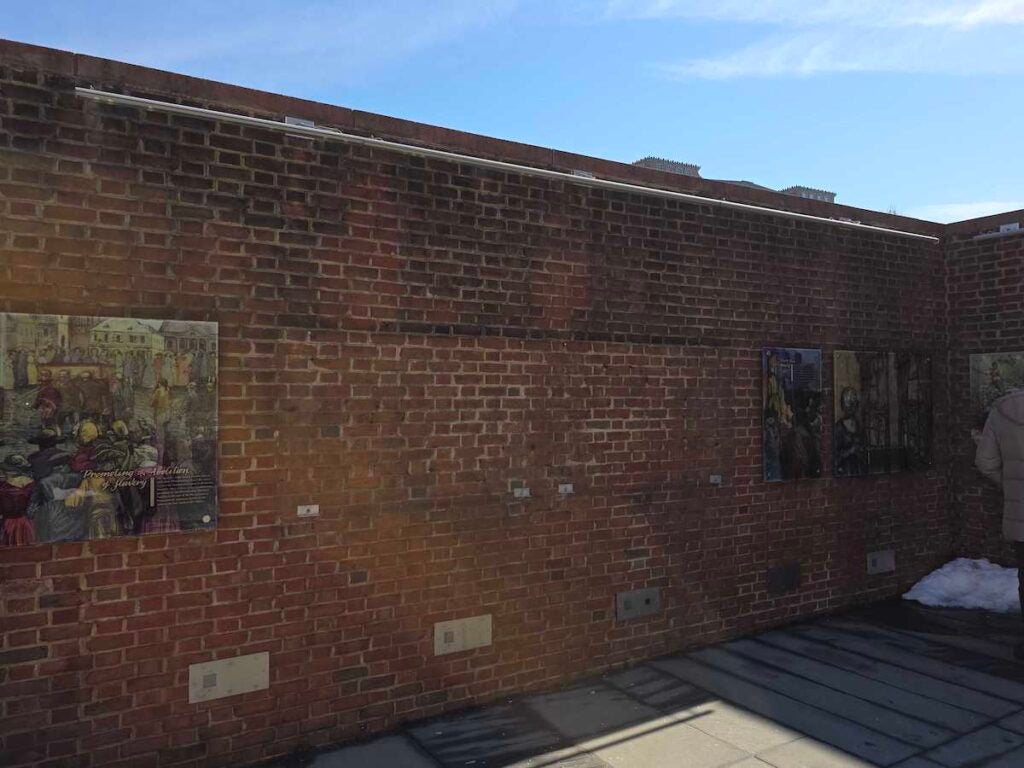 Panels still missing at President’s house. (Tom MacDonald/WHYY)
Sean Connolly, executive director of the nearby Arch Street Meeting House, said his organization receives about 70,000 tourists a year, and they all deserve to see the unvarnished version of U.S. history.
“The historic district of Philadelphia is a web of interlocking historic sites, museums and cultural institutions. The beating heart of that web is, of course, Independence National Historical Park.
The other sites throughout the neighborhood rely on this park to share the stories of the broad American history which took place here. The good, the bad, the complicated and the straightforward. The story presented at the President’s House is one such example of that American complexity, of revolution and idealism stained by the enslavement of others,” he said.
“Our visitors can handle this messy-to-some, uncomfortable history, because without embracing it, how can we ever truly understand the lessons of the past? Museums across the historic district such as Arch Street Meeting House are committed to telling the complicated legacy of American history and will ensure that visitors of all colors can see themselves represented in the historic fabric of this shared American story,” he explained.
Boyle admitted he doesn’t have any “official” Republican support for the bill, but he believes if the makeup of Congress changes after the midterm election, and he becomes budget chairman, there will be a change in some of the representatives who won’t come out in favor of the bill now.