
Pittsburgh is leading efforts to establish a permanent presence on the moon, with local companies focusing on mining, power generation, and technological advancements.”What an investment the space program has been for our country and what an investment it is for a future. We have a super high tech economy right now, and that’s directly traceable back to this, the early space program with Apollo and going to the moon and how it motivated our country. It’s the same thing,” Mike Fincke, a Pittsburgh native and astronaut said.Astrobotic, a Pittsburgh-based company, is already working on the infrastructure needed for living on the moon. “There are minerals there on the moon that can be mined and actually brought back to Earth. That would help us here,” Steve Clarke, former vice president for space programs at Astrobotic, said.Clarke explained that the moon serves as a record of Earth’s past and a toolbox for future discoveries.”There’s so much more to learn about Earth that’s trapped in the lunar surface there, because it’s almost like a time capsule, because there’s no atmosphere. Nothing has blown away. There’s evidence of what happened millions of years ago,” Clarke said.Astrobotic is developing technology to set up an electrical grid on the moon.”We’re going to set up an electrical grid so that robotic systems and human habitats and so forth can run off this electrical grid. And we’ve been developing technology here at Astrobotic to get that ready,” Clarke said.The company’s “Lunar Grid Light” is a rover with a solar array tower that can generate power, which Clarke described as “a backbone capability that needs to be there before we can sustain humans there for long periods of time.”Westinghouse, another Pittsburgh giant, talked about the limitations of solar power on the moon by developing nuclear power systems. “The nuclear aspect of that coupled with it could provide that continuous power and large scale power that’s needed,” Ryan Blinn, director of space and energy systems at Westinghouse, said.Blinn explained that the nuclear power plant would be small, self-contained, and scalable.”Unlike here where we have tons of operators, maintenance folks, security guards for the power plant, this isn’t going to have that. The main thing that’s different is it’s autonomous. It runs by itself, which is great,” Blinn said. Westinghouse is working with NASA to have a nuclear power plant operating on the South Pole of the moon by 2030. “We have a very aggressive timeline working with NASA. Their objective is to have a nuclear power plant operating on the South Pole of the moon by 2030, which is less than five years away,” Blinn said.Anthony Matarazzo, director of simulation and AI at Synopsys, said the region has a unique position to model the entire lunar system.”So think about the need for communications and being able to optimize, you know, the rover to the base station, to the antenna on the satellite. So this is like a systems of systems simulation. I call it like a super model,” Matarazzo said. HEBI Robotics, based in Bloomfield, is working on building infrastructure on the moon. “If you think about what needs to happen in space to create the infrastructure and the logistical infrastructure and all the things that need to make everybody go, there’s so much to build, it’s mind boggling to think of all the different things that need to go into place, things we take for granted here, where on the moon or Mars or in space, it’s just a blank slate,” CEO Bob Raida said.Justine Kasznica, founder of Keystone Space Collaborative, said the potential for zero gravity could change how we heal and manufacture.”Space biomedical experiments, where the experiments need a zero gravity environment to test. It turns out that the zero gravity environment has tremendous attributes for manufacturing of, you know, whether it’s silicon chips or organoids, on the medical side,” Kaszinca said. Clarke said the moon is a testbed for Mars exploration.”It’s a good testbed before we go to Mars, because it’s close. It’s only three days away. You can send a lot of different missions there fairly quickly. You could also fail there, and if you have crew there, you can bring them back pretty quickly. Mars is a different story. We’re talking six months one way,” Clarke said. Astrobotic CEO John Thornton is optimistic about Pittsburgh’s role in space exploration.”If we can grow this kind of business against all the odds that we faced over the years and ultimately be successful in this big, audacious goal, there’s no reason to think that anything is impossible right here. Pittsburgh,” Thornton said.
PITTSBURGH —
Pittsburgh is leading efforts to establish a permanent presence on the moon, with local companies focusing on mining, power generation, and technological advancements.
“What an investment the space program has been for our country and what an investment it is for a future. We have a super high tech economy right now, and that’s directly traceable back to this, the early space program with Apollo and going to the moon and how it motivated our country. It’s the same thing,” Mike Fincke, a Pittsburgh native and astronaut said.
Astrobotic, a Pittsburgh-based company, is already working on the infrastructure needed for living on the moon.
“There are minerals there on the moon that can be mined and actually brought back to Earth. That would help us here,” Steve Clarke, former vice president for space programs at Astrobotic, said.
Clarke explained that the moon serves as a record of Earth’s past and a toolbox for future discoveries.
“There’s so much more to learn about Earth that’s trapped in the lunar surface there, because it’s almost like a time capsule, because there’s no atmosphere. Nothing has blown away. There’s evidence of what happened millions of years ago,” Clarke said.
Astrobotic is developing technology to set up an electrical grid on the moon.
“We’re going to set up an electrical grid so that robotic systems and human habitats and so forth can run off this electrical grid. And we’ve been developing technology here at Astrobotic to get that ready,” Clarke said.
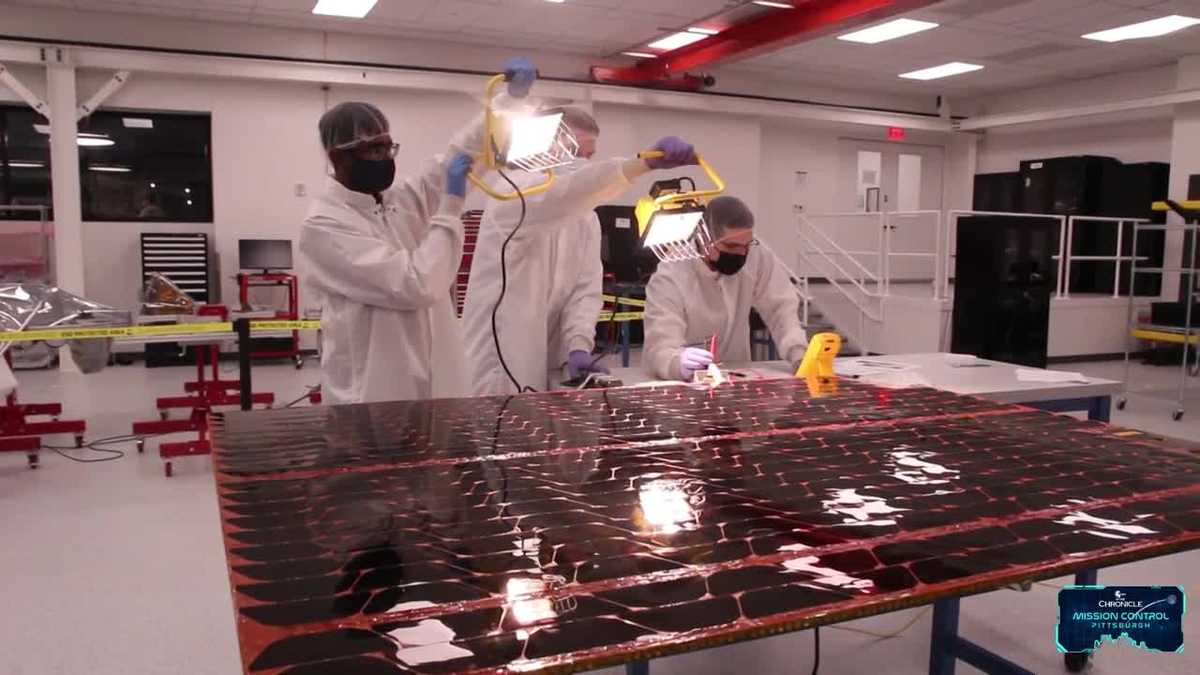
The company’s “Lunar Grid Light” is a rover with a solar array tower that can generate power, which Clarke described as “a backbone capability that needs to be there before we can sustain humans there for long periods of time.”
Westinghouse, another Pittsburgh giant, talked about the limitations of solar power on the moon by developing nuclear power systems.
“The nuclear aspect of that coupled with it could provide that continuous power and large scale power that’s needed,” Ryan Blinn, director of space and energy systems at Westinghouse, said.
Blinn explained that the nuclear power plant would be small, self-contained, and scalable.
“Unlike here where we have tons of operators, maintenance folks, security guards for the power plant, this isn’t going to have that. The main thing that’s different is it’s autonomous. It runs by itself, which is great,” Blinn said.
Westinghouse is working with NASA to have a nuclear power plant operating on the South Pole of the moon by 2030.
“We have a very aggressive timeline working with NASA. Their objective is to have a nuclear power plant operating on the South Pole of the moon by 2030, which is less than five years away,” Blinn said.
Anthony Matarazzo, director of simulation and AI at Synopsys, said the region has a unique position to model the entire lunar system.
“So think about the need for communications and being able to optimize, you know, the rover to the base station, to the antenna on the satellite. So this is like a systems of systems simulation. I call it like a super model,” Matarazzo said.
HEBI Robotics, based in Bloomfield, is working on building infrastructure on the moon.
“If you think about what needs to happen in space to create the infrastructure and the logistical infrastructure and all the things that need to make everybody go, there’s so much to build, it’s mind boggling to think of all the different things that need to go into place, things we take for granted here, where on the moon or Mars or in space, it’s just a blank slate,” CEO Bob Raida said.
Justine Kasznica, founder of Keystone Space Collaborative, said the potential for zero gravity could change how we heal and manufacture.
“Space biomedical experiments, where the experiments need a zero gravity environment to test. It turns out that the zero gravity environment has tremendous attributes for manufacturing of, you know, whether it’s silicon chips or organoids, on the medical side,” Kaszinca said.
Clarke said the moon is a testbed for Mars exploration.
“It’s a good testbed before we go to Mars, because it’s close. It’s only three days away. You can send a lot of different missions there fairly quickly. You could also fail there, and if you have crew there, you can bring them back pretty quickly. Mars is a different story. We’re talking six months one way,” Clarke said.
Astrobotic CEO John Thornton is optimistic about Pittsburgh’s role in space exploration.
“If we can grow this kind of business against all the odds that we faced over the years and ultimately be successful in this big, audacious goal, there’s no reason to think that anything is impossible right here. Pittsburgh,” Thornton said.