
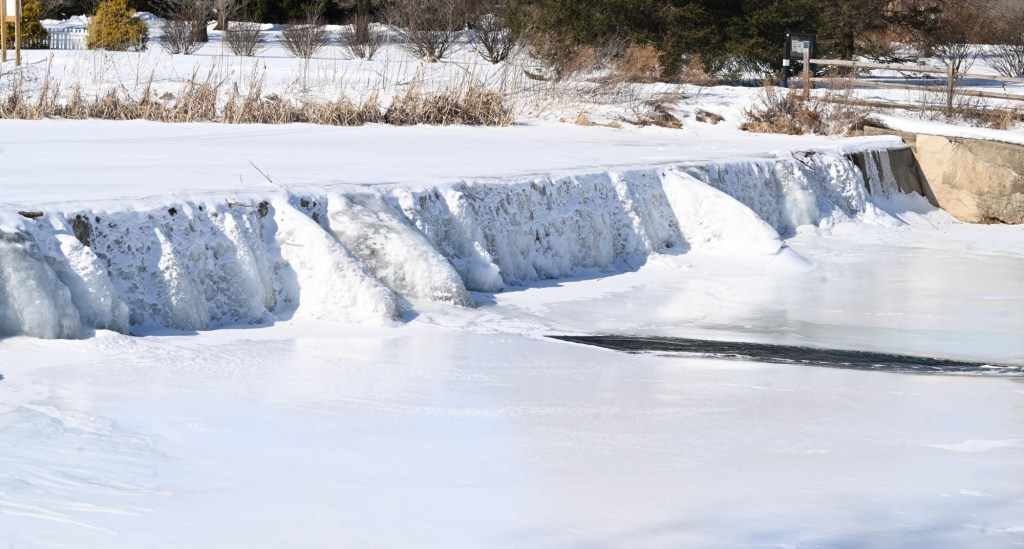
As the latest fresh blanket of snow begins to run into area storm drains, stubborn piles persist from late January’s major storm, signaling the drought watchers’ dilemma: Will a snowy winter be enough to recharge Lehigh Valley’s drought-burdened watershed?
Experts say this winter’s erratic precipitation likely won’t be enough to make up for a dry fall, and caution that snowmelt can take months to recharge the groundwater that will be needed to fuel summer flows in area streams and rivers.
“Snow takes a long time to unlock hydrological benefits,” said Chris Stachelski, the regional observation program leader and climate services program manager for the National Weather Service Eastern Region Headquarters.
While rain can have an almost immediate effect on the water supply in local reservoirs, snowmelt can take weeks to provide a benefit, and a full recharge of groundwater can take months — that’s assuming snow actually has a chance to melt.
This winter’s low temperatures have kept the ground frozen, leaving little chance for snowmelt to sink into the soil and recharge underground aquifers.
In addition, the longer snow sits on the ground, the more is lost due to evaporation nto the air, not the soil.
It’s also worth noting that snow simply doesn’t deliver as much water as rain does.
“A common rule of thumb is 10 inches of snow equals 1 inch of rain, but it can be 15 to 1 or even 20 to 1 in very cold conditions like we’ve seen,” said Taylor Stakes, spokesperson for the Lehigh County Authority, which provides water and wastewater services to 270,000 regional customers.
Although Allentown recorded its snowiest January in 10 years, this winter also featured lots of dry periods between storms.
That erratic precipitation pattern was seen across the mid-Atlantic and Northeast, Stachelski said, noting that areas that have seen blockbuster storms while simultaneously dealing with drought range from Charlotte, North Carolina, to Boston.
Lehigh and Northampton were among the 17 Pennsylvania counties under a Drought Warning as of Tuesday.
Lehigh County’s observation well fell to 80.96 feet below ground Feb. 16, 45 feet lower than the 10-year high of 35.9 feet recorded Jan. 5, 2019. It has since rebounded slightly, to over 77 feet as of Tuesday.
LCA has asked its customers to voluntarily reduce water use by 10% to 15%. If water shortages escalate to a drought emergency, mandatory reductions would go into effect for customers and the authority would review the water use of large commercial and industrial users.
Although the latest round of Lehigh Valley precipitation featured a wet snow that could provide a “positive bump” to the regional water supply, a couple of months of wet weather is needed to truly alleviate the drought, Stachelski said.
The recent increase in temperatures helped saturate the soil, so a lot of that moisture should infiltrate into underground reservoirs, said Melinda Daniels, senior research scientist at the Chester County-based Stroud Water Research Center.
However, Daniels noted that the system that cycles rainfall and snowmelt into groundwater operates with “multiyear buffering,” meaning the system is currently still processing precipitation from the last two years, with last year being a very dry year.
“We really are due for a traditionally wet spring to kind of recharge everything — that would be most beneficial if we could get some slow, steady rain,” Daniels said.
The local freshwater ecosystem isn’t just under burden because of drought, Daniels noted, as a winter dominated by snow and ice means rock salt usage spikes, creating salt-contaminated runoff that is toxic to freshwater flora and fauna.
Lehigh Valley environmental groups have documented the lasting effects of rock salt usage on local streams and drinking water, finding that chloride levels in the Little Lehigh Creek, which supplies drinking water for Allentown, are 2.5 times higher than 2001 levels.
Rock salt’s impact on Lehigh Valley’s water will linger long after winter passes