
Hundreds of small businesses throughout the region should benefit from a $1 million investment to the Northeastern Pennsylvania Alliance through the Historically Disadvantaged Business Assistance Program, state officials said.
In total, Department of Community and Economic Development Secretary Rick Siger announced the Shapiro administration will invest $15 million to support small businesses across Pennsylvania with the creation of 10 microgrant programs that will help small firms with costs to start or expand their businesses.
“This initiative is about making sure Pennsylvania’s small businesses have the resources, partnerships, and support they need to grow and compete,” Siger said. “These microgrants will deliver targeted resources to the businesses that need them most, working hand-in-hand with trusted community partners who understand their unique challenges and opportunities.”
The programs will be administered through a service center, regional economic development organization or institution of higher education, state officials said.
NEPA Alliance will partner with the Northern Tier Regional Planning and Development Commission, Wilkes University Small Business Development Center and the University of Scranton Small Business Development Center to develop and deploy this program throughout Tioga, Bradford, Susquehanna, Lycoming, Sullivan, Wyoming, Lackawanna, Wayne, Pike, Montour, Columbia and Luzerne counties in Northeast Pennsylvania, said Steve Ursich, vice president of business development services for NEPA Alliance.
“Anytime we can bring grant dollars into our region to support small businesses, that’s a win,” Ursich said. “Tying it in with the overall historically disadvantaged programming that we’ll be rolling out shortly gives a good boost to small businesses that have been lacking access to capital and other services necessary for success. This funding is going to help us outreach to the small businesses that just don’t have the time or the capital to get access to a whole range of access to accounting assistance, human resources responsibility training and loan package assistance.”
Ursich praised Gov. Josh Shapiro’s administration for continuing to provide grant funding to NEPA Alliance.
“I think they recognize the value in economic development and the role we play in supporting small businesses through boots on the ground,” he said. “They know small businesses are the backbone of our local economy.”
Lisa Hall Zielinski, director of the University of Scranton Small Business Development Center, noted the funds provide vital support to area firms.
“We are always encouraged to see additional resources being directed to Pennsylvania’s small businesses,” she said. “As program guidelines are finalized, our SBDCs will be prepared to assist entrepreneurs in navigating the application process and strengthening their proposals. Even relatively small amounts of capital can make a real difference for a small business. Investing in things like equipment, inventory or operational improvements can position them for stability and growth. When businesses take time to plan and seek guidance, those dollars can go even further.”
Ursich said NEPA Alliance will spread out the funding to small firms across the region.
“The maximum grant we’re looking to do would be $10,000, with probably a majority less than that,” he said. “We’re really hoping that we’re going to be able to help a couple hundred businesses.”
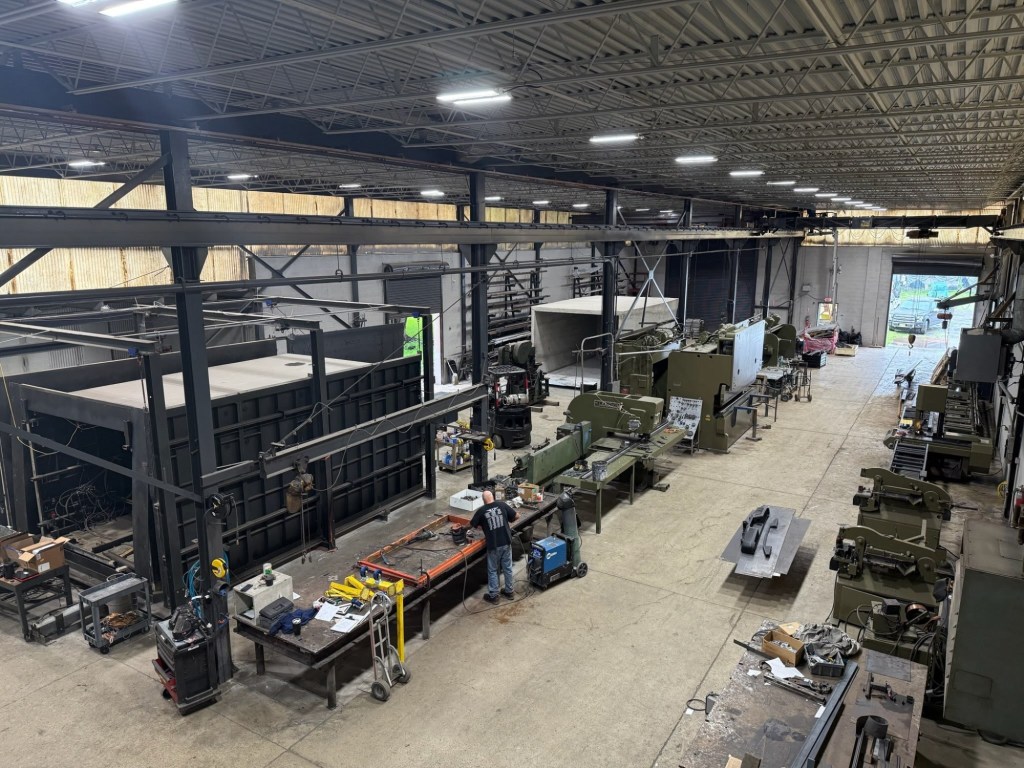
Brock Sambolec, founder of Hanover Twp.-based Brock Metal Fabrication and Brock Construction Group, credits NEPA Alliance for helping move his company forward.
“I’ve been working with them for a little more than five years to help me with procurement and I’ve received many government contracts with their help,” he said. “They’ve also directed me with the financial side as well. I’ve been able to receive startup funds to owner-finance a property that is now closing. They gave me the financing to get in there and renovate the building. I wouldn’t be where I am today without them. They’ve helped me in all different aspects.”
Sambolec added assistance from NEPA Alliance paved the way for his company to expand its production capabilities.
“We went from general construction to metal fabrication to mass manufacturing,” he said. “We’re mass manufacturing parts for all different companies. Over the last three months, we’re making 185,000 parts for a concrete form company.”