
Janet Ney is a longtime member and volunteer for the Lehigh-Pocono Committee of Concern Peace Center — LEPOCO — serving on several committees: Steering, Newsletter, Stop the Wars and Reels and Spiels.
During a recent Steering Committee meeting, a visiting Lehigh University student asked how we got involved in the LEPOCO Peace Center. A roomful of longtime staff and volunteers offered a variety of stories. The stories revealed deep convictions about peace and nonviolence going back to their earliest years — growing up in a family of activists, starting in college with opposition to the Vietnam War, and, in my case, faith-related experiences. One story that resonated with me was that finding LEPOCO meant finding a home, a place where others shared convictions and wanted to act on those convictions.
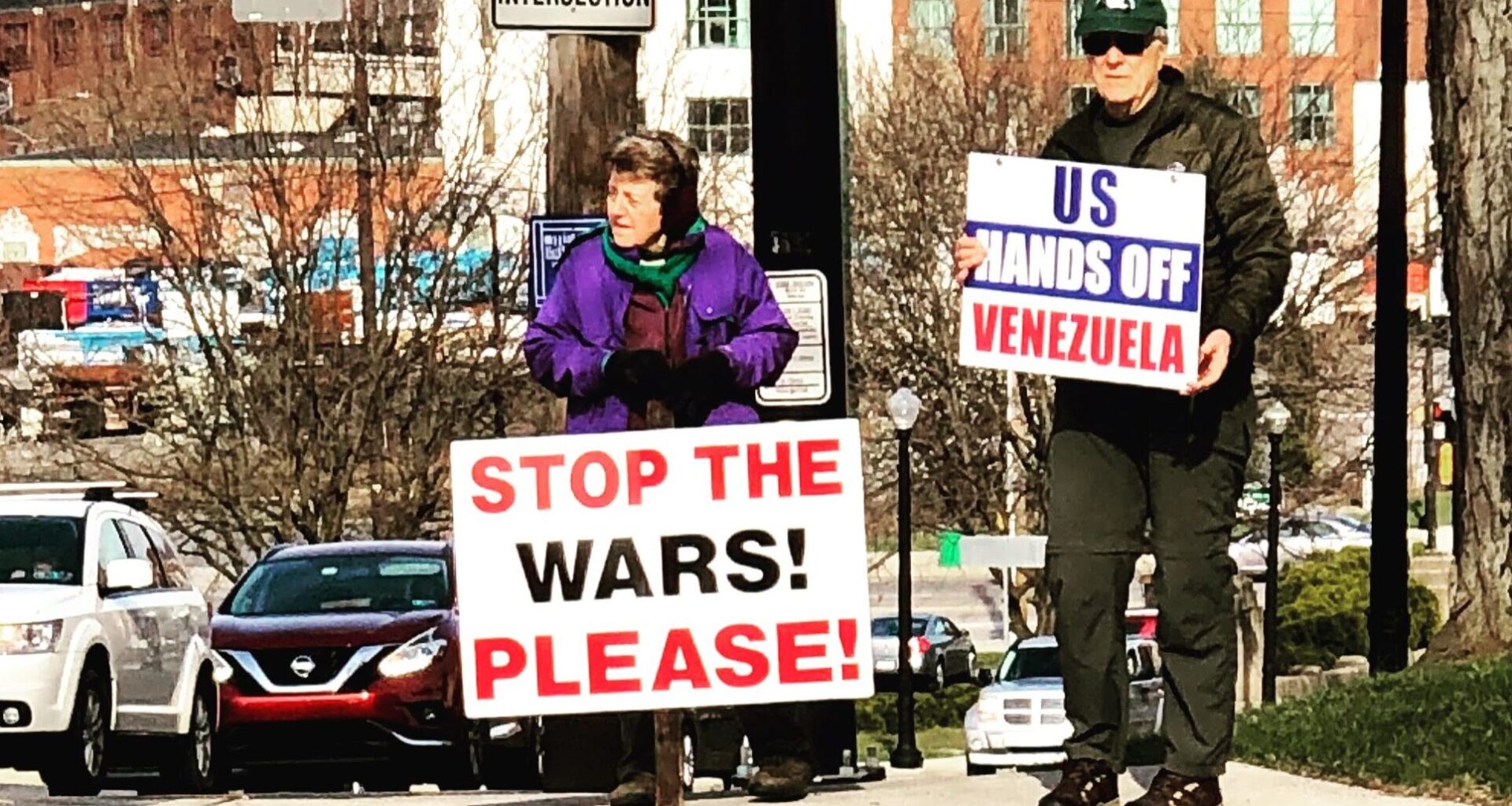
Drawing on a long tradition of speaking out for peace, Lehigh-Pocono Committee of Concern members gather in vigil at the south approach to the Hill-to-Hill bridge in Bethlehem every Thursday afternoon. They’re there to protest war and injustice. They’re there to support nonviolent solutions wherever conflict occurs. From time to time, others in the community have joined the demonstration in solidarity to call for an end to war and violence in Gaza, Ukraine, Venezuela and Sudan, and wherever people are suffering and dying in conflict.
LEPOCO’s roots are deep. In 1965, the Vietnam War was raging. In Southeast Asia, people were dying in conflict, and in the U.S., people were in conflict about the dying. A group of concerned residents of the Lehigh Valley began meeting as the Lehigh Valley Peace Council. These meetings led to the founding in December 1965 of LEPOCO and its first demonstrations in Allentown and Easton.
For 60 years, LEPOCO has been the valley’s peace community by speaking out, raising issues and supporting efforts to end war and to alleviate suffering. A brochure published over the years contains this statement: “LEPOCO members share a vision that we can build a safer and more just world. Gathering strength from our diversity, we work together and as individuals for nonviolent changes, starting in our own community.”
LEPOCO is a community organization, welcoming anyone who shares a belief in nonviolence and peace. A regular gathering on the second Monday of each month, the Action Meeting, is open to everyone to learn about current issues in the local community and around the world. An elected Steering Committee conducts the business of the evening at these meetings. All decisions are reached by consensus.
Like any nonprofit organization, LEPOCO has an annual meeting. This Annual Gathering is a fundraiser that offers attendees a program and a chance to mingle with friends both old and new. Prominent people are invited to speak at the event. This year, the speaker will be Rev. Jon Stratton, the dean of the Cathedral Church of the Nativity in Bethlehem. The Annual Gathering will be on April 19 at the Steelworkers Union Hall.
All LEPOCO members are encouraged to raise issues of concern and suggest actions that LEPOCO might want to take. The topics addressed today and over the years are varied, reflecting the diversity of the membership. Committees of volunteers are formed to explore issues and plan events.
The Stop the Wars Committee plans actions such as an annual Tax Day distribution of information about military spending. Every year, the group commemorates the Rev. Dr. Martin Luther King Jr. with readings from his speeches, sermons and music. For many years, a public reading of the full text of his Riverside Church sermon in opposition to the Vietnam War prompted thoughtful discussion and reflection. In January, the event presented readings on King’s love for humanity.
Most recently, LEPOCO showed “The Penguin Lessons,” which tells the story of an English teacher who rescued a penguin from an oil slick in politically volatile Argentina in 1976.
Other activities include a book group that meets monthly and the LEPOCO Peace Singers, who welcome new members who love to sing. Issues of concern or interest include nuclear disarmament, world hunger, economic conversion for peace, Central and South America and ending the death penalty.