
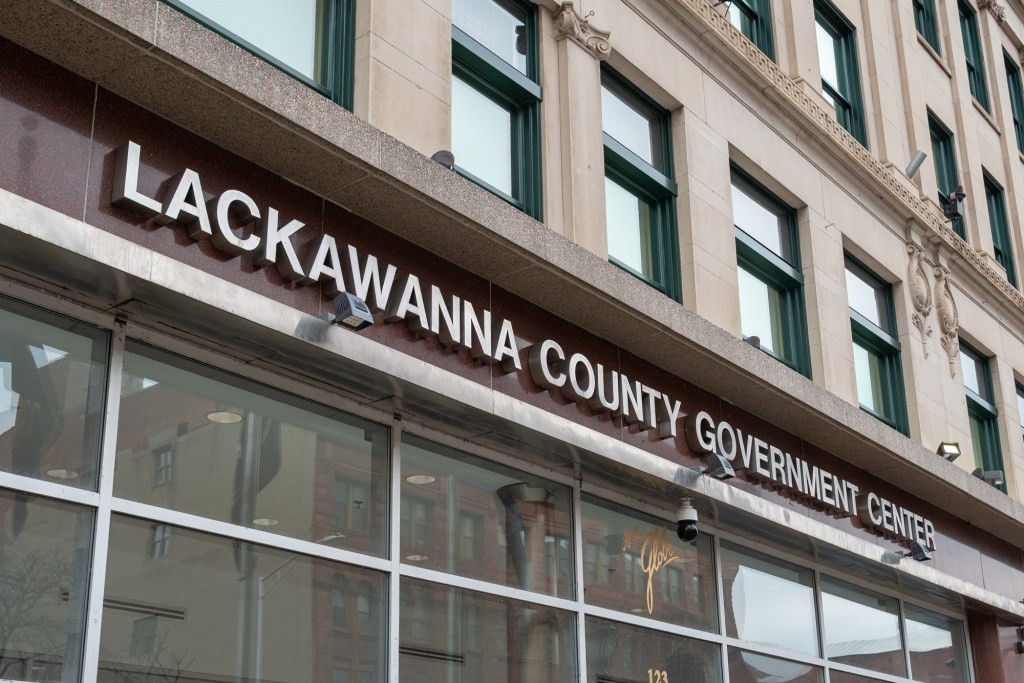
Lackawanna County recently announced the completion of its “digital budget book” for 2026, an online tool designed to make the county’s annual operating budget more accessible, transparent and digestible to residents and taxpayers.
The county, which unveiled its first digital budget book last year, approved a contract in 2024 with vendor ClearGov for the digital budget book software. That renewable pact costs $14,000 annually and runs through 2027.
“The book, compiled by the Revenue & Finance Department, the Communications Office and contracted vendor ClearGov.com, with input from every county department head and elected official, exponentially increases the amount of information available to the public,” county officials noted in a recent news release. “The digital format converts complex, static documents into user-friendly, interactive visualizations to modernize county government and enhance transparency.”
It also includes “detailed descriptions of the budget process, advanced graphics on every department’s revenue and expenditures in the 2026 budget, and narratives of how the county uses public money to deliver crucial public services,” the release notes. “Each department head details accomplishments from the previous year and plans and goals for 2026.”
In that and other respects, the digital budget book is a user-friendly alternative to the county’s traditional budget, a 40-plus-page breakdown of revenues and expenditures by line item. That version, like its digital counterpart, is available online at lackawannacounty.org.
Commissioners Thom Welby, Bill Gaughan and Chris Chermak unanimously approved the county’s tax-hike-free 2026 budget in December after Gaughan and Chermak introduced a draft version in mid-October. Welby took office in November after winning a special election to fill the remainder of former Commissioner Matt McGloin’s unexpired term running into early January 2028.
The final, almost $181 million spending plan carried a projected general fund surplus of $119,354. And while the budget did not increase property taxes, individual tax bills may have fluctuated this year compared to 2025 as a result of the county’s first comprehensive property reassessment since 1968.
Because reassessment must be revenue neutral for the county and other taxing bodies, tax rates fell precipitously this year when new, higher assessments took effect to ensure those entities collect essentially the same amount of property tax revenue after reassessment as they did before. The county’s tax rate, for example, dropped from 89.98 mills to just 5.79 mills this year, a mill being a $1 tax on every $1,000 of assessed value.
Taxpayers who pay their county property taxes in full by April 15 receive a 2% discount off the face value of their bills. They also have the option of paying the face value in four equal installments due on March 31, June 30, Aug. 31 and Oct. 30, respectively.