
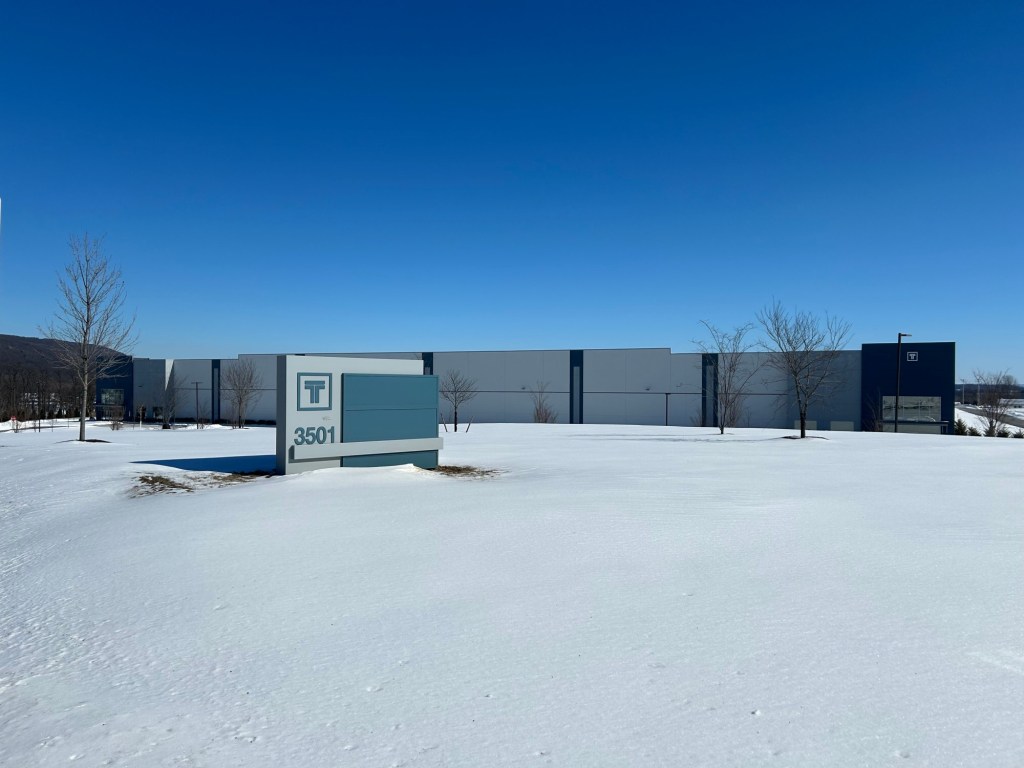
A recently released Department of Homeland Security document has shed more light on plans to convert warehouses into detention and processing facilities like the one planned in Upper Bern Township.
The department purchased a 62-acre property at 3501 Mountain Road containing a 527,000-square-foot warehouse in late January for $87.4 million.
The DHS document was posted online by New Hampshire Gov. Kelly Ayotte following her request for more information regarding the proposed purchase of a similar warehouse in that state.
It shows that the Berks County facility is just one of 16 proposed processing centers, each with an expected population of 1,000 to 1,500 detainees whose stays would average three to seven days. Another eight large-scale detention centers — like one planned for Tremont Township in Schuylkill County — would be capable of housing 7,000 to 10,000 detainees for periods averaging less than 60 days.
Plans call for all of the facilities to be operational by December as U.S. Immigration and Customs Enforcement implement a new $38 billion detention model financed by President Donald Trump’s One Big Beautiful Bill.
“This new model will allow ICE to create an efficient detention network by reducing the total number of contracted detention facilities in use while increasing total bed capacity, enhancing custody management and streamlining removal operations,” the document reads.
The document states that the model will incorporate all existing detention standards and will promote the safety, dignity and respect of undocumented immigrants.
Those key responsibilities will include providing basic needs such as food, clothing and recreation; ensuring medical and dental treatment, mental health care and emergency services; facilitating legal access through visitation spaces and law libraries; providing religious spaces and supporting scheduled phone calls and mail services.
The document states that selection of each facility included an engineering review of the existing utilities and facility infrastructure.
“Once these capacities were identified, an engineered solution was developed, using standard code compliant methodologies within the design of the facility,” the document states. “The final selection of a facility was predicated on a ‘no detrimental effect’ determination.”
Following the release of the document, the Reading Eagle reached out to DHS officials seeking information about the impact the Upper Bern facility would have on the local economy and infrastructure.
It received the following statement from Department of Homeland Security Assistant Secretary for Public Affairs Tricia McLaughlin:
“These will be very well-structured detention facilities meeting our regular detention standards. Sites will undergo community impact studies and a rigorous due diligence process to make sure there is no hardship on local utilities or infrastructure prior to purchase.
“The Hamburg facility and its construction are expected to bring 1,307 jobs to the area and would contribute $146.7 million to GDP. It’s also projected to bring in more than $33.3 million in tax revenue.”
ICE did not respond to subsequent requests for access to those studies or to questions seeking more detail about how the economic projections were calculated.
It turns out local officials haven’t been given access to those studies either.
What county officials know
Berks County Commissioner Christian Leinbach said last week that his primary concerns about the ICE processing center in Upper Bern fall into two categories: the financial aspect and the humanitarian aspect.
He said that until the federal government fully addresses those concerns, he will not lend his support to the center. Leinbach said he has relayed that information to DHS officials.
He said the center’s impact on local government revenues could be devastating because the federal government is exempt from paying property taxes.
Based on the current assessment of the property, the loss in local tax dollars would be about $200,000 for the county, $31,000 for the township and $597,000 for the Hamburg School District.
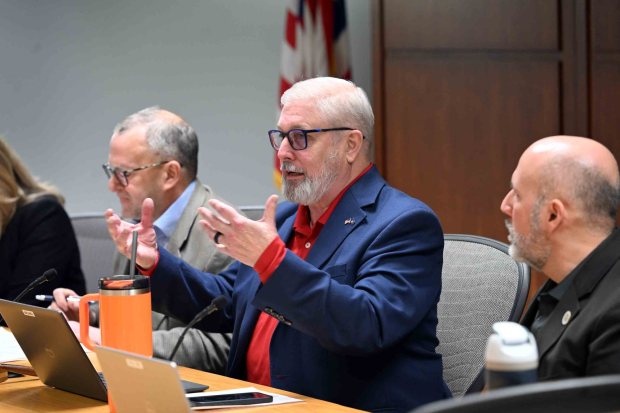 Berks County Commission Chairman Christian Leinbach bemoans the lack of transparency by the federal government in the recent purchase of an Upper Bern Township warehouse by the Department of Homeland Security during the weekly commissioners’ meeting on Feb. 5 at the Berks County Services Center. (BILL UHRICH/READING EAGLE)
Leinbach said U.S. Rep. Dan Meuser shared a document with him proving a basic economic analysis created by the federal government that included the same figures sent to the Reading Eagle. He said he believes those numbers are not based on facts.
For instance, he pointed out that the projection that the center will bring in more than $30 million in tax revenue is largely based on income and sales taxes. Counties, municipalities and school districts rely primarily on property taxes.
“That economic data has nothing to do with the financial impact on the county, municipality or school district,” Leinbach said. “It will not fix what it takes.”
The Reading Eagle reached out to Meuser’s office but did not receive a response.
Leinbach said that when it comes to the humanitarian issues he wants to make sure the facility would operate in a respectful manner, providing things like three meals a day, clean accommodations and access to health care.
He has suggested to DHS that local officials be given regular access to the facility to ensure people housed there are being treated in a manner similar to what they would experience in a correctional facility.
Leinbach said he has concerns about the impact the facility will have on the local infrastructure like the township sewer system, the extraction of water from wells, increased traffic and the strain on emergency services.
He said has not seen the community impact study referenced by McLaughlin that is said to show there would be no hardship on local utilities or infrastructure.
What township officials know
Upper Bern Township Solicitor Andrew Hoffman said last week that the supervisors are aware some community impact studies may have been performed by DHS, but municipal leaders have not been provided copies.
Township officials had previously issued a statement saying that since they learned of the purchase of the warehouse they have focused solely on the health, safety and welfare impact of the facility on residents and their ability to address those concerns.
The statement said the supervisors recognize they may not be able to regulate what happens at the site through its zoning or subdivision and land development ordinances.
“Sovereign immunity and preemption apply where the federal government is involved,” it read.
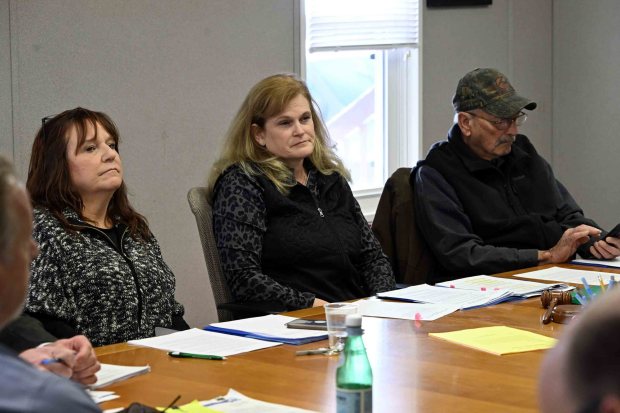 Upper Bern Township supervisors, from left, Lisabeth Lynn, chair Glorie Grim and Arthur Lambert listen to concerns about the ICE warehouse plans during the supervisors meeting on Feb. 12. (BILL UHRICH/READING EAGLE)
Still, the statement said, township officials have concerns they hope the federal government addresses.
“The federal government may more than double the township’s population of 1,600 with those brought to that facility,” it read. “The township, therefore, is exploring the extent to which township, county, state and federal officials can address with the government the impacts on essential services to the township’s residents.”
The statement said those concerns include the adverse impact the facility would have on the township’s sewer system, given the sudden dramatic growth in population.
“The additional load on the sanitary sewer system, estimated to be far above the capacity purchased by the developer of the warehouse, could overwhelm the township’s wastewater treatment plant,” it read.
The possible extraction of potable water from wells for the 1,500 or more people who will be at the facility also deserves attention, the statement read, pointing out that the township has no public water system.
The statement continued by saying the supervisors also worry about the impact of the facility on local volunteer fire departments and EMS companies, who may find themselves overwhelmed by the population influx.