
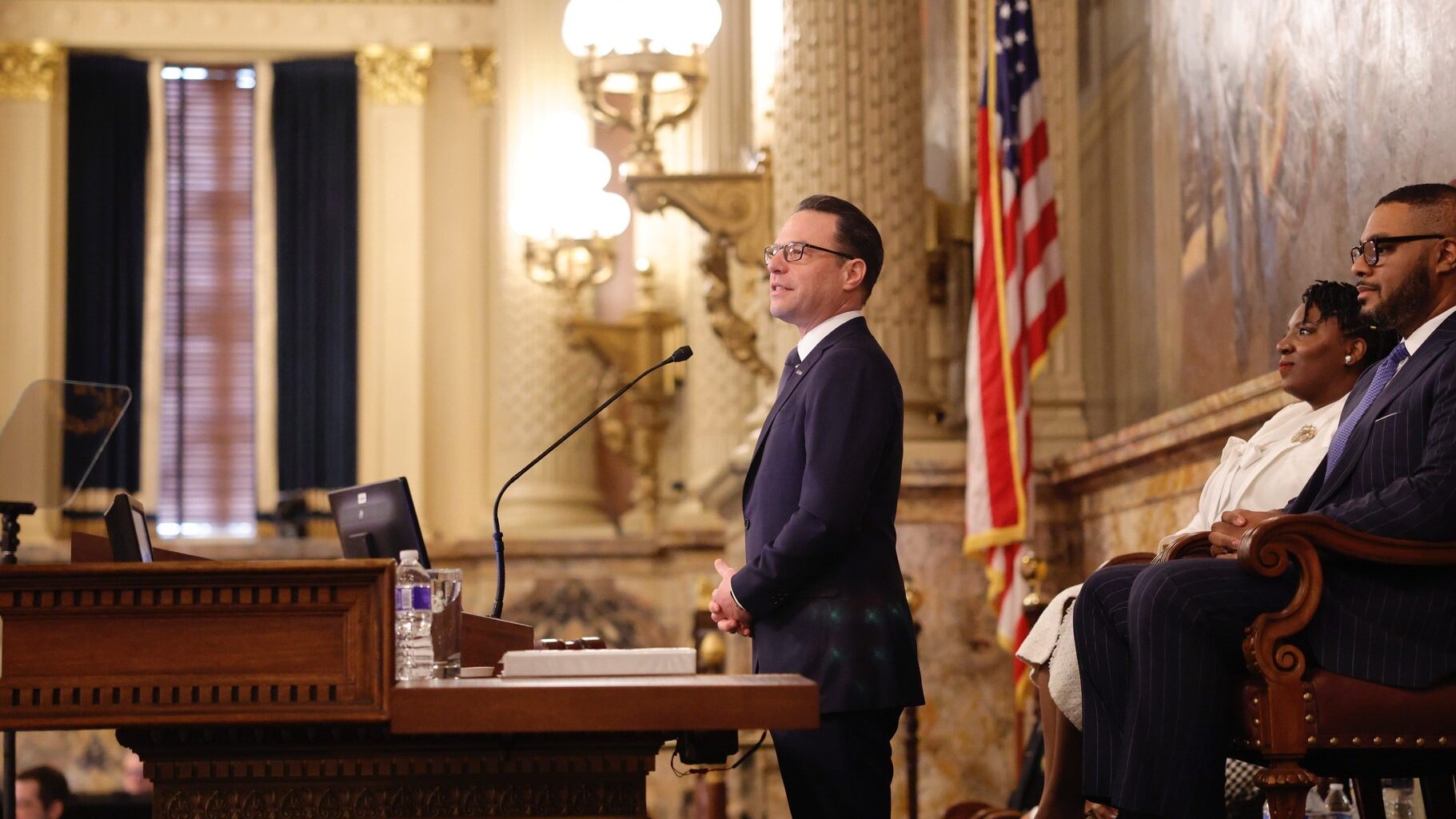
Earlier this month, Pennsylvania Gov. Josh Shapiro included cannabis reform and legalization in his 2026-27 state budget proposal as a means to gain state revenue while avoiding a tax hike.
While legalization efforts are supported by state and local leaders from both sides of the political aisle, Pittsburgh cannabis advocates are concerned that little progress is actually being made.
A “Will of Council” introduced at Pittsburgh City Council’s regular meeting on Tuesday, Feb. 17, urged Shapiro and Pennsylvania legislators to pass “comprehensive adult-use cannabis legalization during the 2026 legislative session.”
Shapiro’s budget will now be scrutinized by lawmakers in a series of committee budget hearings until its June 30 deadline — assuming the budget doesn’t come to a four-month impasse as it did last year. The 2026 legislative session is set to end on Nov. 30.
The Pittsburgh City Council action was introduced by Councilmember Barb Warwick and sponsored by all other council members.
“Not only are communities being harmed by unfair and confusing laws around medical vs. recreational use, we are actively leaving money on the table by not legalizing and taxing a product residents can simply drive to a neighboring state to purchase,” Warwick wrote in a message to NEXTpittsburgh.
“What this budget does do is finally regulate and tax skill games and pass comprehensive cannabis reform,” Shapiro said in his budget address. “District attorneys from across the commonwealth are calling on us to regulate skill games and finally provide law enforcement with clear guidance. We’re putting our communities at risk and losing out on billions of dollars in revenue by doing nothing on both.”
NOW, THEREFORE, BE IT RESOLVED, that the Council of the City of
Pittsburgh hereby calls on Governor Josh Shapiro and the Pennsylvania General
Assembly to act with urgency and pass comprehensive adult-use cannabis
legalization during the 2026 legislative session; and,
BE IT FURTHER RESOLVED, that the City Council urges state leaders to
advance legislation that decriminalizes cannabis, protects patients, expands
access for veterans, and maximizes economic opportunity for Pennsylvania
workers and entrepreneurs; and,
BE IT FURTHER RESOLVED, that the Council affirms its support for
responsible, regulated adult-use cannabis legalization as a necessary step toward
justice, public health, and economic growth; and,
BE IT FURTHER RESOLVED, that the Clerk of Council is directed to
transmit copies of this resolution to Governor Josh Shapiro, the leadership of
the Pennsylvania House of Representatives and Senate, and the Allegheny
County legislative delegation.
Will of Council, 2026-0164. Sponsored by Council member Barb Warwick and all members.
Shapiro estimates that the tax revenue generated from cannabis sales could bring in as much as $729.4 million, according to reporting by SpotlightPA.
Both the house and senate have been presented bills to legalize cannabis, but they either have not had a committee hearing or have been voted down.
Local advocates say talks about adult-use cannabis in Pittsburgh and Pennsylvania have a “weird vibe right now.”
“The discussion that we should be having is one of social justice and social equity,” says Patrick Nightingale, a local criminal defense attorney and the executive director of the Pittsburgh chapter of the National Organization for the Reform of Marijuana Laws (NORML).
“Legalization is the right thing to do; it should have never been illegal in the first place; [it brings] disproportionate harm to Black and Brown Pennsylvanians,” he continues. “But if the only thing that gets people talking about this is potential tax revenue generation, we’re going to have to have that conversation as well.”
Patrick Nightingale has been leading the Pittsburgh chapter of NORML since 2009. Through the organization, he met his wife, Theresa; the couple married in 2014. Since then, the duo have seen the passing of Pennsylvania’s medical marijuana act and decriminalization ordinances in Pittsburgh and Philadelphia, but their advocacy work continues.
Theresa Nightingale serves as the vice chair of Ward 15 — Warwick’s ward — and contributed to Warwick’s “Will of Council.”
“Legalization — just like what it was when we advocated for medical marijuana — reduces police interactions and also makes for safer products that are not diverted, and that’s what we want,” Theresa Nightingale says. “I think a lot of people are confused because they think Republicans are the only ones holding this up, and that’s not necessarily the case.”
She pointed to House Bill 1200, introduced by Rep. Dan Frankel, D-23, of Pittsburgh, which would have legalized cannabis and established exemptions “from criminal or civil penalties” related to it, but also required the establishment of state-run stores for its sale — similar to wine and liquor.
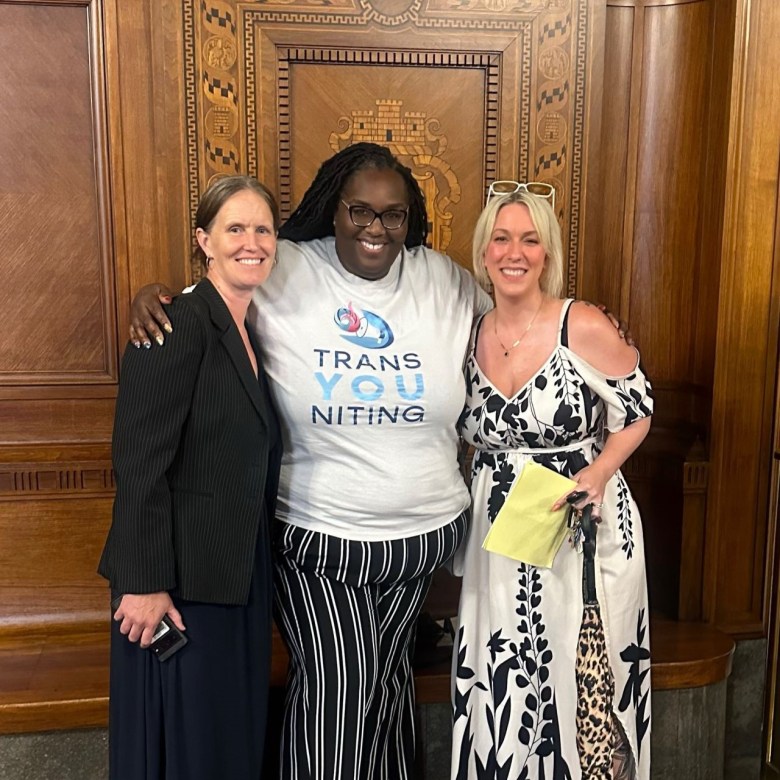 From left: Barb Warwick, TransYOUniting founder Dena Stanley and Theresa Nightingale pose in the City Council chambers after a meeting on July 8, 2025. Photo courtesy of Theresa Nightingale.
The bill was voted down by the Pennsylvania Senate Law and Justice Committee less than a week after its introduction, but Committee Chair Dan Laughlin — a Republican senator from Erie County — says that was because he opposed state stores, rather than cannabis legalization.
State stores, Theresa adds, would eliminate the jobs created by medical marijuana dispensaries, which total about 25,000 across the state, according to a press release from the Pennsylvania Cannabis Coalition.
But to Patrick Nightingale, conversations on legal cannabis’ potential economic impact is a means to a different end: reducing cannabis-related arrests. He says that throughout his career as a defense attorney, he’s seen prosecutors and police officers treat cannabis offenses just as severely as those for heroin or cocaine.
According to Allegheny County crime statistics from the years 2005 to 2014, 30% to nearly 50% of all drug violations in the county involved cannabis.
“For years we’ve said, ‘Stop arresting cannabis consumers,’” he says. “ … Those arguments resonate with progressive Democrats, those arguments also resonate with Republicans who do not want to see the criminal justice system overburdened with unnecessary arrests, but that argument simply isn’t gaining enough traction to get this moving forward.
“We’ve got to go with the jobs angle; we’ve got to go with the revenue creation angle, whatever gets us across the goal line.”