
City Council’s approval of a two-unit conversion sparked a wider discussion over how the city should balance preserving single-family homes with growing housing demand, future development and a possible shift toward public transportation.
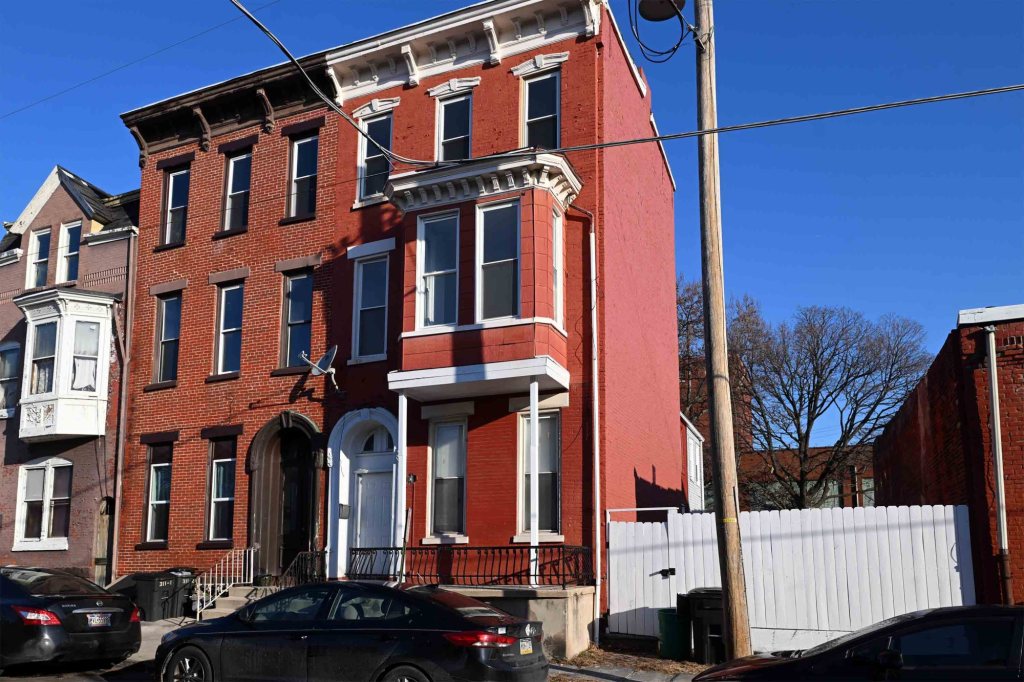
Council at its regular meeting last week unanimously approved a conditional use application to convert 313 Elm St. from a single-family home into a two-unit property.
The approval was granted with conditions, including that the property remain owner-occupied and comply with prior zoning decisions and all applicable codes.
Council also granted a minor variance because one of the units measures 693 square feet, which is below the 700-square-foot minimum.
Though voting yes, Councilman Raymond Baker, expressed skepticism about dividing single-family dwellings into multiple units.
“I am not a fan of the splitting up of row homes in the city,” he said, noting the practice removes housing from the ownership market.
Such properties could otherwise be purchased by a family for use as a private home, Baker said.
Still, Baker said the applicant made a strong case, including the provision of off-street parking and promise of owner-occupancy.
“He brought forward a stellar, pristine case,” Baker said. “That is why I reluctantly afford the approval of this.”
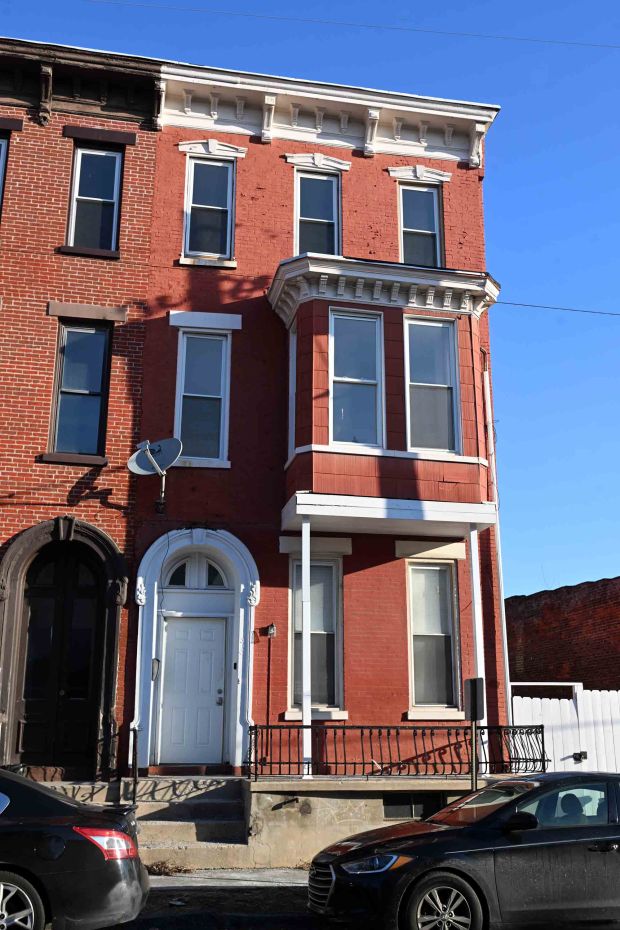 City Council’s approval of converting 313 Elm St. into a two-unity property leads to debate over housing shortages, parking concerns and whether to incentivize reversing apartment conversions. (BILL UHRICH/READING EAGLE)
Councilman O. Christopher Miller echoed Baker, adding that each property must be evaluated on its own merits.
“Not all buildings are the same,” Miller said. “Just because we’re approving one building for two units, it does not necessarily mean that it could happen with other properties throughout the city.”
Miller pointed to factors such as parking, square footage, owner-occupancy and the density of multiunits on a block as critical considerations.
The approval led to a broader discussion, including whether the city should create incentives to reverse some prior apartment conversions.
“I would like everyone to consider weighing in on some kind of ordinance that would call for advantages to deconversion,” Council President Donna Reed said, suggesting possible incentives to convert multiunit buildings back into single-family homes.
Councilman Jaime Baez Jr. placed the discussion in the context of housing demand.
“The fact of the matter is that there is a housing demand and that we are 5,000 units short,” Baez said.
He predicted more conversion requests are likely.
“I think we’re going to continue to see more conversions of these types,” Baez said.
Baez recognized that the lack of parking in the city is a problem, but said he expects residents to rely more on public transportation in the future, which would reduce parking concerns.
“I think we’re going to continue to see the trends, especially with the train coming back to Reading, right?” he said. “We’re going to continue to see individuals leaning on public transportation, not just on the bus system and Uber and taxis, but then on that train system, and so I don’t think that we’re going to lean into needing more spaces for cars. I think we are truly going to lean into more public transportation.”
With several downtown office buildings, such as 405 and 601 Penn Street, being converted for mixed uses, including housing, the city must start thinking creatively, he said.
“There’s only so much parking in the city, and there’s only so many garages,” Baez said. “So we have to start thinking more progressive, futuristic, into public transportation and how we tackle these concerns.”