
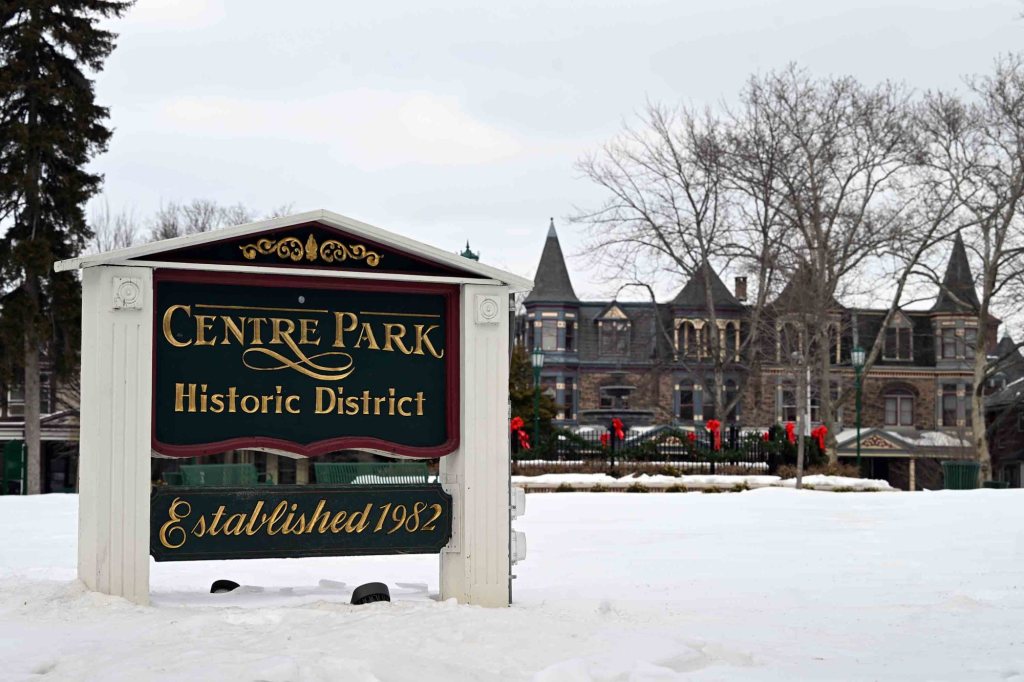
Reading administrators say they are weighing possible changes to the city’s historic preservation ordinance that could simplify enforcement, strengthen efforts to combat blight and better support redevelopment citywide.
Recent discussions on the subject were prompted by the sudden collapse of the Historical Architectural Review Board.
City Council voted Wednesday night to accept the resignations of Suzanne Cody, Michael McDevitt and Richard Polityka from HARB. The latest step down follows the Feb. 9 resignations of Erin Weller, Nigel Walker and Aaron Booth.
The departures leave the nine-member board with no remaining members.
The board is responsible for reviewing exterior changes in the city’s five historic districts: Centre Park, Callowhill, Prince, Penn’s Common and College Heights.
“This is troubling, right?” Managing Director Jack Gombach told council in earlier in February. “This is a function of our government that just sort of stopped working for various reasons.”
Community Development Director David Barr said resigning members cited a lack of staff support, particularly around keeping meeting minutes and sending out written resolutions notifying applicants of decisions.
Former HARB Chair Nigel Walker declined to comment.
The ordinance requires HARB to notify the applicant of its decision within 30 days, a task that has been delegated to staff.
It also requires records of HARB actions and decisions be kept, but the obligation to make meeting minutes available for public inspection comes primarily from the state Sunshine Act.
Barr cited staffing challenges within the preservation office, noting that the number of historic districts has expanded from one in 1978 to five today, covering a significant portion of the city. Council approved a second full-time preservation position last year, though that employee is still in training.
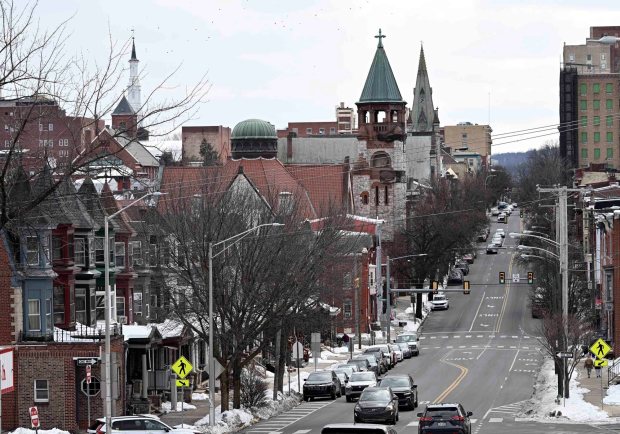 Possible changes to Reading’s historic preservation ordinance might include shifting preservation enforcement into the zoning system or making it part of the city Redevelopment Authority. (BILL UHRICH/READING EAGLE)
During Wednesday’s committee of the whole meeting, council members discussed whether to conduct exit interviews with departing board members and how to proceed given the unprecedented loss of an entire panel.
Councilman O. Christopher Miller said a full board stepping down is not comparable with a single resignation and likely requires a broader conversation.
City Solicitor Michael Gombar advised that while appointments and resignations must be handled in public session, council’s nominations and appointments committee could explore exit interviews without violating the state Sunshine Act, since it consists of only three council members.
Barr said possible changes to the preservation system could include shifting enforcement into the zoning structure or making it part of the city Redevelopment Authority.
“We’re proposing to look at a different way to organize the enforcement,” he said, emphasizing the city is not looking to eliminate its historic protections but to evaluate how they can function more effectively.
The resignations prompt broader questions about whether the current structure is sustainable and whether preservation review should be more closely aligned with the city’s larger strategy to combat blight and encourage redevelopment, Barr said.
“Is our community able to do it economically? Is it putting a damper on development? I think those are all fair things to ask,” he said.
City Solicitor Michael Gombar noted that any major changes would require legislative action by council.
Council President Donna Reed stressed that historic protections remain important to homeowners who invested in the districts with the expectation that neighborhood character would be preserved.
“I’m sure we will have many discussions before any action is taken,” she said.