
There are 27 counties in Pennsylvania that have not held a countywide property reassessment since 1999 or earlier. They cover Philadelphia’s collar, some urban areas and vastly rural spaces all around the state. Another 26 counties were reassessed between 2000 and 2019.
Since 2020, 14 counties have either completed or begun a reassessment.
More: Many Pa. counties haven’t updated property assessments in decades
Pennsylvania does not have a law requiring counties to conduct reassessments routinely, so in most cases county commissioners are tasked with deciding whether to conduct one.
The topic, largely outside the realm of high-profile issues like 911 funding and supporting mental health services, was elevated this year as one of the County Commissioners Association of Pennsylvania’s three priorities.
So what is a countywide property reassessment and why are counties content to go decades without conducting even one?
Here are some basic myths and realities about reassessments in Pennsylvania.
Myth: Countywide property reassessments are done for local governments to get more tax revenue
Fact: State law mandates countywide property reassessments must be revenue-neutral. This means the final property assessment figures cannot earn more tax revenue for the governments than the previously assessed figures did.
Myth: Countywide property reassessments increase property taxes across the board
Fact: A reassessment conducted properly conforms to what is basically the law of thirds. This means that a third of the county’s properties’ assessed values go up, a third go down and a third stay about the same. This was measurably true in Perry and Cumberland counties, according to Randy Waggoner, chief assessor for Perry County, who also worked for Cumberland.
“If your taxes go up, the reason is you were under-assessed before,” said Josh Zeyn, chief assessor for Tioga County.
Myth: A county board of commissioners has sole discretion on whether a county will conduct a reassessment
Fact: Yes and no. While a board of commissioners commonly decides to have a reassessment ― or not ― some counties have been ordered by a court to conduct one every so many years.
In Lancaster County, a 1990s case triggered the county to conduct one every eight years. Right on time, Lancaster’s board of commissioners in 2026 are overseeing the county’s first since 2018.
The lawsuits often boil down to a citizen or group suing a county over uniformity, which is protected by the Pennsylvania Constitution.
A property owner should not have to pay to challenge a county on uniformity, Zeyn said. “It shouldn’t be their burden to get a county to do a job they should already be doing.”
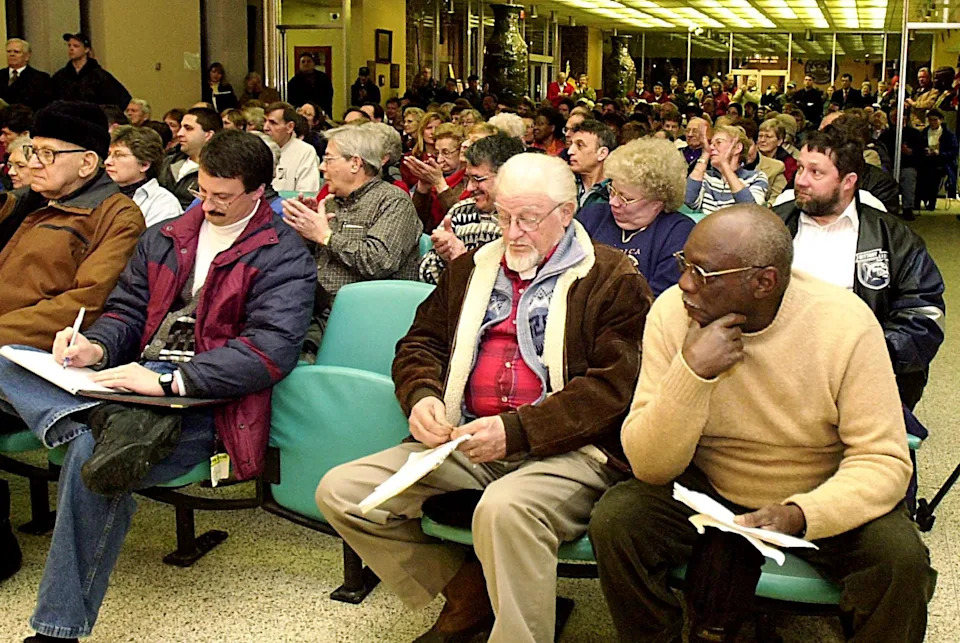
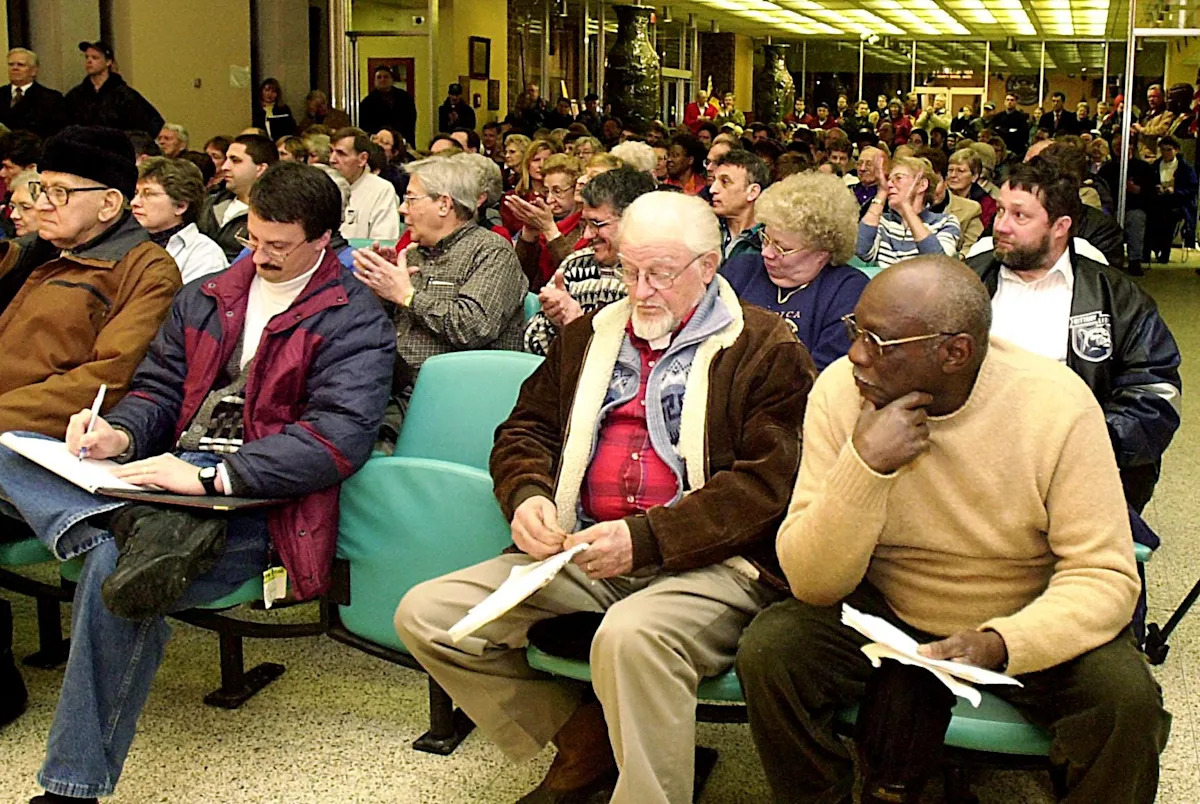
When Erie City Council held a public hearing Feb. 25, 2003, on a countywide reassessment and the ensuing increase in property taxes that had gone into effect Jan. 1, hundreds of city residents filled council chambers to listen and 47 spoke for a combined 2 hours.
Myth: Reassessments let governments increase their millage rates as high as they want
Fact: Pennsylvania has a law governing this issue and it protects taxpayers specifically after a countywide reassessment. So a government can generate the same amount of tax dollars after a reassessment, the millage rate fluctuates to achieve this balance.
That is why, Waggoner explained, even though a municipality’s taxable assessment may have doubled, their millage rate must be reduced proportionately. After the millage rate is calculated to be revenue-neutral for the first year, a government can only increase it by not more than 10%.
More: York County hasn’t had a countywide reassessment since 2006. Is it time for a new one?
Myth: Countywide property reassessments could disrupt the real estate market
Fact: A healthy real estate market relies on predictability. Keeping assessed values as current as possible can help achieve this. This is why the Pennsylvania Association of Realtors and other industry groups support regular reassessments.
When the values become outdated, typically after around eight years, property owners begin disproportionately paying property taxes, putting unfair burdens on some property owners while others get discounts.
It creates a scenario where people in newer homes assessed when they were built are essentially subsidizing people who have been in their homes for decades, according to Joel Berner, senior economist for Realtor.com.
Mark Walters is the USA TODAY Network Pennsylvania statehouse reporter. Reach him at mwalters@usatodayco.com.
This article originally appeared on Erie Times-News: What to know about property reassessment myths, facts in Pennsylvania