
When Rah Crawford first heard the story that became his short documentary film, The Art of Brotherly Love, he could barely process it. It seemed so improbable, so extraordinary that he thought it couldn’t be true.
In the early 1800s, two slave ships, the Phoebe and the Prudent, carrying kidnapped African families who had been deliberately separated by gender and age, were captured at sea by the USS Ganges. Instead of continuing the rupture of enslavement, those ships were brought to Philadelphia. And the families were reunited.
Reunited.
“It blew my mind,” Crawford told me. “This just doesn’t happen. This is fairy-book romance type of stuff.”
A contemporary artist and filmmaker based in Philadelphia, Crawford first heard of the Ganges story indirectly. In 2009, he was commissioned to create storyboards for the video installation at the President’s House site at 6th and Market streets — Philadelphia’s now-famous memorial to the nine enslaved Africans held by George Washington. Working closely with Louis Massiah of Scribe Video, Crawford translated scripts into visual sequences: the kitchen, the living quarters, Washington’s wife knitting at the table, enslaved figures in intimate and domestic scenes.
“I wasn’t a history buff,” Crawford says. “I’m an artist. Storyboards were just part of my service menu.” But immersion changed him. As he researched garments, architecture, and scenes of 18th-century life, “my mind started to open up to this history.”
While studying the President’s House narrative, Crawford encountered references to another Philadelphia moment — the Ganges Incident. In an era defined by commodification, Black family separation, and cruelty, the reunification felt almost supernatural to Crawford.
“The first thing that popped into my mind was divine intervention,” he says. “No one can take credit for this.”
For Crawford, the story transcended archival curiosity. It became something mythic. Something epic. “These are the ingredients for the ultimate romance story,” he says.
Life emulates fiction
Over 15 years, two imagined figures emerged in Crawford’s creative consciousness — Dondai and Ayeelah, lovers separated by violence but bound by destiny. He eventually wrote a historical fiction screenplay titled Gangee: A Love Story. The film has not yet been made, but you can read a preview of the screenplay here. Its epigraph reads: “In a war-torn land of fear, hatred, and deceit, a young couple’s unbreakable love overcomes the greatest of obstacles.”
“We don’t have detailed records about what happened to the Ganges/Gangee Africans before capture,” Crawford notes. “So I wrote what I call a heroic version — almost a Romeo and Juliet of the Atlantic world.”
But the self-published screenplay did not remain fiction alone. As readers encountered the story on the documentary’s website, something unexpected happened. Descendants of the Ganges Africans surfaced. A “Project Ganges” team was formed by Crawford and his team. Historians entered the conversation. Chief among them is amateur historian Michael Kearney, whose research platform based on documents from the Historical Society of Pennsylvania has become a central archive for the descendants and the scholarship.
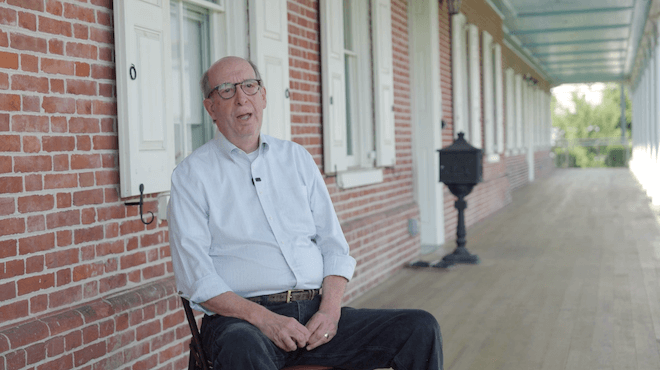 Amateur historian Michael Kearney.
“I was nervous meeting historians,” Crawford laughs. “Who’s this guy writing historical fiction?” He was equally anxious meeting living descendants. “These characters were inspired by something ancestral — ideas planted in my head. And now I’m meeting their families.”
What happened next startled him.
“The spirit in them is the same spirit in my main characters,” Crawford says. “There’s a truth that runs through it — right into history.”
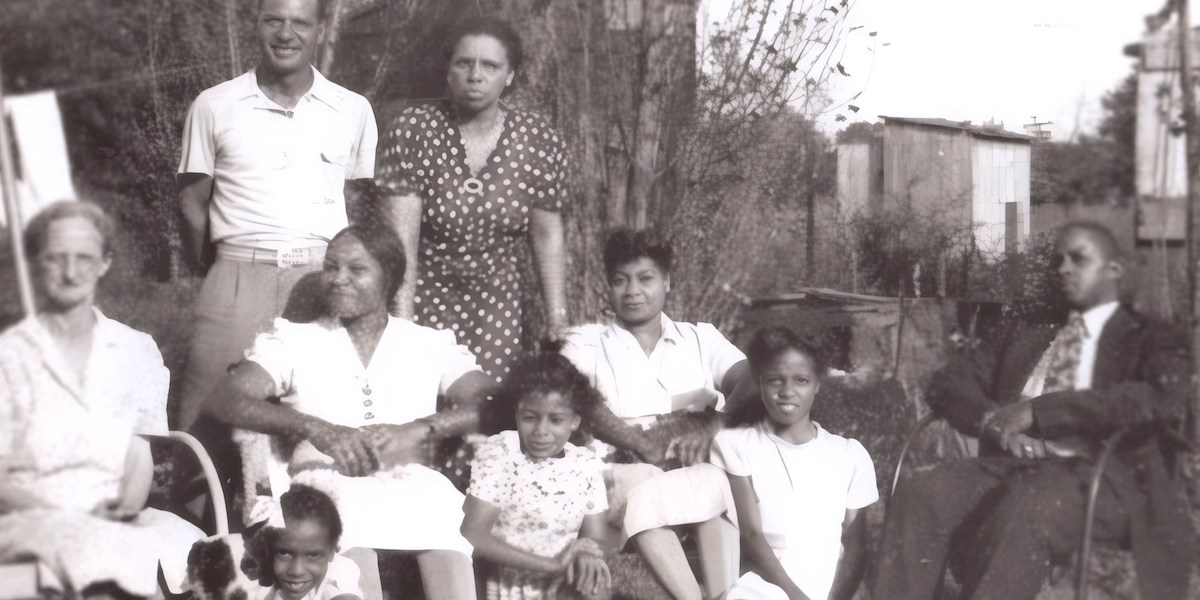
Some Gange descendants remain in Philadelphia and surrounding areas. Others gather annually in family reunion traditions dating back to the 1860s. One family has sustained structured reunions for over a century and a half, complete with elected reunion officers and meticulously preserved photographs. In one unforgettable moment during post-production of the documentary, a descendant insisted that her grandmother — then in her late 80s — be included.
“We were wrapped,” Crawford recalls. “Three days from submission to a film festival in Brooklyn. But she was firm. She was right. We had to film her grandmother.”
The documentary became more than a film. It became a gathering.
The Art of Brotherly Love braids together descendants, historians, artwork, screenplay excerpts, and Crawford’s own creative journey. It asks how art and history speak to one another. It asks how fiction can illuminate fact without distorting it. It demonstrates what Crawford calls “the holistic process” — the full arc from archival fragment to communal memory to commercial cinema.
And yes, commercial.
“From the beginning,” Crawford says, “I wanted this to be mainstream. I want it commercial. I want it generating revenue at every touch point.” For him, commercial success is not crass ambition — it is strategy. “That’s how narratives break through. That’s how they cross racial barriers.”
Only in the City of Brotherly Love
Philadelphia is central to this story — not just as setting, but as symbol. The city’s name, derived from the Greek for “brotherly love,” reflects Quaker ideals of fellowship and moral experiment. William Penn’s grid design, Crawford notes, became the blueprint for other American cities. And during the Ganges moment, Philadelphia’s reputation for relative progressivism shaped the outcome. The ship captain could have sent the captured vessels anywhere.
“He knew Philadelphia was the place,” Crawford insists. “Sensitive. Progressive toward Black people. That mattered.”
In an era approaching America’s 250th anniversary, Crawford sees the Ganges story as foundational rather than peripheral. It complicates the narrative of enslavement by revealing a rupture in inevitability — a moment when separation did not win.
“I want Philadelphia — and the world — to know this story,” he says. “It’s love. It’s triumph. It’s allies. It’s family. Our kids should know it the way they know Romeo and Juliet.”
At the Philadelphia premiere earlier this year, the audience received a surprise: a live vocalist performing original music inspired by the film. It underscored Crawford’s broader vision. Education is stage one. But beyond education lies opera, theater, cinematic adaptation, and cultural saturation.
Because for Rah Crawford, the Ganges Incident is not just history. It is prophecy. It is proof that rupture can be reversed. That separation can yield reunion. That even in the machinery of the Atlantic slave trade, there existed moments of improbable grace.
And in the City of Brotherly Love, that grace still echoes.
 MORE FROM DR. JAMES PETERSON