
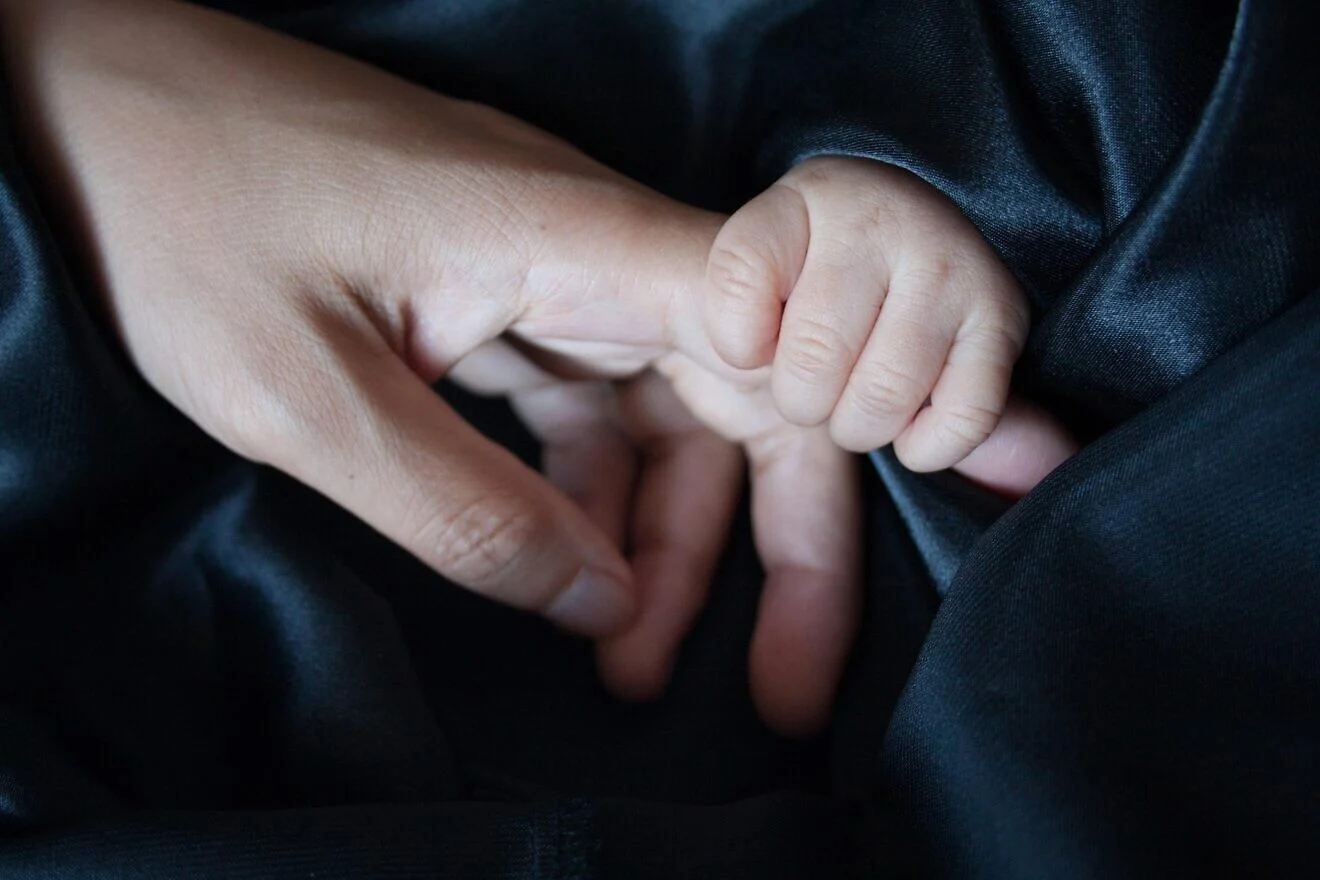
 Mother and child.
(Photo credit: bingngu93/Pixabay via JNS)
Lihi Lapid
After more than a decade of writing a women’s column, I decided that it was time to write a book about motherhood. I wanted to explore the transition from a couple building a life together to a family. I wanted to write about compromise and love, about arguments and strength. I did not intend to write about the mother I am or my private family, but as the pages filled, I realized I could not tell the story honestly without including myself.
I wrestled with the line between private and public — what to write and what to keep inside. I consulted my mother-in-law, Shulamit Lapid, a gifted writer, and asked her, “When you write a book, do you write the whole truth?”
She said, “You write the whole truth. And then you delete a little.”
So I wrote the whole truth and began to delete what could hurt someone or reveal too much. But I reached one passage that I could not erase. If I removed it, it would no longer be the truth. For a year and a half, the manuscript sat on my computer while I wrestled with it. I knew it needed to be published, but I was afraid of the exposure.
My husband and I discussed it. He asked if I could handle the publicity. I said yes, though I did not yet understand how complex it would be.
One afternoon, I picked up our little girl from daycare, and the teacher told me that she was not responding like other children. While waiting for an evaluation, my husband and I tried to get her attention, but she didn’t react. We began to wonder if it was more than her hearing. The night before the assessment, we lay awake in each other’s arms. I prayed and promised anything, hoping that she was “only” deaf. Any other possibility felt unbearable.
Our daughter Yaeli was not deaf. She is autistic. Today, she is 29 years old, nonverbal, at the more challenging end of the spectrum. When the book was published in Israel, it sparked public conversation. Until then, very few people spoke openly about raising a child with significant disabilities. Opening that door allowed parents to breathe and speak honestly. When the book was published in the United States as “I Wanted to Be Wonderful,” it entered the USA Today bestseller list in two weeks. It became clear that the conversation about special needs is universal.
Yaeli became my greatest teacher. Motherhood became the defining lesson of my life. Today, as president of SHEKEL, I work to integrate people with disabilities into the community. I learned that vulnerability does not weaken us; it strengthens us. Showing pain while remaining strong is at the heart of female identity.
International Women’s Day is often about achievements. Those matter, but being a woman is also about the invisible work that keeps everything together. It is remembering who has eaten, who has a test tomorrow, who needs attention. It is being present for everyone, offering comfort and also knowing when to set boundaries.
Being a woman means wanting to be loved and finding joy in loving. It means supporting a partner, strengthening him and recognizing that shared life includes challenges. Even in the most beautiful garden, there are thorns. Sometimes, we cry; sometimes, we make mistakes; sometimes, we save each other. That is part of life.
Being a woman often means navigating expectations — family, work, society. We try to make each person feel important. Sometimes we fail. If we are wise, we apologize. If others are generous, they forgive. This balancing act requires strength that is rarely recognized.
Being a woman often means giving up what we want or dream of. We postpone our own needs. Yet we cannot give from an empty place. We too deserve care, attention and kindness. When a woman feels valued, the entire family benefits. She is the beating heart and connecting thread.
In Israel, we have endured two heartbreaking years, and once again, we find ourselves at war. But slowly, we are rebuilding. Hard times clarify what truly matters. After tragedy, people long for simple things: a family dinner, a birthday at home, a hug, being together.
Happiness is not constant. It is a collection of moments to gather in the album of our hearts. If we do not pause to appreciate them, they slip away. For many years, I missed small moments of joy. I have learned to slow down. The race outside can wait.
International Women’s Day is not only about achievement. It is also about turning inward, about being a little kinder to ourselves, about acknowledging that strength and softness can coexist. It is about telling the truth, even when it is complicated, because honesty connects us and creates change.
So this Women’s Day, March 8, make one decision. Give a gift to the woman you do not always listen to enough. The one whose needs you postpone. Give that gift to yourself. Pause. Appreciate what is good. Protect moments of joy. The world can wait. Honor the woman you already are.
Lihi Lapid is an Israeli bestselling author and a prominent voice on contemporary women’s issues. She serves as the president of SHEKEL, an organization dedicated to advancing inclusion for people with disabilities.