
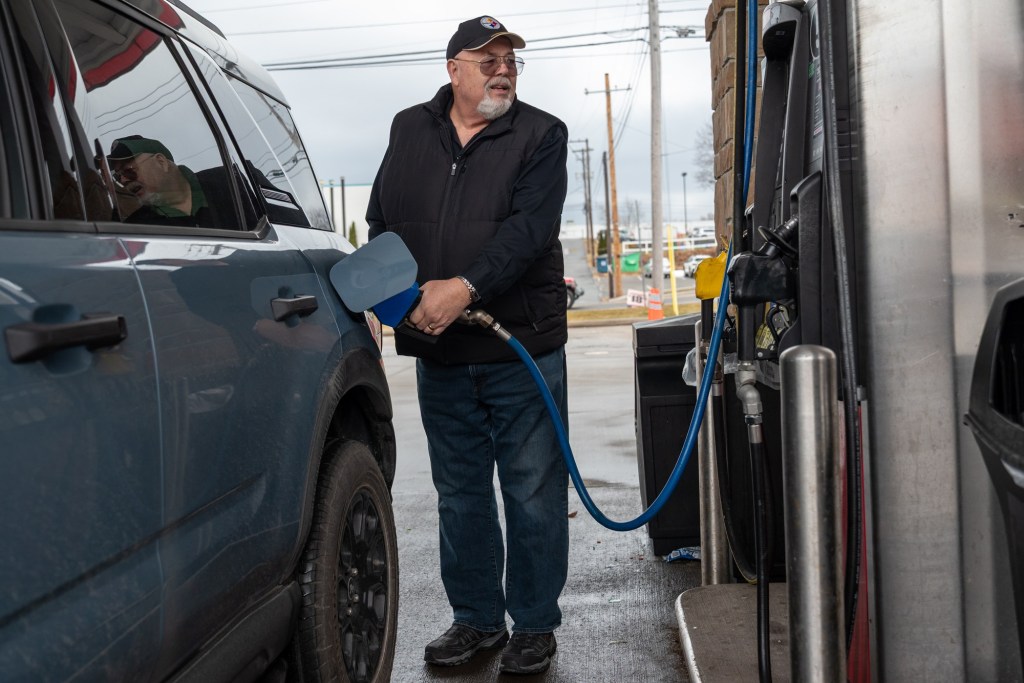
Northeast Pennsylvania residents are paying more at the pumps as the price of gasoline spikes.
As of Wednesday, gas is averaging $3.18 a gallon in the Scranton/Wilkes-Barre/Hazleton metropolitan area, a 7-cent jump from nearly $3.11 cents Tuesday, according to data from AAA. Pennsylvania has the ninth highest gas prices nationwide, according to the AAA figures, with the average price increasing 10 cents to almost $3.30 a gallon Wednesday, from $3.20 Tuesday. The national average price Wednesday was nearly $3.20, according to AAA.
Across Northeast Pennsylvania on Wednesday, the average price of gas ranged from nearly $3.18 a gallon in Luzerne County to $3.19 a gallon in Lackawanna and Schuylkill counties, figures show.
Gas prices jumped 11 cents Monday into Tuesday across the United States as war engulfed the Middle East and shipments of oil and gas are stranded in the Persian Gulf. On Tuesday, oil prices soared to levels not seen in more than a year as Iran launched a series of retaliatory attacks, including a drone strike on the U.S. Embassy in Saudi Arabia, according to the Associated Press.
Iran has also struck energy facilities in Qatar and Saudi Arabia, and disrupted tanker traffic through the Strait of Hormuz, the narrow mouth of the Persian Gulf through through which a fifth of all oil traded passes, sending global oil and natural gas prices soaring.
Patrick De Haan, head of petroleum analysis for GasBuddy, an app-based fuel savings service, said markets were already anticipating the higher prices, as the price of oil rose from $57 a barrel in January to about $65 a barrel late last week.
He said the national average price rose 12.1 cents Tuesday, the fourth largest single-day increase since 2005. De Haan said the spike comes as seasonal increases in the price of gas are underway. Prices typically tend to go up in early March, he said, peaking between mid-May and early April, from 25 to 65 cents a gallon.
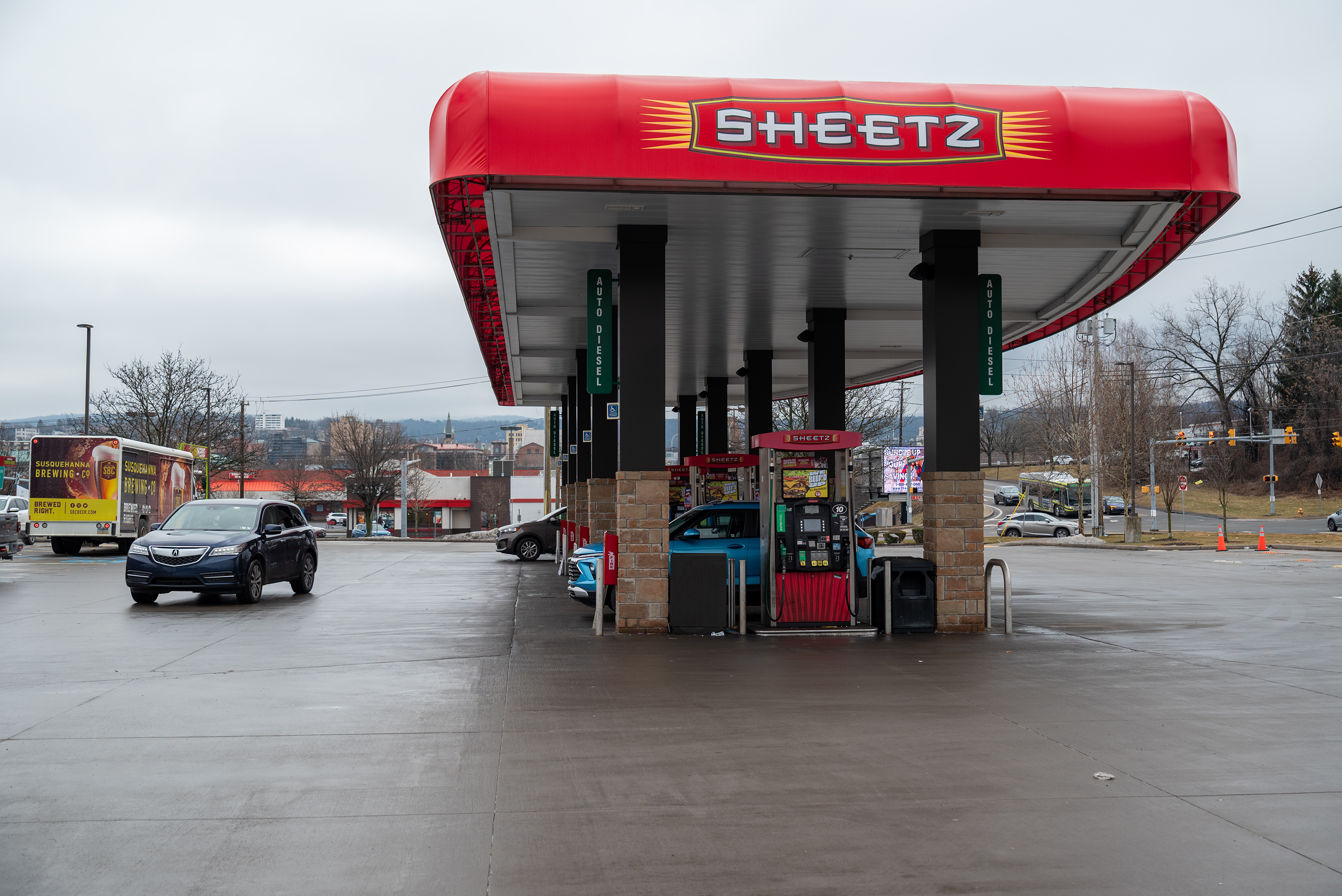
Cars come and go at he Sheetz on Mount Pleasant Drive in Scranton on Wednesday, March 04, 2026. (REBECCA PARTICKA/STAFF PHOTOGRAPHER)
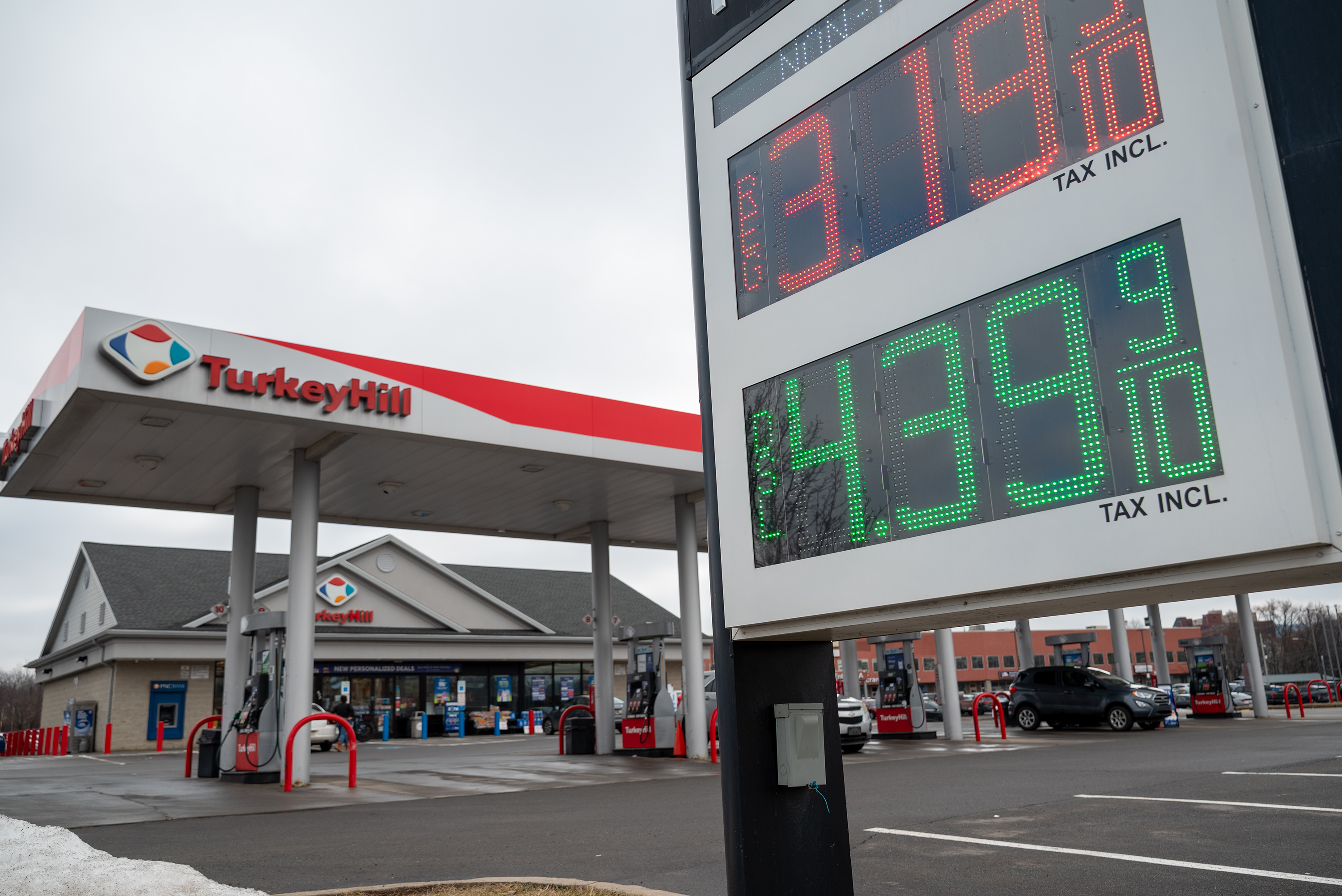
Gas prices at the Turkey Hill on N. Main Ave. in Scranton on Wednesday, March 04, 2026. (REBECCA PARTICKA/STAFF PHOTOGRAPHER)
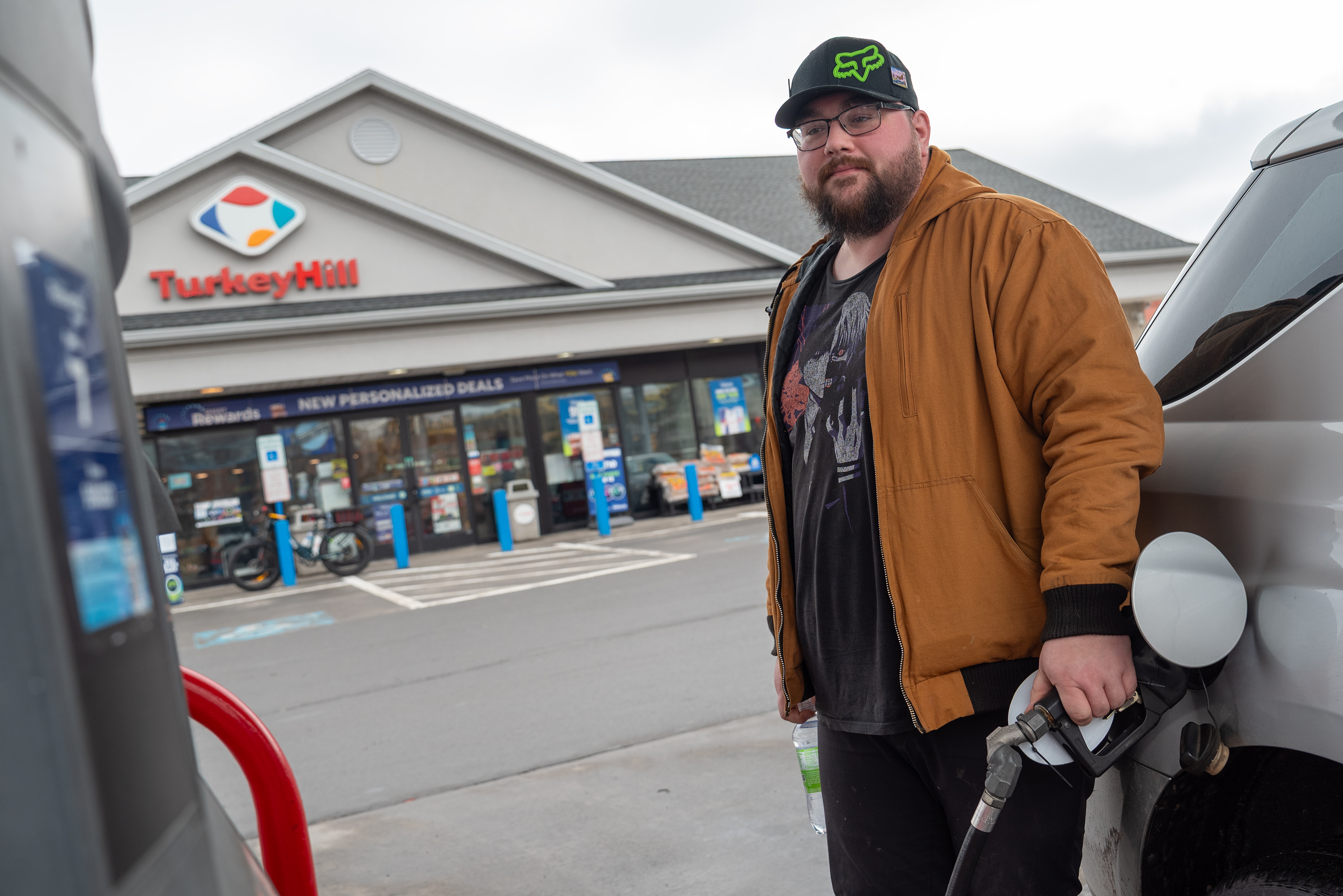
Rich Myerski fills up his vehicle at the Turkey Hill on N. Main Ave. in Scranton on Wednesday, March 04, 2026. (REBECCA PARTICKA/STAFF PHOTOGRAPHER)
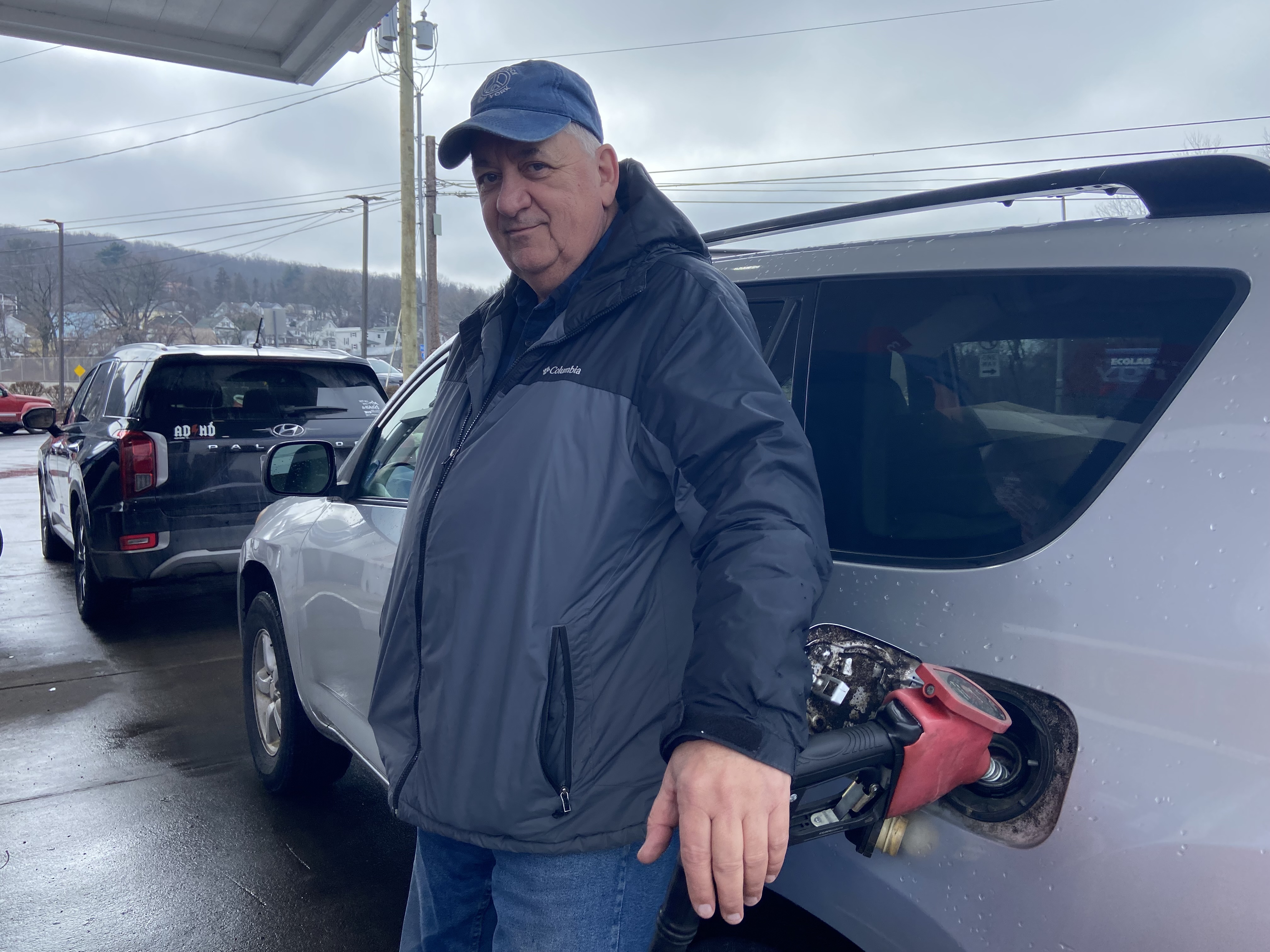
Dan Reynolds of Scranton pumps gas at the Exxon gas station in South Scranton Wednesday, March 4, 2026. (Christine Lee/Staff Photo)
Show Caption
1 of 4
Cars come and go at he Sheetz on Mount Pleasant Drive in Scranton on Wednesday, March 04, 2026. (REBECCA PARTICKA/STAFF PHOTOGRAPHER)
In Scranton, gas averaged $3 a gallon. People in the city pumping gas Wednesday morning said while the spike was inevitable given the events in the Middle East, they worried about the financial impact it will have on them.
“It hits the pocket a little harder but you gotta get around,” said city resident Mike Tomcho as he pumped gas at an Exxon station in South Scranton.
Bethlehem resident Michael Wladyka, a driver for Lyft, was already dealing with decreasing tips from customers and is concerned about the higher gas prices.
“It’s harder to feed the family. It’s harder to keep things going,” he said as he filled his vehicle with gas at the Sunoco at Wyoming Avenue and Mulberry Street in downtown Scranton.
Dan Reynolds of South Scranton hopes the war is short so the price will go down, but the high prices mean he will probably drive less.
Steven Lindemann, CEO of AAA Schuylkill County, said the last time gas prices had such a spike was when Russia began its invasion of Ukraine in early March 2022. At that time, the national average for gas prices jumped 11 cents, from $4.06 to $4.17, he said.
“It’s going to affect every household, one way or another,” Lindemann said. “We’re hoping that this is more of a limited time.”
Depending on the duration of the war, the pain of higher prices could increase in the coming weeks, and may be felt more heavily in areas reliant on imports. Experts say it’s hard to know when prices will go down.
“We don’t know what the reactions from Iran will be,” De Haan said.
President Donald Trump addressed the rising prices in remarks in the Oval Office on Tuesday, according to the Associated Press. “We have a little high oil prices for a little while, but as soon as this ends, those prices are going to drop, I believe, lower than even before,” Trump said.
Trump later said on social media that, if necessary, the Navy would escort oil tankers through the Strait of Hormuz. He also ordered the U.S. International Development Finance Corp. to provide political risk insurance for tankers carrying oil and other goods through the Persian Gulf “at a very reasonable price.”
De Haan said Trump’s announcement could bring some relief to the high prices.
“That would be good because that’s where the choke point completely is; that’s primarily why oil prices have skyrocketed so much,” he said. “If there is relief there, if the Strait of Hormuz can start to see flows through it again, I think we’ll be in good shape.”
He anticipates prices may start to go down this weekend but cautions any new developments in the war could push the market higher.
“If there’s a major escalation, it’s going to have a probably major impact on the price of oil, De Haan said.