
SCRANTON, LACKAWANNA CO. (WOLF) — As the country prepares to celebrate its 250th anniversary, we’re highlighting the people, places, and history that make Northeastern Pennsylvania part of Amazing America. Tonight, we highlight how one Scranton nonprofit is working to preserve and celebrate a piece of local history that often goes untold.
In a century-old building on North Main Avenue in Scranton, a new chapter of history is being written by rediscovering the past. They’re celebrating more than one milestone – the historic bank’s centennial, 100 years of Black History Month, and a nation preparing to make 250 years of independence.
The Black Scranton Project began as a graduate thesis by founder Glynis M. Johns, who wanted to challenge a stereotype she had heard her entire life.
“I wanted to investigate the stereotype that there are no Black people in Scranton because I’m born and raised here. I wanted to see if that was true, and I had to look into the history books to find out how long our community was here,” said Johns.
What she discovered was a deep history, stories of Black residents who helped shape Scranton dating back to the 1800s.
“Doing that, I found so many incredible folks, so many people who were contributing to Scranton. And we were here all the way back to the 1800s,” said Johns.
Her research uncovered connections to major moments in American history, from residents who used the Underground Railroad to others who served in the Union Army during the Civil War.
“Those stories really encourage people. I feel like it gives you a sense of self and identity, and it’s wild that Scranton in particular is so connected to that story, connected to the Underground Railroad and the Black freedom struggle in American history overall,” said Johns.
She also discovered local figures whose stories rarely appear in classrooms, like Lincoln Tillman, the first Black firefighter in Scranton, and Louise Tanner Brown, a businesswoman who took over her husband’s transportation company in the 1920s and doubled the size of the firm within a few years.
“We never look at it from a local lens. Who were the people that inspired us in Scranton who identify as Black, who never get spotlighted? Let’s see who we can figure out. Those are things that I feel like we should share in school alongside Martin Luther King’s legacy, alongside what Rosa Parks did,” said Johns.
Johns says while many people in the region know Scranton’s mining roots or celebrate its Irish and Italian heritage, Black history hasn’t always had the same visibility.
“We ourselves don’t always have a connection to the city because the city isn’t always making space for Black culture in the ways that they do other cultures and cultural celebrations,” said Johns.
That’s part of the reason the organization hosts community events like Juneteenth block parties, Black History Month celebrations, and workshops aimed at uplifting artists, business owners, and local history.
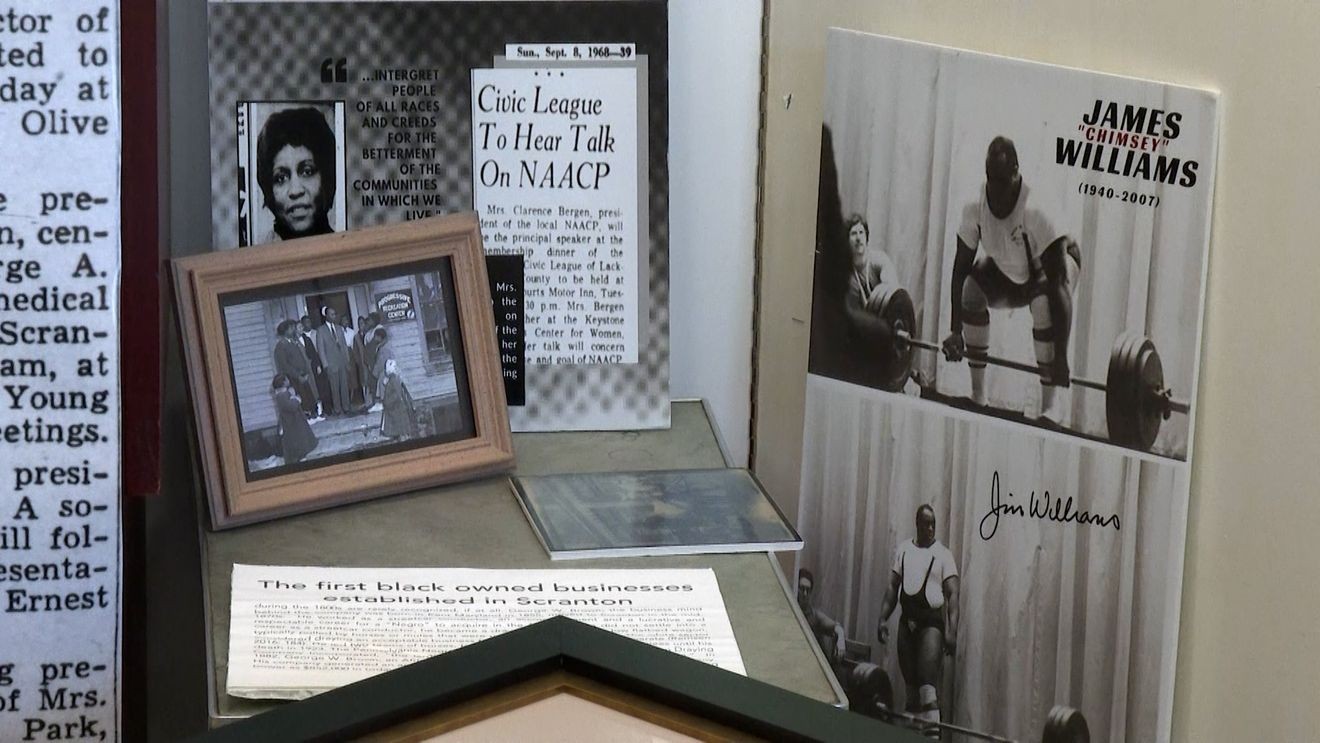
Now the group is transforming a former PNC Bank building into the Black Scranton Project Center for Arts and Culture, a permanent space dedicated to preserving African American history in the region.
“We don’t have spaces that are dedicated to Black art. We don’t have anything that’s dedicated to African American history. So, what’s stopping us from doing that here?” said Johns.
Inside, exhibits explore Black history through artifacts and collections, including a display using historic postage stamps to highlight Black heritage and another examining how Black Americans reflected on the nation’s bicentennial nearly fifty years ago.
For Johns, preserving those stories isn’t just about the past, it’s about making sure future generations see themselves in the history of their own city.
“Even though I’m from this city being successful, a lot of people told me that I wouldn’t be successful or go to college because I’m a Black woman from Scranton. That’s so not true. There are so many people who look like me who feel that way, and they shouldn’t. I would like to be an example that you can do it too,” said Johns.
And as America approaches its 250th anniversary, she says understanding those local stories is part of understanding the nation itself.
The organization hopes the new cultural center creates a space for education, art, and community programs, ensuring Black history in Scranton becomes a lasting part of the city’s story.