
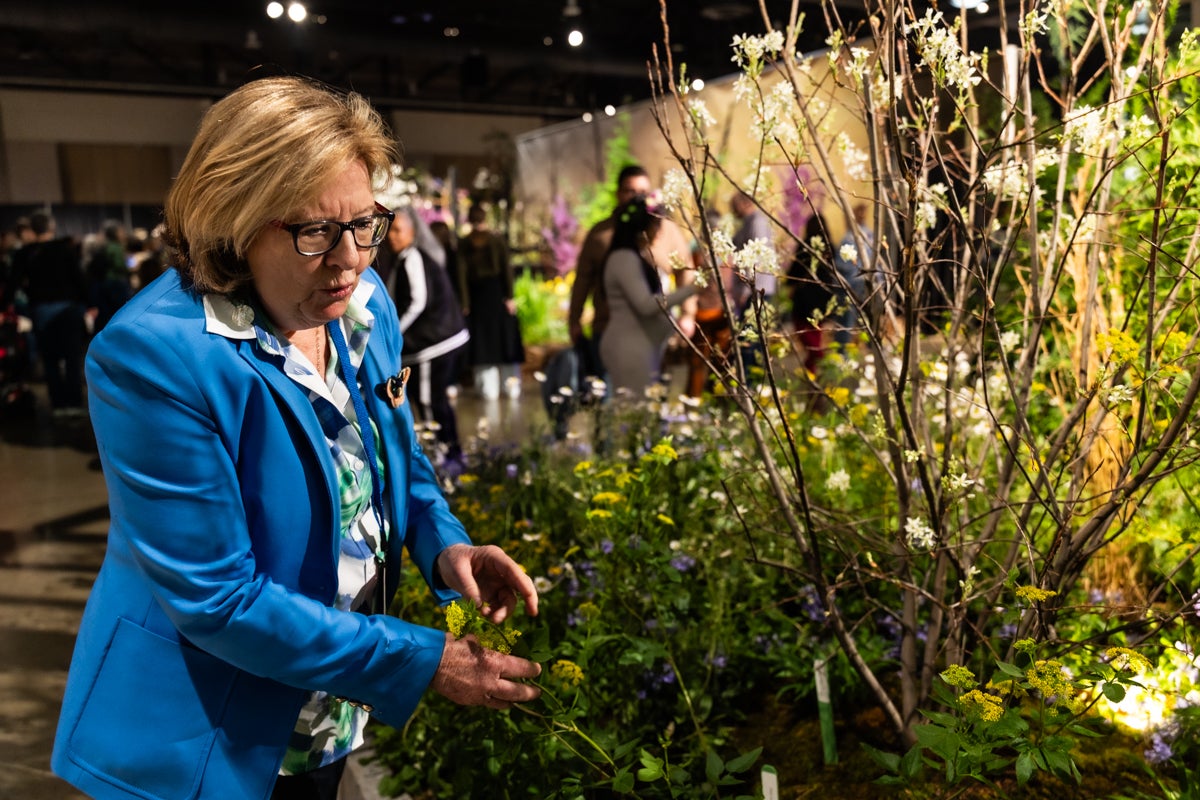
Jones advises gardeners to water early in the morning, use shade cloths or even install beach umbrellas over vegetable gardens. Landowners can also consider large plants like sunflowers to create shaded areas.
“My peppers were burning. They were getting sun-skulled,” Jones said, recalling the extreme July heat in her home state of Maryland. “Peppers are a plant that loves hot weather — but it’s too hot. So, I was putting umbrellas over them to shade them.”
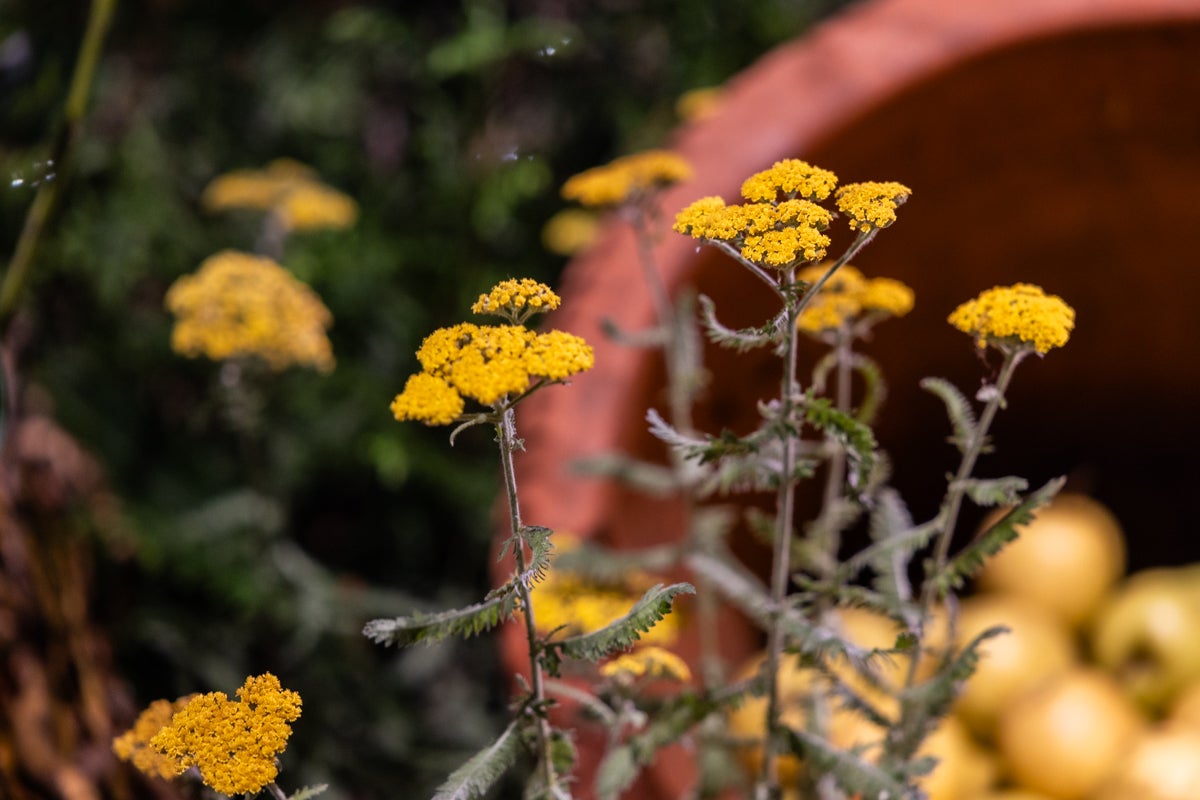 Yellow yarrow, a native plant, on display at Temple University’s exhibit at the 2026 Philadelphia Flower Show (Kimberly Paynter/WHYY)
She encourages gardeners to research which plants are more likely to thrive in certain conditions, and understand which species work in tandem. The phrase “right plant, right place” may be an overused meme, Jones said, but the concept is crucial when adapting to climate change.
There is a silver lining to the effects of a warming planet, she said, as gardeners are growing plants they wouldn’t have dreamed of planting a decade ago.
“It’s not all bad news. It’s about actionable things that you can do to mitigate this. You just have to learn how to garden a bit differently,” she said. “Be a nimble and adaptable gardener.”
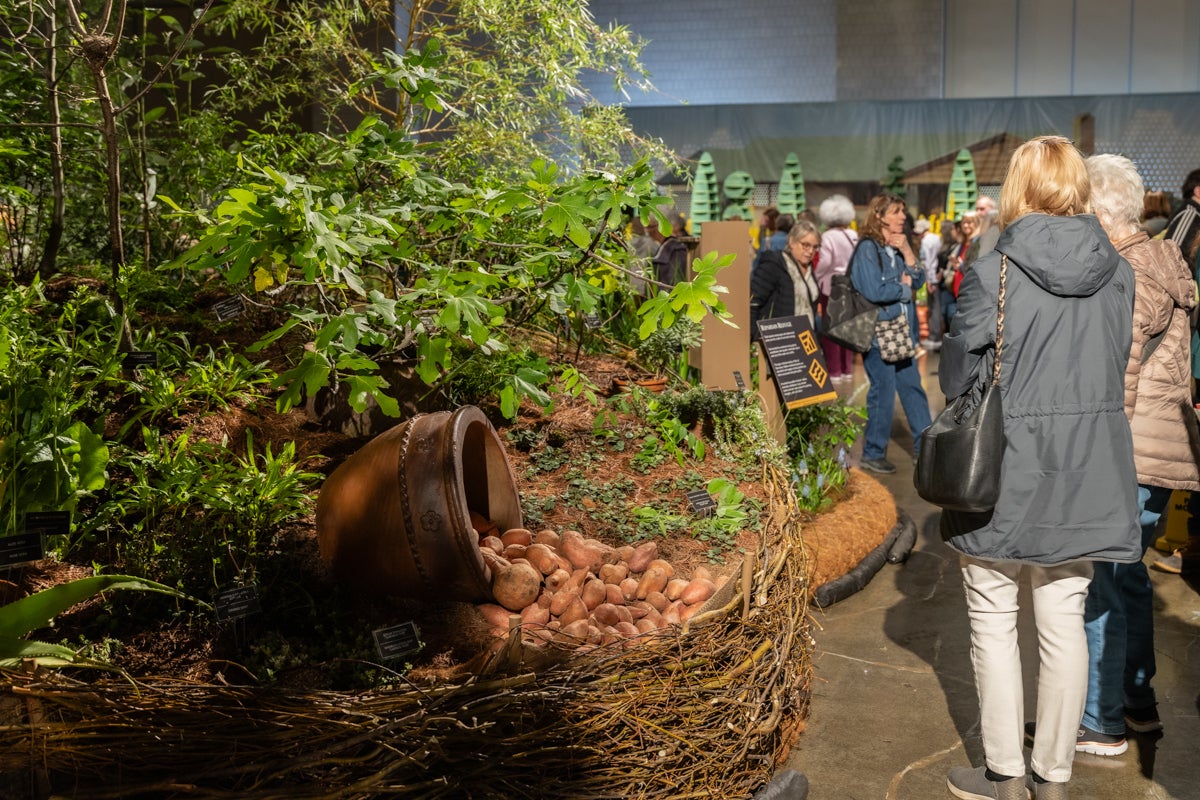 Rosemary, sweet potatoes and a fig tree on display as part of Temple University’s exhibit at the 2026 Philadelphia Flower Show (Kimberly Paynter/WHYY)
The Philadelphia Flower Show also promoted the importance of planting native species as the region faces habitat loss, which reduces the number of birds and insects that visit gardens. Invasive species like burning bush have choked out native plants in the area, and don’t support pollinators.
Andrew Bunting, the society’s vice president of horticulture, encourages gardeners to buy pollinator plants and native shrubs that improve biodiversity and to reduce their lawn area as much as possible.
He advises people to plant mountain mint, which grows quickly and has an abundance of pollinators, or butterfly milkweed to attract monarch butterflies, which are facing population declines.
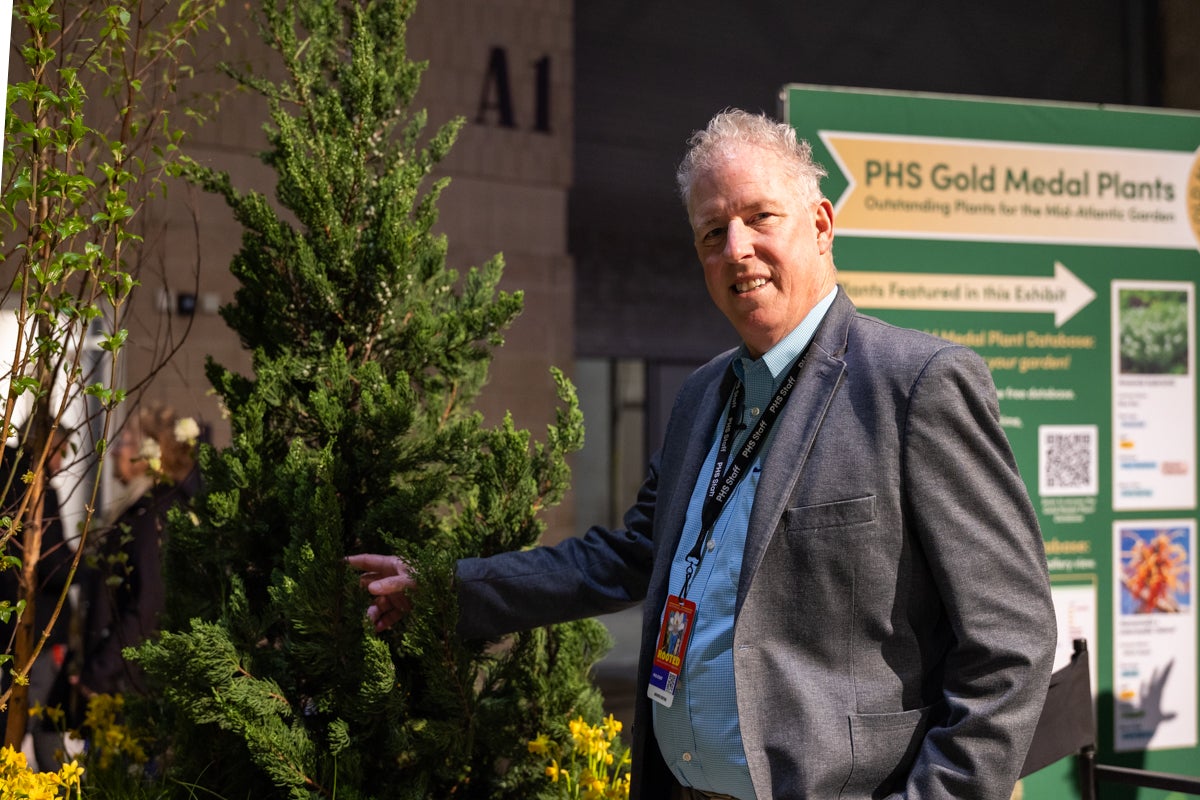 Andrew Bunting, vice president of horticulture at the Pennsylvania Horticultural Society, with a native juniper tree the PHS Gold Medal Plants exhibit at the 2026 Philadelphia Flower Show (Kimberly Paynter/WHYY)
Bunting also said using electric mowers instead of gas, and avoiding pesticides, can also make a big difference on the environment.
“If every homeowner just did one thing, collectively, that would have a positive impact on the environment,” he said.