
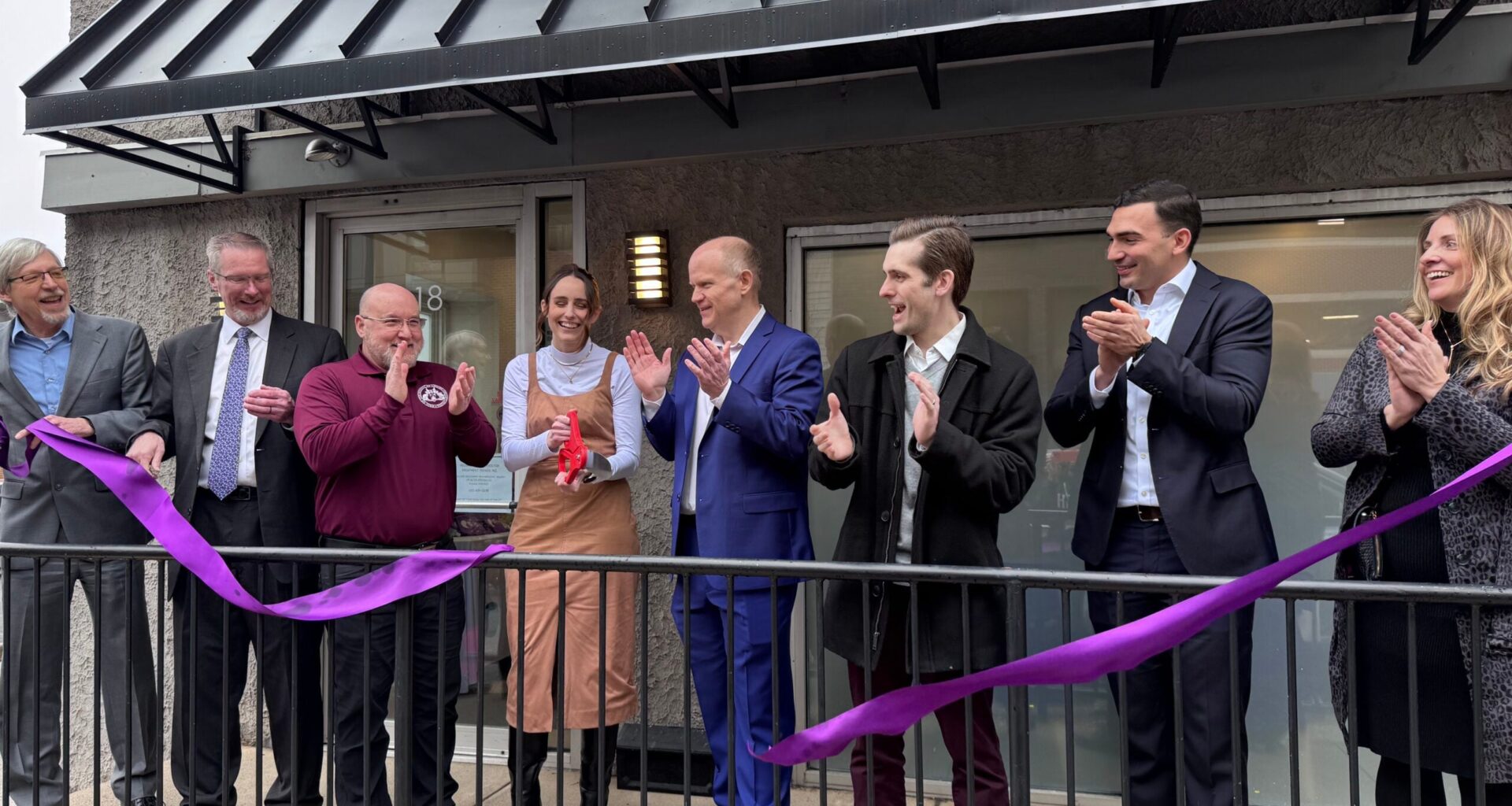
ALLENTOWN, Pa. — A renovated residential addiction treatment facility in Allentown celebrated its grand reopening Friday, restoring 50 beds that had been lost when the program shut its doors nearly two years ago.
Treatment Trends Inc. held a ribbon-cutting ceremony at its Allentown Residential facility at 18 S. 6th St., drawing county officials, state lawmakers and community partners to mark the return of one of the Lehigh Valley’s longest-running inpatient recovery programs. The facility, which traces its roots to 1972, stopped accepting admissions May 1, 2024, and fully closed the following month after aging infrastructure and mounting maintenance costs made continued operations unsustainable.
The $1 million renovation — funded entirely through Pennsylvania’s opioid settlement allocation administered by the state Department of Drug and Alcohol Programs — overhauled the building’s living spaces, improved safety systems and added full elevator accessibility. No taxpayer dollars were used for the construction.
“We could have lost 50 beds,” said Lehigh County Executive Josh Siegel. “This facility represents hope and healing for the damage that those opioid companies have wrought on our communities, and that’s incredible.”
Siegel credited District Attorney Gavin Holihan, the county Board of Commissioners and the previous administration for identifying the funding opportunity. The grant, Holihan explained, was originally secured by his predecessor and had five months left before it would have lapsed when he took office.
“I thought to myself, who do I know who could help me spend a million dollars in a short period of time?” Holihan said, crediting Joe Martellucci, administrator of Lehigh County Drug and Alcohol, with realizing the funds could be redirected toward the facility’s renovation.
“Strong communities require both accountability and opportunity,” Holihan said. “Expanding high-quality residential treatment, especially for individuals reentering our community from incarceration, improves long-term recovery outcomes and strengthens public safety for everyone in Lehigh County.”
Construction wrapped in fall 2025. The program quietly resumed operations in December and is currently serving 10 residents, with the facility expected to reach its full capacity of 50 as staffing and census levels stabilize, according to Lehigh County Drug and Alcohol Services. The facility is co-ed, serving both men and women.
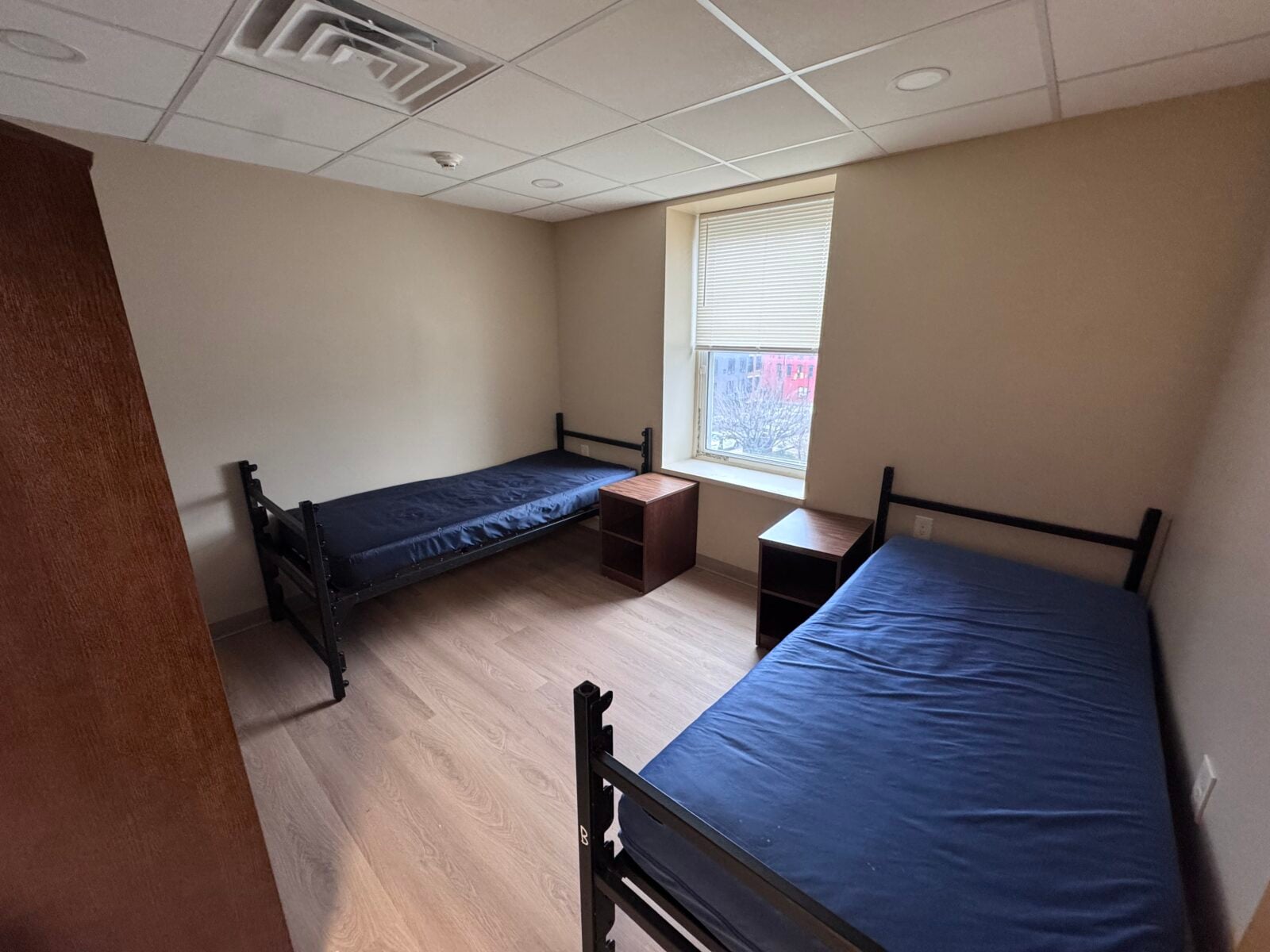 An unoccupied resident room at the newly renovated Treatment Trends Allentown Residential facility. The $1 million renovation modernized living spaces and added full elevator accessibility to the building, which had been closed since 2024. (Jai Smith / Lehigh Daily)
Chelsea Edmunds, director of the Allentown Residential program, called the reopening a “rebirth” for a facility that has served the community for more than five decades.
“Since May 1st, 2024, we faced the difficult decision to suspend admissions,” Edmunds said. “We were at a crossroads. But in our darkest moment, we experienced something extraordinary — a second chance.”
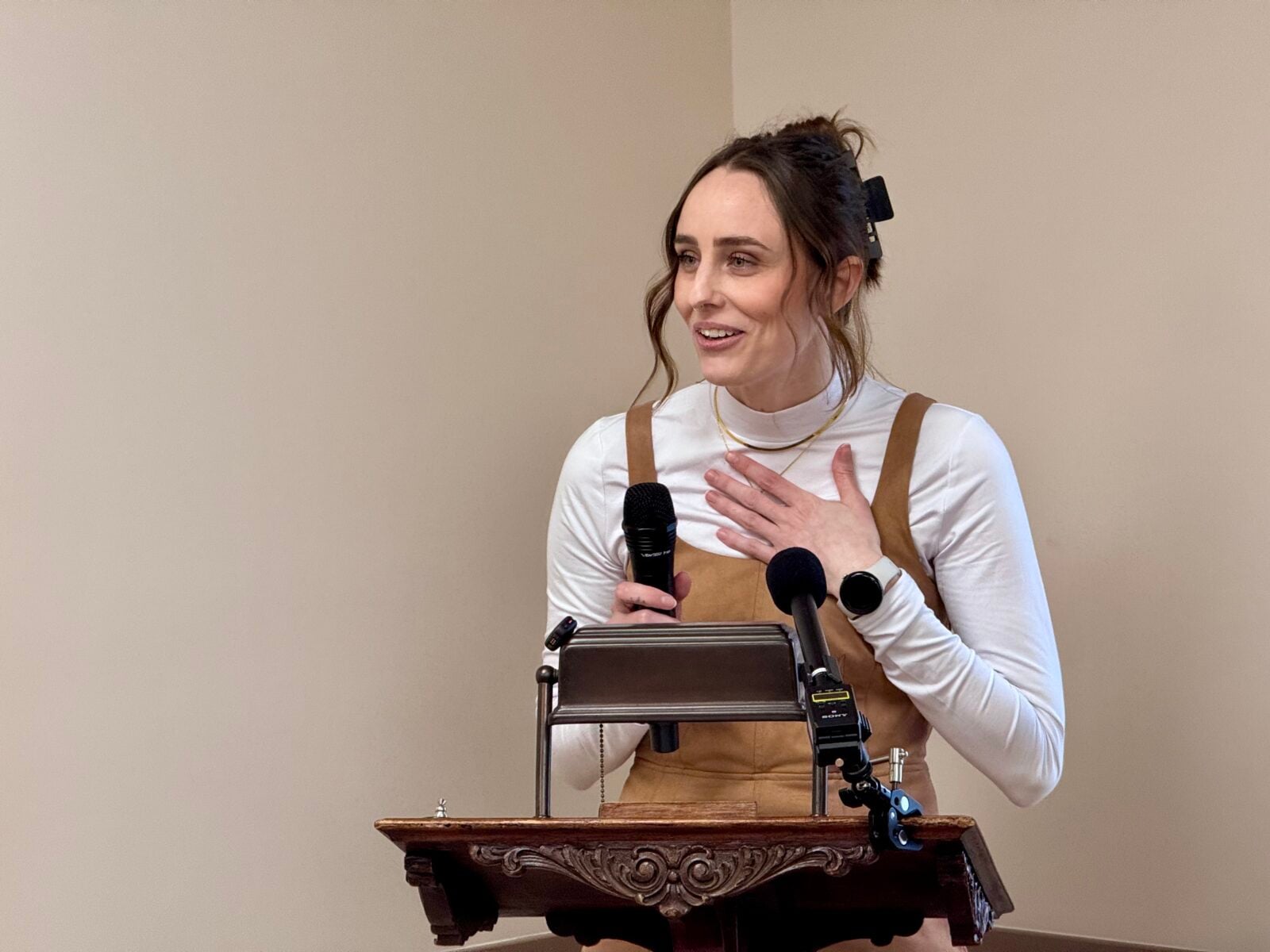 Chelsea Edmunds, director of the Allentown Residential program, speaks Friday during the grand reopening ceremony at 18 S. 6th St. in Allentown. Edmunds called the reopening “a rebirth” for a facility that has served the community since 1972. (Jai Smith / Lehigh Daily)
Edmunds said the program has also adapted to a changed funding landscape. Where residents once could stay up to 90 days, managed care organizations now typically authorize stays of 15 to 30 days. “We simply can’t get that kind of funding anymore,” she said.
John Dillensnyder, executive director of Treatment Trends, said the facility’s location matters as much as its services.
“When people receive treatment close to home, connected to family and community, their chances of sustained recovery increase dramatically,” Dillensnyder said. “By reopening this building in Allentown, we are restoring hope, structure and opportunity.”
That sentiment was echoed by the county official whose office helped make the renovation possible.
Joe Martellucci said the collaboration between his office, the district attorney, county commissioners and state officials made the project possible.
“We were facing permanent loss of treatment beds,” Martellucci said. “Our office, the District Attorney, County leadership, and DDAP all came together to restore and strengthen high-quality treatment for people and families in Lehigh County.”
Pennsylvania state Sen. Nick Miller also spoke at Friday’s event, presenting a proclamation to Dillensnyder recognizing the organization’s work and the fortitude of its staff through the closure period.
With its reopening, Treatment Trends has launched a specialized treatment track for individuals returning from incarceration. The program integrates family engagement and community reintegration planning to reduce the risk of relapse and support long-term stability.
The Allentown reopening is part of a broader expansion of Treatment Trends’ footprint in the region. The organization also opened a new outpatient center in Slatington last November — the first dedicated treatment facility in that borough — also funded through Lehigh County’s opioid settlement allocation.
Lehigh County expects to receive approximately $18 million in opioid settlement funds through 2038. Siegel said the county plans to continue investing that money in treatment and recovery programs.
Overdose deaths in Lehigh County have trended downward in recent years as investments in prevention, treatment and recovery support have grown, according to Lehigh County Drug and Alcohol Services.
Tours of the newly renovated facility followed Friday’s ribbon-cutting ceremony.
This is the part where we ask.
No billionaire owner. No paywall. Just you keeping local news free.
$5 keeps us going
100% funds local journalism.

Jai Smith is a lifetime Lehigh Valley resident on a mission to empower local underserved communities and inform the public while providing journalists and storytellers a platform to develop the next generation of news media.