
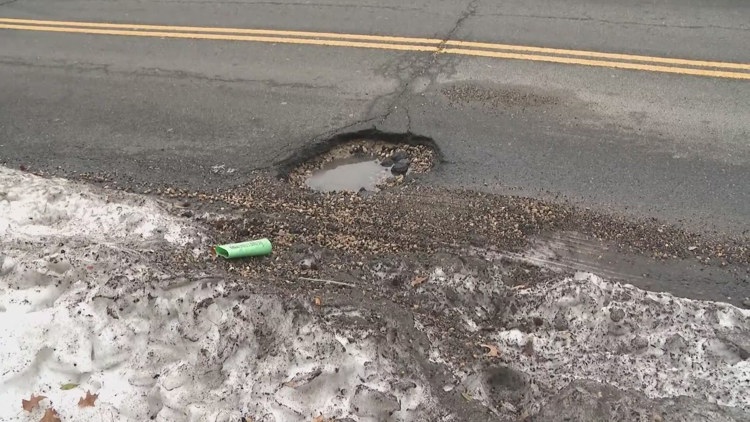
As spring arrives, drivers in Pennsylvania are seeing more than just sunshine and warmer temperatures, they are encountering potholes popping up across local roads. The culprit, officials say, is the late-winter freeze-thaw cycle, which can weaken pavement and cause cracks to grow into dangerous holes.
“Freeze-thaw cycles this time of year are cracking and breaking up the pavement, creating potholes that can appear almost overnight,” said Eric Boozle, acting highway maintenance manager for York County. “We can’t be proactive when it comes to potholes, we can only react to them.” That’s why this time of the year is especially important for drivers to stay focused and be alert on the roadways.
Potholes form when water seeps into cracks in the roadway. When temperatures drop below freezing, that water expands, putting pressure on the surrounding pavement. When it thaws, the pavement weakens, and traffic passing over it can break away chunks of asphalt, leaving behind holes that range from a few inches across to several feet wide.
PennDOT crews are already hard at work responding to potholes on state-maintained roads. During the colder months, crews use a temporary cold mix, a stone/oil mixture that remains pliable even in low temperatures, to fill in holes quickly. Once asphalt plants reopen and hot mix becomes available, crews return to make more permanent repairs.
“It’s not a permanent fix, but as soon as the weather warms up and we can get hot mix, we’ll make permanent repairs,” Boozle explained.
While state crews handle roads under PennDOT maintenance, some potholes appear on township or locally maintained streets. Regardless of where the pothole appears, drivers are encouraged to report them as accurately as possible. For state-maintained roads, residents can call 1-800-FIX-ROAD or submit a concern through PennDOT’s website, providing a detailed location so crews can respond efficiently.
Potholes are not just a nuisance, they can pose real hazards to drivers. Striking a large pothole at highway speeds can damage tires, rims, suspension, and steering components. In some cases, it can even cause accidents, especially if drivers swerve suddenly to avoid one. Mechanics often see spikes in repairs this time of year, from bent rims to misaligned wheels and suspension problems.
To protect your vehicle and stay safe, experts recommend keeping a few precautions in mind:
Maintain a safe following distance so you can spot potholes ahead
Slow down when road conditions are poor
Avoid sudden swerving if you encounter a pothole
Checking tire pressure regularly and inspecting your wheels and suspension after hitting a pothole can also help prevent long-term damage.
With more temperature swings expected through early spring, officials say drivers should remain alert. While PennDOT crews are responding as quickly as possible, potholes can develop overnight or in areas that have already been patched temporarily. Being attentive behind the wheel is the best way to stay safe and minimize damage during pothole season.