
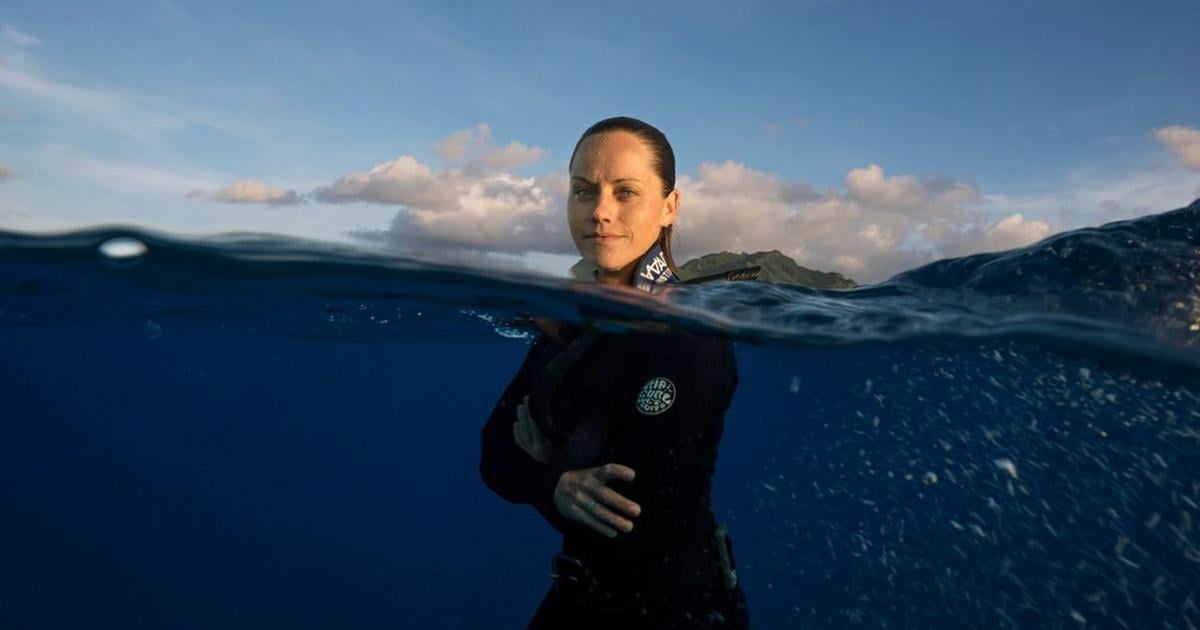
READING, Pa. — For Jessica Cramp, her love of sharks did not come naturally. It started as a fascination with the ocean that led to years of lab work. Then, on a chance to get out and work in the field, she decided to make a change.
“On one of the islands that a sailboat I was on went to, there was a man who wanted to create a sanctuary for sharks, and I had just at that time had this interesting experience and learned about their plight,” Jess recalled earlier this week. “So, I agreed to join that organization, and I co-championed the shark sanctuary campaign, and that really started me off on the journey.”
Jess grew up in the Poconos, but her father is a graduate of Daniel Boone High School in Berks County, and her grandfather ran what is now the Cramp-Hummel Funeral Home in Reading. She does have memories spending time with her aunt and cousin, visiting the Pagoda and getting her first tick.
She’s lived at the Shark Sanctuary on Cook Island in the Pacific Ocean now for the last 15 years, studying sharks. And — like her engagement with sharks — Jess did not expect to be touring the country with National Geographic Live. About 10 years ago, she woke up to an email about getting added to the National Geographic Explorer program.
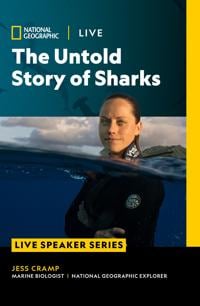
“Through that, I’ve just had a really unique opportunity to be a part of the National Geographic family, and then that has grown into talking about my work on stage as part of the NatGeo Live tour,” Jess said.

National Geographic
This week, Jess had another busy schedule — as she was driving in Pennsylvania to a plane ride for a show in Wisconsin before heading back to Reading — but now, she gets sort of a homecoming. Jess did her show at the Miller Center for the Arts at Reading Area Community College and got to spend time visiting with family and spreading her message of conservation and a love of science to young minds.
Sadly, her grandfather is no longer with us, but while she was in town, she said she planned to spend time with her dad.
“Just kind of drive around and check it out. I want to drive past the funeral home, it’s a little moribund, but I want to see it because my dad has memories from there,” she said.
Jess’s home the last 15 years has been the Cook Islands, where she’s working on keeping sharks away from industrial fishing boats and on handling measures to keep sharks alive if they’re caught. She’s also advocating for sharks, lobbying for changes like hooks that don’t catch sharks as readily, and fishing lines that sharks can bite through rather than metal lines. She said that about 36% of all sharks are endangered, with the main issue coming from overfishing and being taken out for parts. Part of her work comes from working with fishers.
“Sharks and fishers are often at odds, because sharks are taking the fish from fisherman,” Jess said. “And we’re working to promote coexistence by helping trial different deterrents to keep sharks away from the fishing line.”
That experience is the center of her show, which is unique in that she’s presenting her findings and research on a stage in about a 70-minute presentation. She emphasized that the screen is the star of the show and that the fun is discussing her research with National Geographic quality footage.
“You get some fun iPhone videos of my team in the field, catching and tagging sharks and some very, very high-quality videos of the work that we do,” Jess said.
She’s been doing the show now for several years. Jess said that she’s gotten more comfortable over the years, adding “70 minutes is a long time to talk about yourself.” She also has a question-and-answer section that’s especially helpful for the students who go to every show.
Pixabay
Jess said she hopes students and guests go away knowing there’s more to learn, as there are more than 500 species of sharks in the world, and that number rises above 1,000 if one includes cartilaginous fish — or fish with bones made of cartilage. In other words, a shark’s cousin.
“In this day and age, everyone thinks ‘all the discoveries have been made, there’s nothing left for us to discover’ and it’s just, it couldn’t be further from the truth for sharks. And even the species I work on day-in and day out with a team, we still don’t know where they’re breeding or where they’re having their babies,” she said.
And Jess said there’s a variety of ways to get involved: “We need students to, if they’re interested in creative writing, or if they’re interested in animation, or they’re interested in law, or they’re interested in fishing, all of this contributes to shark science, where you don’t have to be the one on the water. But if you do want to be the one on the water, there’s still an enormous number of things to be discovered. We’re still discovering new species every year.”
You can still help sharks from home, too. Jess said when buying seafood, make sure it’s sourced as locally as possible. She also said to check lotions, lipstick, and sunscreen products and look for an ingredient called squalene — a compound that can be sourced from shark liver oil. Jess said if the bottle doesn’t say “sourced from vegetables” on it, avoid it. You can also call the company to ask to use a different source of squalene.
Jess said she’s happy with her work, so far, and her show. She wants people to know this is an entertainment-focused show that leads people into the waters of shark conservation.