
Most Pittsburgh Penguins fans are focused on what’s happening on the ice. But off it, the team has been tending to its carbon footprint in alignment with the Penguin’s Pledge sustainability initiative. To make up for the greenhouse gasses the hockey team has been pumping into the atmosphere, the team worked with Pittsburgh-based natural gas company EQT and the conservation nonprofit Allegheny Land Trust (ALT) to purchase and retire forest carbon credits.
“Protecting forests is one of the most effective climate strategies we have,” ALT president Carrie Gilbert said in a news release. “By protecting forests and quantifying their climate benefits, we’re creating locally rooted solutions that address global challenges while improving quality of life across our region.”
Forest carbon credits are third-party-verified, tradeable units that represent one metric ton of carbon dioxide or other comparable greenhouse gas. They act as mechanisms to offset carbon emissions. Outside companies are able to verify the credits and issue them as buyable. ALT’s credits were certified by the Seattle-based nonprofit City Forest Credits.
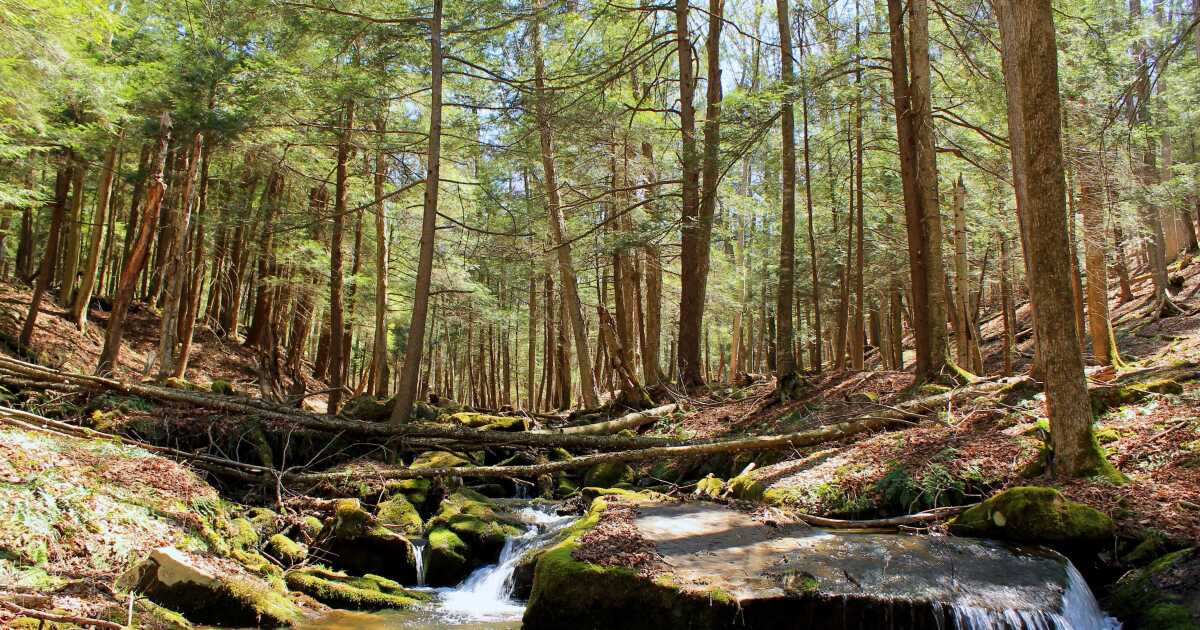
And, bonus points, the Penguins bought and retired local forest acres. The credits in this transaction originate from land ALT has already permanently protected: Buena Vista Heights in Elizabeth Township, Buerkle Woodlands in Sewickley Hills, and the Glade Run Lake Conservation Project in Butler County. Together, they account for more than 270 acres of conserved land. Gilbert also noted that each of these projects serves purposes beyond carbon storage, including public and ecological benefits.
“It really has meant so much to us to have this kind of commitment from such a premier and storied hockey powerhouse as the Pittsburgh Penguins. I think this partnership really amplifies our conservation work to a larger audience,” Gilbert told WESA.
Gilbert said the deal came together quickly. “EQT actually found our credits on the market and reached out to us,” she said. “This came together in really just a month or two.”
The transaction, which was facilitated by EQT, helps offset the team’s carbon footprint dating back to the 2024-25 season.
“This effort builds on our broader Net Zero partnership with the Penguins, which focuses on supporting their sustainability goals through practical, regionally grounded solutions,” said Amy Rogers with EQT.
A common criticism of carbon markets is that credits can function as “permissions to pollute.” But Gilbert pushed back on that framing.
“Credible programs position credits as part of a larger strategy,” she said, adding that the Penguins, as voluntary market participants, have also made broader sustainability and climate pledges.
ALT, founded in 1993, reports the trust has protected more than 4,000 acres across the region to date. Gilbert said her organization is evaluating additional properties for carbon credit eligibility.
The Penguins recognized the partnership during a “Pledge Night” game last week.