
Politicians persist in telling us what our lives are like. Both Biden and Trump have tried to persuade us to believe their versions of affordability rather than our own lived experience at the grocery store. President Trump’s State of the Union address was filled with false narratives about everything from the 2020 election to the sanity of his Democratic opponents.
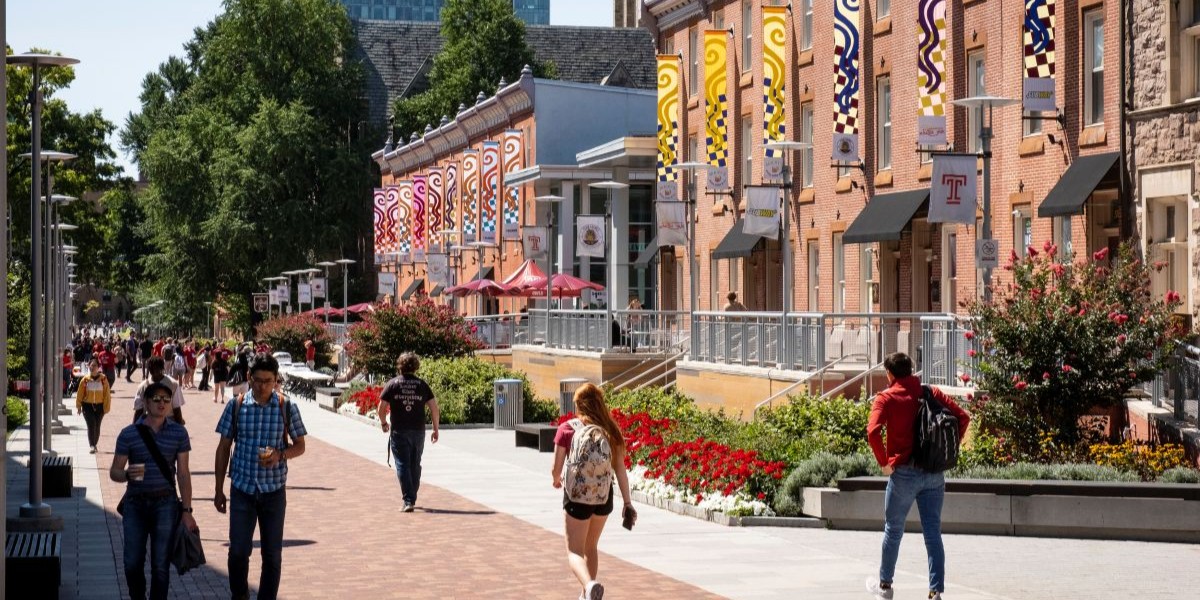
One of Trump’s favorite subjects is the experience of students on college campuses. He and his acolytes project a horror film. As Courtney Brown writes for education philanthropy Lumina, “If you listen to the national conversation about higher education, you’d think campuses are ideological battlegrounds, students are disillusioned, and employers are quietly questioning whether degrees still matter. Then you read the latest Lumina Gallup report, The College Reality Check: What Students Experience vs. What America Believes, and the story flips.”
Lumina Gallup uses state-of-the art methodology for its studies
The higher education web surveys, conducted from October 2 to 31, 2025, include responses from 6,010 students currently enrolled in postsecondary education, 5,052 adults previously enrolled but not completing degrees, and 3,000 adults never enrolled at a college or university. The Gallup Alumni Survey, conducted from November 10 to December 1, 2025, includes respondents who received associate or bachelor degrees, are aged 18 or older, have internet access and live in one of the 50 states or the District of Columbia. Respondents include 1,266 associate degree graduates and 4,667 bachelor’s degree graduates. Both surveys are weighted to match national demographics based on the most recent American Community Survey figures. And, of course, Gallup has been conducting surveys for 90 years. They know what they’re doing. This is not fake news.
Key Findings from Gallup’s 2026 State of Higher Education Study (quoted from the report):
Between 64 percent and 74 percent of Democratic, Republican and Independent students say all or most of their professors encourage students to share their views and support speakers and audiences alike during controversial discussions. Just 2 percent of all college students, including 3 percent of Republicans, say they feel they don’t belong on their campus due to their political views. Roughly nine in 10 college students are confident that their coursework is teaching them career-relevant skills and that their degree will help them secure a job after graduation. About nine in 10 bachelor’s (93 percent) and associate degree students (89 percent) believe that the overall investment they are making in college is worth it, and about three-quarters of students and college graduates agree that their degree is or has been worth the cost. Three-quarters of college graduates say their degree has been “critical” or “important” to their career success, and most recent bachelor’s (80 percent) and associate degree (62 percent) graduates secured a good job within one year of graduation. Just over half of college students (57 percent) say four-year universities do not charge fair prices, while 25 percent say the same of two-year colleges. FIRE’s adjacent poll
The Foundation for Individual Rights and Expression (FIRE) also conducted an attention-grabbing free speech poll, using different methodology to judge how free students feel to speak up on campus. Their survey of nearly 69,000 students around the country had similar results to the Gallup poll: 76 percent of students said they do not have to self-censor on campus, and 78 percent said the same of their classrooms. But the FIRE survey also found that 72 percent of students think it’s acceptable, even if in rare cases, to shout a speaker down on campus. And 27 percent said they do not trust their school administration to defend a speaker’s rights to express their views.
Unlike the Gallup Poll, FIRE does not confine itself to polling student experiences. FIRE makes judgments about university policies and speech controversies to determine its annual free speech rankings. According to these criteria, the University of Pennsylvania ranks near the bottom, placing 231 out of 257 schools. One university policy that has lowered Penn’s ranking concerns Amy Wax, a Penn Law Professor who was sanctioned by her employer, although she kept her job and tenure, for denigrating women and minorities. Harvard ranks dead last, but lately FIRE has come to Harvard’s defense, even filing a brief supporting the university’s suit against the Trump administration.
What do these findings mean?
The nation is deeply polarized, but the Gallup report indicates that campuses are not. About two-thirds of respondents (Republicans, Democrats and Independents) say that faculty members encourage students to express their views even if they might make others feel uncomfortable. Seven in 10 say professors create classroom environments that support students with unpopular opinions and those who may not like what they hear. Only a very small percentage feel that they do not belong because of their politics.
It’s also crucial that all universities and colleges remain ever vigilant, promoting free-speech and committing to doing everything possible to sustain and improve the positive results of the Gallup survey.
These findings match my own lived experience as a university president and professor. I used to tell students in my writing classes that I wanted them to learn to express themselves so effectively that I would have no choice but to give an A to a paper expressing opinions that I personally disagreed with. Although there are always outliers, most professors, as the Gallup study verifies, share that view. As a university president, I met with faculty members seeking help from the provost and me on how to create campus environments for open expression.
While a strong majority of students at four-year colleges value their education, they question the cost. As the Lumina summary says, “That distinction matters. Value is about impact. Price is about access. You can believe something changed your life and still feel the bill was too high.”
What should we do with these findings?
For universities, continue to focus on affordability. Tuition is free for those admitted to Penn if their families make up to $200,000.The Quaker Commitment covers all costs, including housing and dining for students in families earning less than $75,000 annually. For 2026-27, the Temple Promise offers tuition coverage for first-year full-time Philadelphia County 2026 high school graduates whose family’s adjusted gross income is $65,000 or less (as documented by FAFSA) and qualify for admission and in-state tuition. Ursinus College recently announced the America250 Tuition Promise for Montgomery County, assuring eligible students that tuition will not exceed $10,000 per year, renewable up to four years. Students must reside on campus and must remain enrolled as full-time residential students to receive the guarantee each year. Many other Philadelphia-area colleges and universities offer discounts and scholarships. All institutions should do more. Four-year colleges should also develop strong partnerships with more affordable community colleges, as Drexel has done.
It’s also crucial that all universities and colleges remain ever vigilant, promoting free-speech and committing to doing everything possible to sustain and improve the positive results of the Gallup survey. University administrators should take seriously FIRE’s report showing students’ doubts about administrative commitment to defending the rights of campus speakers. Presidents, provosts, and deans should follow the lead of their faculty and demonstrate stronger commitment to the First Amendment.
For the Commonwealth of Pennsylvania, provide funding for state and state-related universities, supporting quality education at an affordable price. Increase scholarships available through the PA Higher Education Assistance Agency (PHEAA). Here is an opportunity to take direct action benefitting students, families, employers, and the Commonwealth in general.
For the general public, consider the gap between rumor and what students actually report. Trust reliable information, not false narratives. Regain confidence in universities and colleges. Lobby city, state, and federal government to support higher education as something that really does make the United States great. If it is possible for you, contribute to local colleges and universities, especially to scholarships.
In the current political climate, we are bombarded by scary stories about much that we hold dear. We have to protect ourselves from selfish manipulation and believe our own eyes, ears, grocery receipts, and Gallup reports.
Elaine Maimon, Ph.D., is the author of Leading Academic Change: Vision, Strategy, Transformation. Her long career in higher education has encompassed top executive positions at public universities as well as distinction as a scholar in rhetoric/composition. Her co-authored book, Writing in the Arts and Sciences, has been designated as a landmark text. She is a Distinguished Fellow of the Association for Writing Across the Curriculum.
 MORE FROM ELAINE MAIMON
Photo by Temple University Photography