
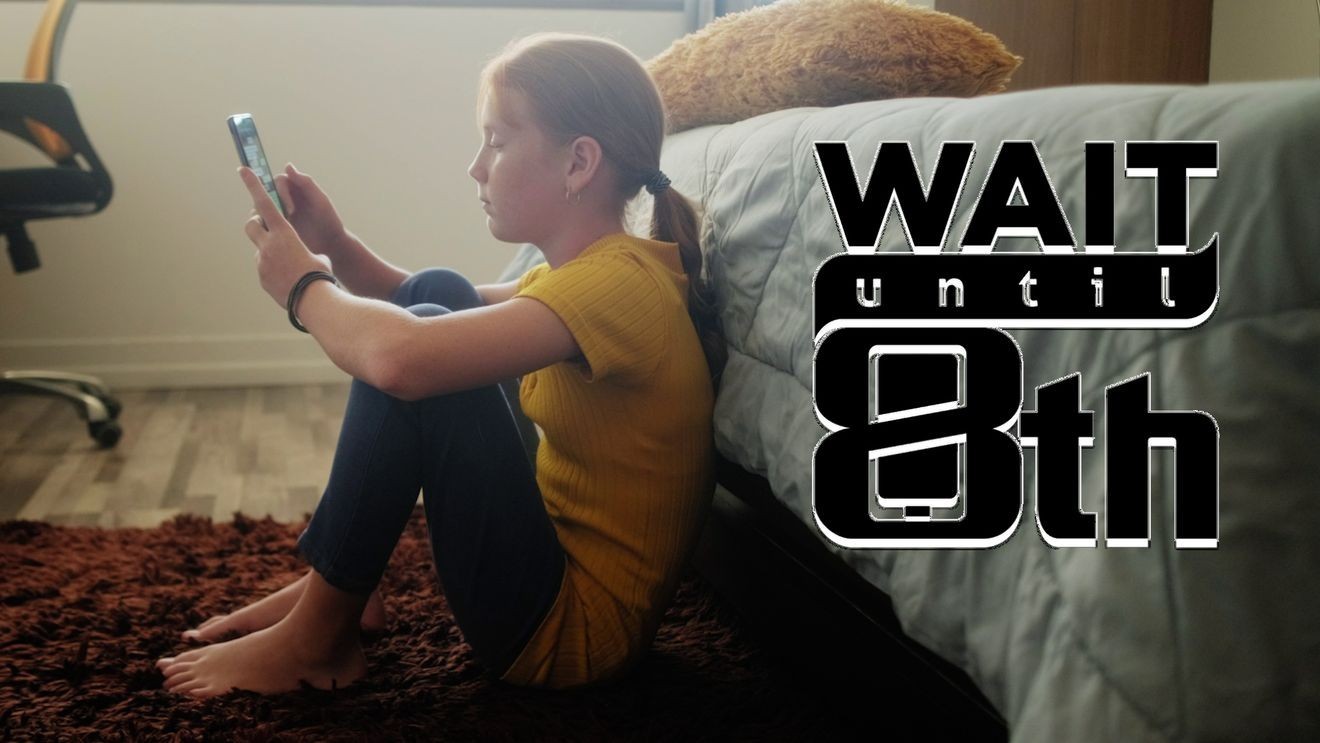
SCRANTON, LACKAWANNA CO. (WOLF) — Scranton School District hosted a panel discussion Tuesday night urging parents to pledge to delay smartphones for children until at least the end of eighth grade.
The effort is tied to the nationwide “Wait Until 8th” campaign, a parent-driven movement that began in Austin, Texas. The pledge is designed to reduce social pressure by encouraging families to make the decision together by grade, while still allowing basic communication through non-smartphone alternatives.
The panel included Superintendent Dr. Erin Keating, Lackawanna County District Attorney Brian Gallagher, Detective Sheryl Turner and Scranton School District Chief of Leadership and Education Rob DeLuca.
District officials said they partnered with the Lackawanna County District Attorney’s Office because they are seeing more issues tied to smartphones and social media, including among younger students. Panelists warned about a range of risks, including cyberbullying, harassment, exposure to mature content and misinformation. They also warned about online predators, grooming and sextortion.
Keating said the initiative is also aimed at helping parents understand what kids can access through a phone and how quickly it can create problems.
“Not only is the campaign to get parents to wait, but it’s also asking parents to really dig in and figure out what your kids are doing on that device, because that device has global capabilities. They have access through social media to a lot of networks, and we’re seeing that spill into schools the next day in the form of things like bullying, harassment and violence, and in the form of real poor decision-making,” Keating said.
Panelists also discussed mental health concerns they said are tied to constant connectivity and social media pressures, including anxiety, depression, low self-esteem, sleep disruption and reduced face-to-face social skills. They urged parents to keep communication open, learn the platforms their children use, and set boundaries, including keeping profiles private and turning off location sharing if a child has a device.
Gallagher said his office often investigates cases involving kids online, and he urged parents to consider the consequences of giving smartphones too early.
“The Wait Until 8th pledge does a few things. It allows children to develop emotionally, psychologically and educationally. It dials down on cyberbullying. It also prevents them from being taken advantage of online. Sadly, we see a lot of financial and sexual exploitation of children. Kids are growing up really, really fast, and that device is so powerful they’re making adult decisions in fourth, fifth and sixth grade,” Gallagher said.
Keating added smartphones can connect kids far beyond their school and immediate circles, often in ways adults do not fully see.
“Kids’ worlds are so much bigger than we understand. That smartphone device in their hands gives them access to the whole world, not just the good, but the bad and ugly, too,” Keating said.
For more information, families can visit the Wait Until 8th website. The district also posted the panel discussion on its YouTube channel for those who could not attend.