
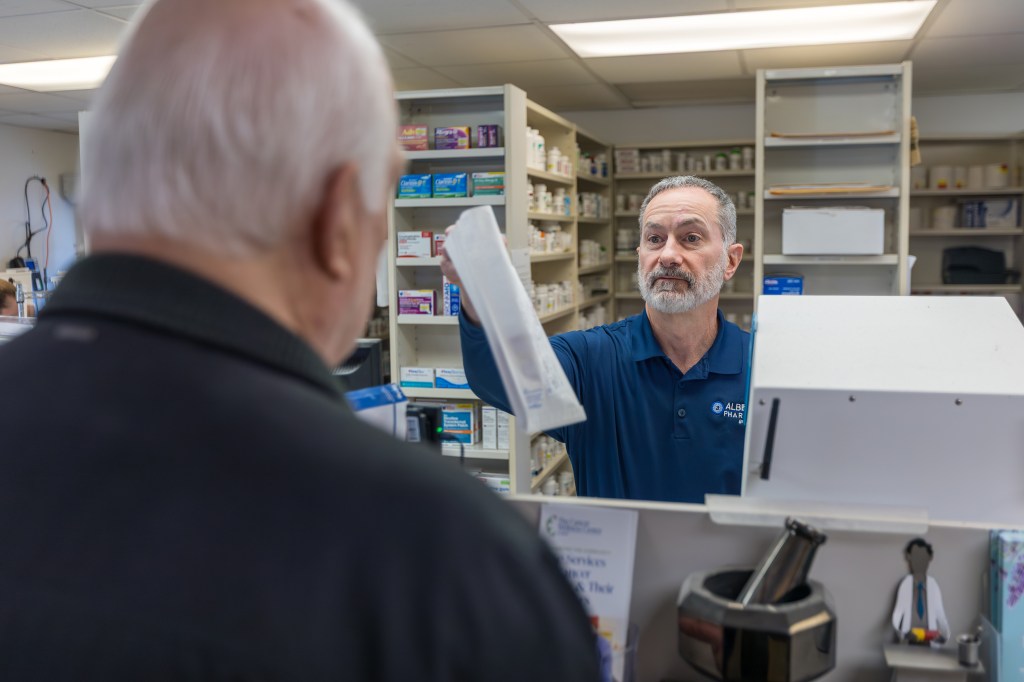
Around here, a trip to the pharmacist not so long ago seemed akin to a visit to a church not so long ago. It wasn’t uncommon to walk through the door, figuring you’d see a friend or neighbor standing by, waiting for a chat with the person in the white coat behind the desk.
Obviously, the pharmacist on duty held a very different job than a priest or a parson, but there were parallels to the roles they played in peoples’ lives. They likely had a working knowledge of a customer’s medical history, enough to be a guiding voice when tough health issues arose again. They were, to many, the first line of defense when health faltered. They got to know just about everybody, through the years. They called their customers by their first names.
In no shortage of locales around our region — especially in our more rural or low-income urban areas — independent pharmacists often served critical roles as a community’s most accessible, established, best-known health care provider. These days though, more and more Pennsylvanians who got used to this type of relationship are seeing “closed” signs on the doors of their local pharmacies.
As more and more independent pharmacists find themselves forced to shutter their business, we should address the significant financial and operational challenges that pharmacy benefit managers (PBMs) have brought to those currently trying to press through during difficult times for their industry. We should also understand the pitfalls that surely will come with continuing to allow current practice to impact pharmacies in our community.
In this regard, it is imperative for the state’s General Assembly to consider and pass legislation designed to reverse trends leading to wider swaths of places known as pharmacy deserts.
Pennsylvanians for Protecting Pharmacy Access — a coalition of chain and independent pharmacies and pharmacists, patient advocates, health care providers, and community leaders pushing for PBM reform across the commonwealth — says more than 1,000 community pharmacies have shut their doors in the state since 2020. It estimates that millions in the state currently live in one of those pharmacy deserts, areas where people have limited access to reasonable pharmacies, or none at all.
According to the American Medical Association, PBMs have been managing prescription drug plan benefits for various health insurers, employers and government programs since the 1960s in an effort to help them control spending on prescription drugs and manage benefits. They help make decisions on which medications plans cover, and even where patients can fill their prescriptions. They process and pay prescription claims.
Pharmacists argue they are also making huge profits off their backs by charging health plans or employers more for a prescription drug than they reimburse pharmacies for the same drug, pocketing the difference. Local pharmacists argue there are unpredictable, often drastic swings in the amount they are reimbursed for filled prescriptions from one month to the next, preventing them from counting on a profit.
“We’re all trying to hold on until we can get to a point where it’s fair,” said pharmacist Joe Albert of Albert’s Pharmacy in Pittston and Carbondale. “They’re making billions of dollars and putting people like me out of business.”
As more close, they’re also putting more Pennsylvanians further away from their nearest pharmacies, creating those deserts.
PBMs often offer mail-order prescription services, or direct customers to out-of-town chain pharmacies, but that is hardly filling the real gap created by the loss of independent pharmacies: The one-on-one consultations so many of us who relied on from our established local pharmacists. This hurts our seniors and underserved communities more directly; they are less likely to have the consistent access to transportation to travel further for pills, and they are the ones most likely to count on medical advice from pharmacists they have gotten to know and trust through consistent visits.
The Federal Trade Commission has taken to the courts to try to stop unfair PBM practices , but the process has been tedious. The main problems would be much better remedied through the legislative process.
The General Assembly would serve the public well by looking into the passage of laws that should reverse the desert trends. Among them: Banning PBMs from steering patients away from independent pharmacies in their communities and toward mail-order, retail, or specialty pharmacies that help them boost their own profits. They should also require PBMs reimburse all pharmacies for the full cost of medications, in addition to a fair dispensing fee, as Pennsylvanians for Protecting Pharmacy Access suggests.
Pharmacies have always played a major role in promoting public health within communities. Without them, patient advocates are lost, and our neighbors suffer. It is time to look out for them and support a system that worked, even if it comes at the expense of a few dollars on a corporate balance sheet.