
In what has become a sort of academic tradition in the higher education sector, leaders of Pennsylvania’s four state-related universities came to Harrisburg on Wednesday, seeking to convince legislators at a state budget hearing to increase the subsidy for their institutions.
Gov. Josh Shapiro’s draft budget, which provides a starting template for budget discussions, offers no general fund budget increase for the University of Pittsburgh, Penn State, Temple or Lincoln Universities.
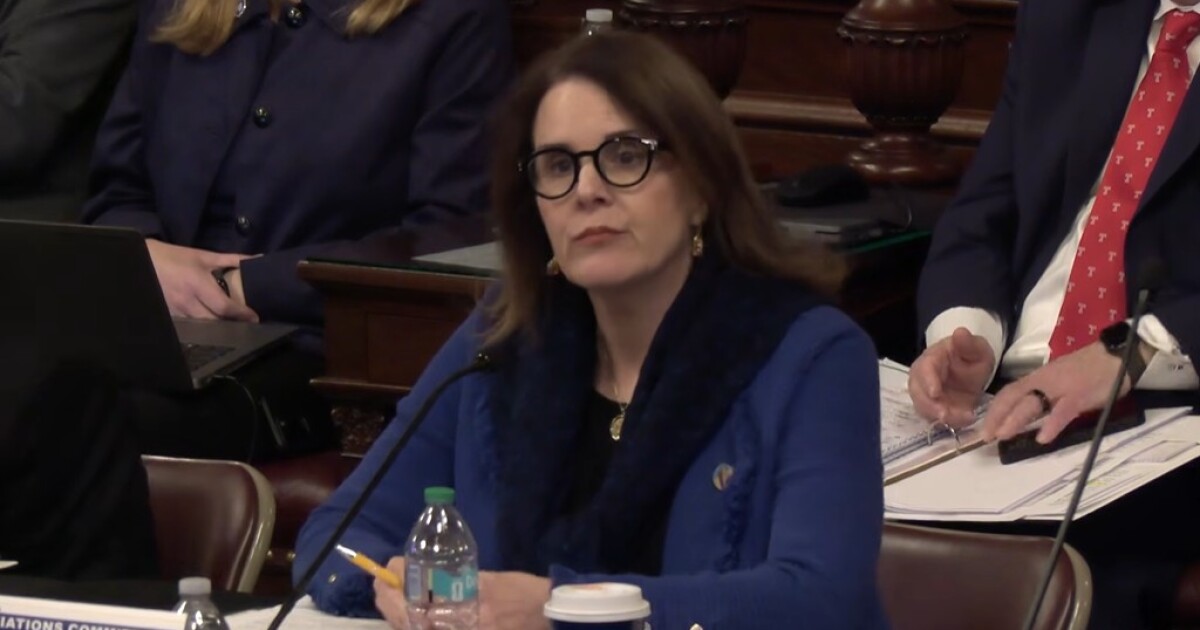
University of Pittsburgh Chancellor Joan Gabel and other school leaders told the House Appropriations committee that if that doesn’t change, students can expect to see higher tuition bills as a result.
“The math is relatively clear that when you hold appropriations flat in an inflationary environment, expenses continue to go up and we have to figure that out somehow and so that has resulted in tuition increases,” Gabel said. “We have held tuition increases below inflation for [at least] 10 years … which is resulting in a very heavy constraint on other strategic investments that we’re able to make.”
Gabel did not provide an amount for Pitt’s own potential hike, but she called it “modest.”
Since 2019, Pitt has received $151.5 million annually from the state. Last year, the school’s leaders wanted to increase that amount by 6%, but came up empty. This year they’ve lowered the request to 3.7%, which would translate into a $5.6 million funding boost.
Gabel called that a “responsible increase request allows us to protect affordability for Pennsylvania students [and] maintain our excellence.”
It was also the most modest request put forward by the state-supported schools.
Republican House leaders pointed out that Penn State is seeking about 12% more than it has received each year since 2019, while Temple has requested a 16% increase and Lincoln, a 10% hike. Meanwhile, officials at those schools have said that fewer students are attending across all campuses — with declines ranging from 1.6% at Penn State to 8.5% at Lincoln between 2024 and 2025.
Jim Struzzi, a key budget negotiator and the Republican chair of the appropriations committee, didn’t sound ready to cut the schools a check.
“The numbers don’t really mesh up,” he said after listing each schools’ budget request and hearing about the mostly-shrinking enrollment.
Penn State University president Neeli Bendapudi told legislators that while PSU plans to close seven branch campuses, the school’s enrollment is only “down slightly.”
But Bendapudi pledged that if state leaders agree to Penn State’s requested budget increase, the school will “commit to freeze tuition for all undergraduate students and all campuses for the 2027-2028 academic year.” On Penn State satellite campuses, tuition will remain flat, she added. But without more state support, she warned, main campus students would see a 2% hike next year.
One point of pride, Bendapudi said, was the fact that “if you adjust for inflation, students at Penn State are now paying a thousand dollars less than they were a decade ago … We’ve kept all increases sub-inflation and we’ve seen no increases in appropriations.”
Temple University in Philadelphia similarly justified its budget request by saying it would freeze tuition for in-state students if its requested increase is granted. Otherwise, said president John Fry, tuition would go up between 3-4%.
“ That’s the only focus… to try to avoid passing that along to our students,” Fry added. Temple’s enrollment sits just below 30,000 students — a marked decline from a high of more than 40,000 in 2017.
Enrollment at Lincoln University, a historically-Black college in southeastern Pennsylvania, decreased 17% between 2023 and 2025, according to school figures. It’s also the smallest of the four state-related universities with just 1,527 students enrolled as of this past fall.
Lincoln has said it maintains a flat tuition cost for students while they attend over four years. And its budget request letter to lawmakers said it did not increase tuition during the last academic year.
Still, Lincoln University president Brenda Allen wrote, “We continue to experience increases in utilities, health insurance and other fixed costs associated with operating a campus. Additionally, costs associated with educational goals and auxiliary functions are outpacing Lincoln’s levels of revenue.”
Gabel had a more upbeat assessment of the situation at Pitt.
“We’re up across the system” in terms of enrollment, she said. Pitt has said that between 2024 and 2025 its student population increased 4%. Enrollment at satellite campuses outside Pittsburgh, Gabel said, has been “flat over the last couple of years — below historical peaks, but stable [and] the Oakland campus is growing.”
The state is required to pass a spending plan by July 1, though last year’s budget came more than four months late, which resulted in missed payments to counties, social-service organizations and schools.
Shapiro last year proposed a 5% general fund hike for the four schools, and also floated a $60 million performance-based funding pool. While a group of legislators, including Pittsburgh Democrat Lindsey Williams, was formed to make decisions on incentive-based funding, last year’s budget did not include an appropriation for it.
During his budget address last month, Shapiro said the council had already developed a formula to send more money to Pitt, Temple, Lincoln and Penn State “based on things like how many of their students graduate, how many degrees they grant for in-demand careers, how many transfer students they accept from community colleges.” He proposed $30 million for the fund.
“ We’ve got this important tool in place,” Shapiro added. “We established the metrics and now it’s time to fund it.”