
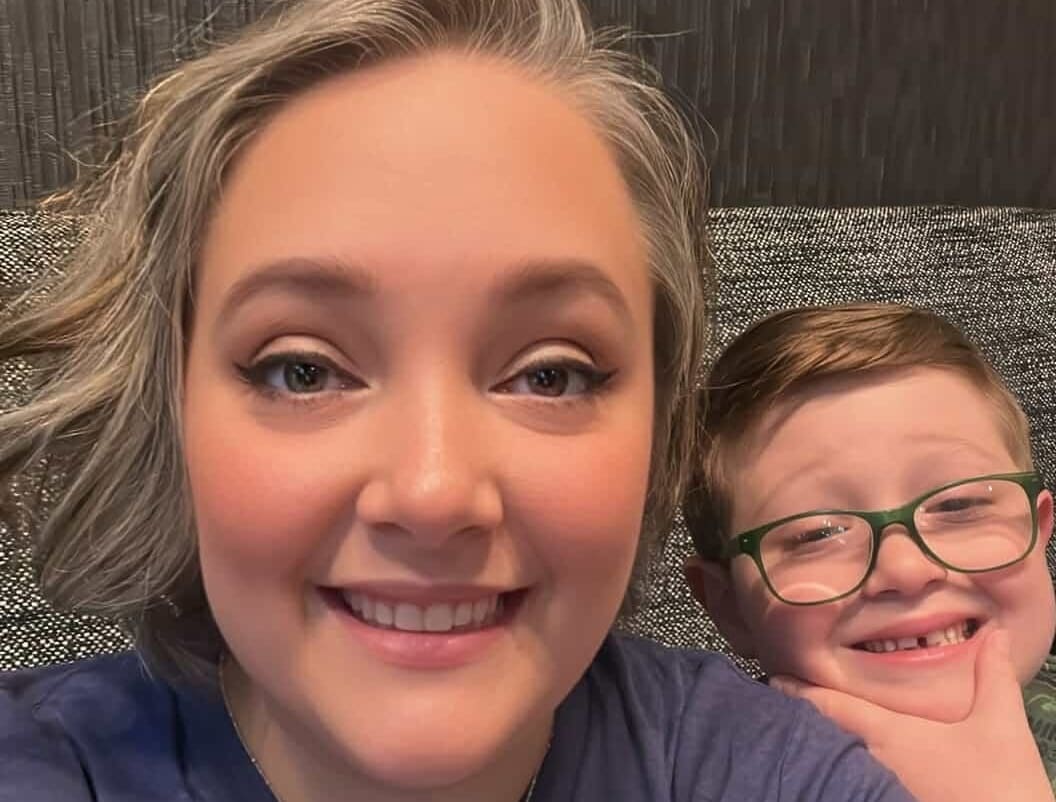
This June, Cole Schiano will celebrate his 10th birthday. Thanks to Medicaid, he’s been able to live his 10 years with all of the medical and occupational support he and his family have needed.
“He is so much fun. He’s in third grade, and he loves school, and he loves his friends,” Cole’s mother, Victoria Schiano, told the Pennsylvania Independent. “He loves being part of the community. He’s a big fan of video games and “Star Wars,” and he knows pretty much everything there is to know about Pokémon.”
According to his mother, Cole has been diagnosed with mitochondrial disease. “If you remember from high school biology, mitochondria are the powerhouse of the cell. And so what that means is that his body does not do a good job producing energy.”
The Cleveland Clinic notes that mitochondrial disease can affect how nutrition is turned into energy in the cells of any organ of the body and causes different symptoms in each patient.
“So for him, he has an IV in his heart that delivers nutrition and fluids,” Schiano said. “He has feeding tubes in his stomach that allow us to give him medication and formulas. He has blood sugar monitors that he has to wear to keep an eye on his blood sugar. You know, he has all kinds of things going on, and because of everything that he has going on, he requires 20 hours a day of skilled nursing to be home with us, to be able to attend school, to be in the community.”
Schiano said when Cole was 4 months old, a social worker at the Children’s Hospital of Philadelphia, where he was an inpatient, explained to her that, based on his medical diagnosis, Cole qualified for disability coverage, under Pennsylvania’s PH-95 Medicaid for Children with Special Needs (PH-95) program, of much of the support and services he would need.
Today, Schiano said, Cole sees 36 doctors in two children’s hospitals in the Philadelphia area.
In July, President Donald Trump signed the One Big Beautiful Bill Act into law, with its cuts of around $1 trillion to federal Medicaid spending from 2025 through 2034. Currently, Medicaid covers health care for one in five Americans, over 70 million people.
Schiano, who works full time as a national community engagement aid at Little Lobbyists, a national family-led organization that advocates for children with disabilities, said she’s already seeing the fallout of the cuts to Medicaid.
“We’ve seen a lot of health care systems in our area having to close because of that; we’re seeing changes at the schools,” she said. “They’re having to look much more carefully at their budget and make decisions about what’s going to be offered. Some of the services that he would typically qualify for for extended school year are not going to be available this year.”
Schiano said that the Trump administration talks about eliminating “waste, fraud, and abuse” in Medicaid in an attempt to “turn the spotlight away from themselves and on to whatever they can get to stick and get people’s attention.”
“‘Waste, fraud and abuse’ is on the provider side. It is not a family-side issue, a consumer-side issue,” Schiano said. “You know Medicaid is — it’s not a cash benefit. So there’s no incentive for families like mine to commit fraud. And furthermore, as I explained before, I mean, it’s nearly impossible on the consumer side to commit fraud, because you’re having to prove everything 10 times over.”
“The narrative that they’re trying to create is one that families are just able to get these services just by walking in the door and saying that they want them, and nobody’s checking for qualifications, and that we’re receiving more services than what we should qualify for, and that regular insurance should be able to take care of these things, and that is just not the reality of how the system works at all,” she said.
Schiano explained that every two months, Cole’s nursing agency and physicians are required to send all of his medical reports to Medicaid, confirming his diagnoses and treatments. Additionally, she has to call the insurance company every two months to provide all of her son’s records for him to continue receiving the care he needs.
“They’re trying to say that our children are getting services that they don’t need, and I would argue that these are the very services that allow him to thrive and to be the person that he is,” said Schiano.
Schiano said Cole’s care is 100% covered by Medicaid, and were they to lose it, she’d be bankrupt in a matter of months. She added that without access to Medicaid, Cole would likely need to be hospitalized and even institutionalized to receive the care he can’t survive without: “He is able to be part of his community and in school with his peers because of these therapies and the services that he is receiving, and he’s able to access his education the same way as his peers do, which, there’s nothing wasteful or abusive about that.”