
This is WESA Arts, a weekly newsletter by Bill O’Driscoll providing in-depth reporting about the Pittsburgh area art scene. Sign up here to get it every Wednesday afternoon.
Over the past 22 years, City of Asylum has sheltered and supported 18 writers fleeing persecution in their home countries. Most have stayed in one of the group’s North Side houses for a couple of years. While a few have remained in Pittsburgh, many have moved on.
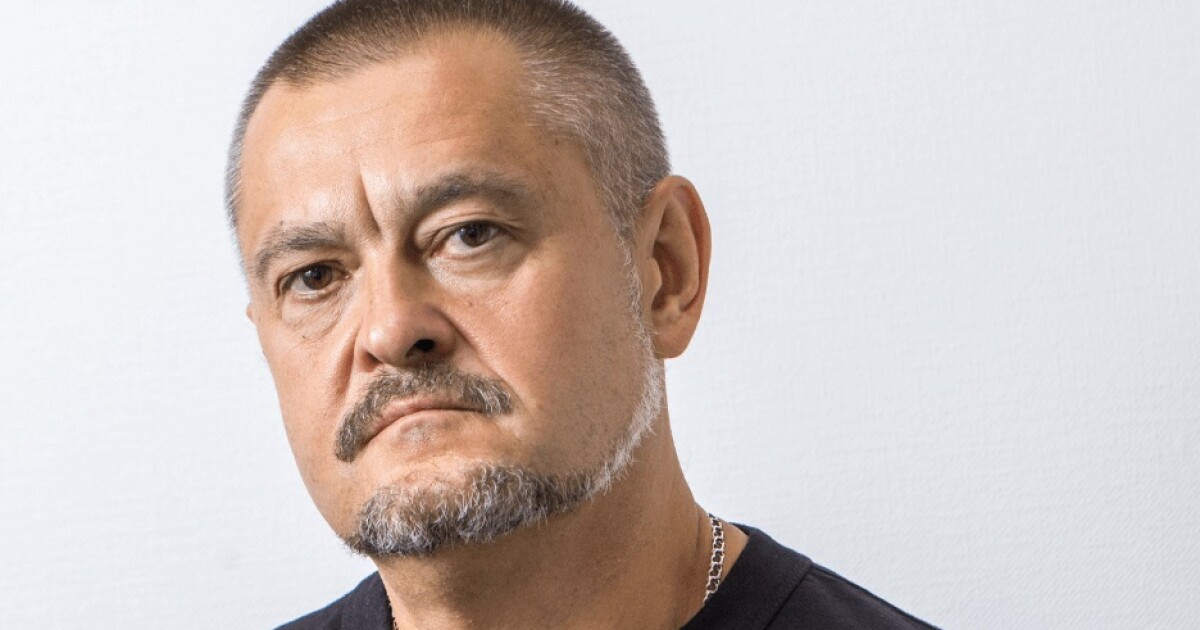
The next to depart will be Volodymyr Rafeyenko, a poet, novelist and critic from Kyiv, Ukraine. His scheduled final appearance as an artist in residence here is a Tue., March 17, staged reading from his play “Signals of Being,” which was sparked by Rafeyenko’s experiences back home in early 2022, at the start of the second Russian occupation. The event at Alphabet City is free with registration.
“I really liked Pittsburgh from the very first sign,” Rafeyenko said through a translator in a Zoom interview this week. He said both the “smell of water” and the city’s metallurgical heritage reminded him of Donetsk, the river-crossed city where he grew up and went to university. (Only later did he learn the two are official sister cities.)
Rafeyenko, 56, writes in a style that’s been described as “magical postmodernism” and is regarded as one of Ukraine’s top novelists for works including “Mondegreen: Songs about Death and Love.” But writing back home, or even living there, had grown dangerous.
City of Asylum residencies are meant to give writers time to write, and Rafeyenko said he got it.
“In three years, I wrote more than I had in 10 years prior,” he said. In fact, he said, he’d never previously had a living situation where he was able to write full-time. (He’s also a research scholar at Pitt.)
While in Pittsburgh, he completed two novels, a book of essays, and two plays — neither of which was “Signals of Being,” a slightly earlier work.
By the way, Rafeyenko grew up speaking and writing in Russian … but he conducted the interview with WESA in the Ukrainian language, which he started to learn after the first Russian occupation, in 2014. According to his bio, he now speaks only in Ukrainian, “as an act of resistance and perseverance.”
In nearly three years here, Rafeyenko got to know Pittsburgh. In addition to taking in theater and opera Downtown, he said he and his wife, Olesia Rafeyenko, enjoyed visiting the Children’s Museum, The Andy Warhol Museum and the Carnegie Museum of Natural History. He singled out holiday performances of Handel’s “Messiah” at Calvary Methodist Church, in nearby Allegheny West, as a particular highlight.
“Signals of Being” takes place at a time when the Russian invasion has left residents with no water and no electricity. But Rafeyenko said the hardest thing back then was the absence of any connection with the outside world — until some dog-walkers discover spots with signals where they can make short phone calls.
The reading of a two scenes from the three-act play will last about 30 minutes and feature a cast of top-notch local actors, including Martin Giles, as “Danylo,” Joseph McGranaghan (“Vasia”) and Kelsey Robinson (“Mariia”), directed by City Theatre’s Clare Drobot. A conversation between Rafeyenko and his literary translator, Mark Andryczyk, will follow.
After he wraps his City of Asylum residency, Rafeyenko will head to a residency at Harvard University (whose Harvard Ukrainian Research Institute published “Signals of Being”).
Asked what he wants Americans to understand about Ukraine, Rafeyenko became visibly emotional. He emphasized Russia has justified its invasion in large part by falsely claiming that Ukraine lacks its own culture and language. “We never wanted to be part of Russia,” he says.
“Same as Americans, we value freedom and dignity,” he added, pronouncing the latter three words in English. “Russians can try to kill us, but they’ll never break us.”