
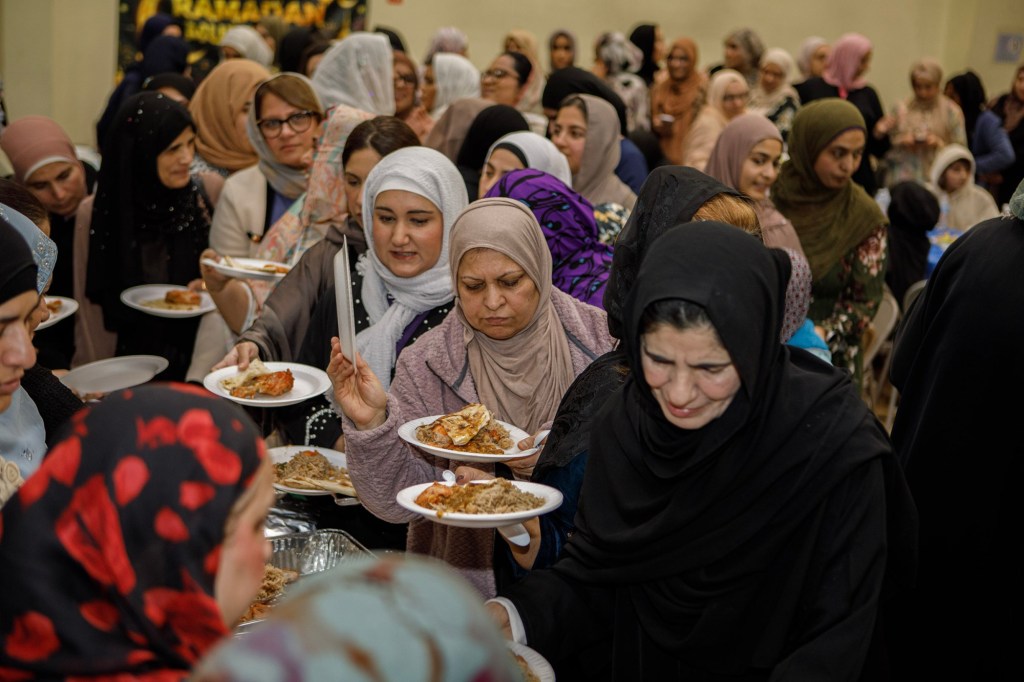
For me, Ramadan is a time that takes me back to my childhood, tied together by shared hunger and a sense of dignity. It stirs memories of hardship, resilience and the will to endure.
Fasting during Ramadan isn’t just about feeling hungry; its real value lies in turning that experience into acts of charity that restore dignity, and in building empathy for those who are less fortunate.
In 2022, the household survival budget in Lehigh County was $34,092 for a single adult and $98,664 for a family of four, which works out to a minimum wage of $17.05 an hour for one person or $49.33 an hour for a working couple. That’s nowhere near enough for a dignified standard of living.
Wealth inequality is like the bitter fruit of a poisoned tree, showing the lasting impact of billionaires hoarding wealth and the lack of fair taxes on the rich, both of which threaten the health of democracy.
In a memorable scene last year, Brazilian President Lula da Silva addressed workers and trade unionists at a relaxed gathering, far removed from the noise of political rallies. He wasn’t there to seek votes or funding, but to share his own story — his fight against poverty and hunger, and the hardships endured by orphans impacted by neocolonial imperialism.
He paused, thinking back to his younger days, remembering the time he walked into a factory cafeteria as a broke young worker, watching others eat while he couldn’t even afford the simplest meal. The memory struck him deeply, his voice trembled, and tears filled his eyes. It wasn’t the president shedding tears, but the child within him who had never left.
It reminded me of my youth and a recent trip to Mombasa, Kenya, where, since the country gained independence in 1963, multinational corporations have exploited resources and deepened wealth inequality, leaving in their wake poverty, pollution, malnutrition, food shortages, prostitution, orphaned children and corruption.
I’ve never felt the need to hide or embellish my past, often sharing warm childhood memories with my kids. Growing up in a family of 10, I lost my father at 14, and I often wondered when we’d finally enjoy a proper meal with meat or chicken.
My three sisters took on babysitting, teaching kindergarten and sewing from home, while we brothers spent weekends fishing and being cared for by our two elder brothers, mother and sisters. That’s how we got by — our lives rooted in moral strength and resilience.
I know hunger not as an idea but through lived experience, having gone to the United Kingdom with only 20 pounds and later to the United States, working my way through college and pushing to turn a dream into reality.
Poverty is nothing to be embarrassed about, and hunger leaves a deep mark that can’t just disappear. That’s why Muslims fast for an entire month — to understand the struggle of hunger and grow empathy for others, especially children, who endure it every day.
Supporting people who are hungry, struggling financially or without a home is important all year, not just during Ramadan. Right now, millions around the world are dealing with famine and malnutrition, particularly in areas affected by conflict, sanctions, occupation and climate change.
Hunger isn’t just a humanitarian problem — it’s a real threat to human security. To tackle it, we need to address the root causes of poverty, like wealth inequality, high living costs and fair pay.
Hunger isn’t just about poverty — it’s fueled by conflict, injustice and the ongoing lack of sustainable solutions from those in charge, leaving millions stuck in cycles of dependence and struggle. Thinking back to Lula’s tears isn’t about the past — it’s a powerful reminder that hunger is a blatant attack on human dignity.
Ramadan is a time for reflection, moral responsibility, and even political involvement. For me, poverty and hunger go beyond the absence of income — they reflect a gradual loss of dignity, driven by wealth inequality and systems that view people as passive recipients rather than individuals with rights.
In these final days of Ramadan before Muslims are obligated to give zakat al-fitr on Eid to those in need, I urge the mayors of Allentown, Bethlehem and Easton, Lehigh Executive Josh Seigel, and the county commissioners to create real safety nets for struggling residents and move the county away from empty gestures of empathy. It’s about advocating for bold, forward-thinking leadership that puts dignity at the heart of public policy.
Let’s work together to make this county genuinely affordable for homeownership, rent, health care, public transport and education, while ensuring dignity for everyone, including those who are incarcerated.
This is a contributed opinion column. Mohammed Khaku, who lives in Upper Macungie Township, is active in the Islamic community of the Lehigh Valley. The views expressed in this piece are those of its individual author(s), and should not be interpreted as reflecting the views of this publication. For more details on commentaries, read our guide to guest opinions at themorningcall.com/opinions.