
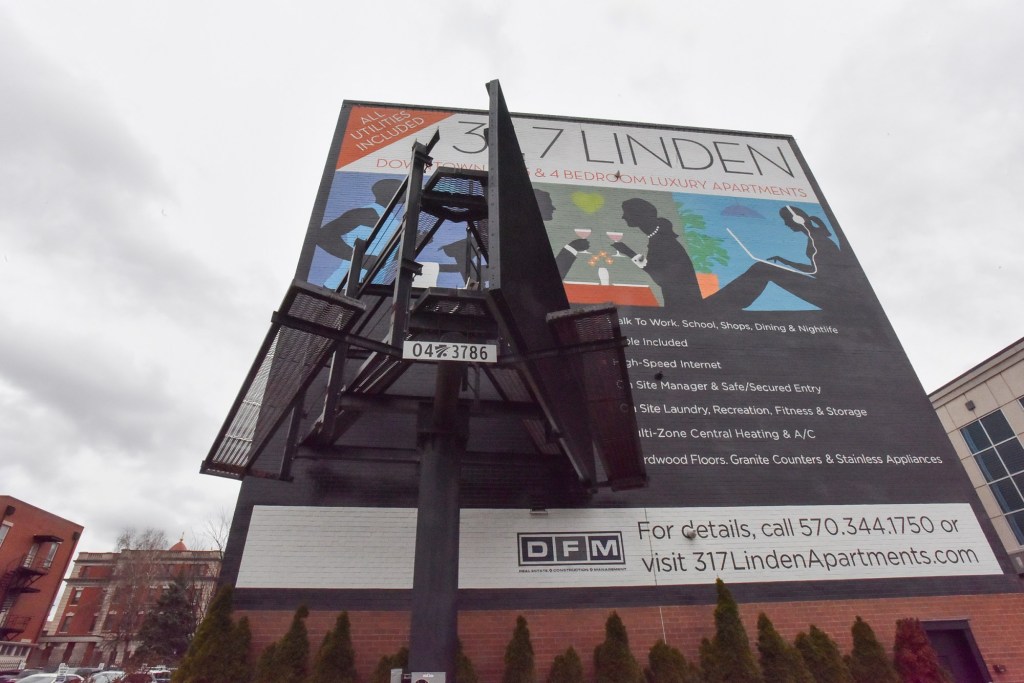
Scranton has issued permits for a two-sided digital billboard at 320 Mulberry St. downtown that was rejected last year by the city’s Historical Architecture Review Board.
City council last year upheld HARB’s recommendation against the billboard sought by Kegerreis Outdoor Advertising of Chambersburg. The firm then sued the city in July to overturn its denial of converting the sign from static to digital displays. In that lawsuit filed in Lackawanna County Court, Kegerreis claimed the city missed its own deadline for council to uphold HARB’s advisory opinion rejecting the digital displays, and the untimely action by council created a “deemed approval” of the digital billboards.
The Kegerreis firm, which had bought the sign structure that was erected in 2012 without zoning approval, sought HARB approval in February 2025 for the conversion of the two sign faces into rotating LED digital signs. At the February 2025 HARB meeting, Scott Kegerreis said his company already had removed both static signs and installed one digital sign facing west, before the city issued a stop-work order. Kegerreis thought the prior owner received the appropriate permits from the city for the conversion of static signs to digital, but there was a “giant miscommunication.” Kegerreis had said officials told him to go before HARB, and if it said yes, then the digital billboards would be permissible. HARB then issued its denial in March 2025.
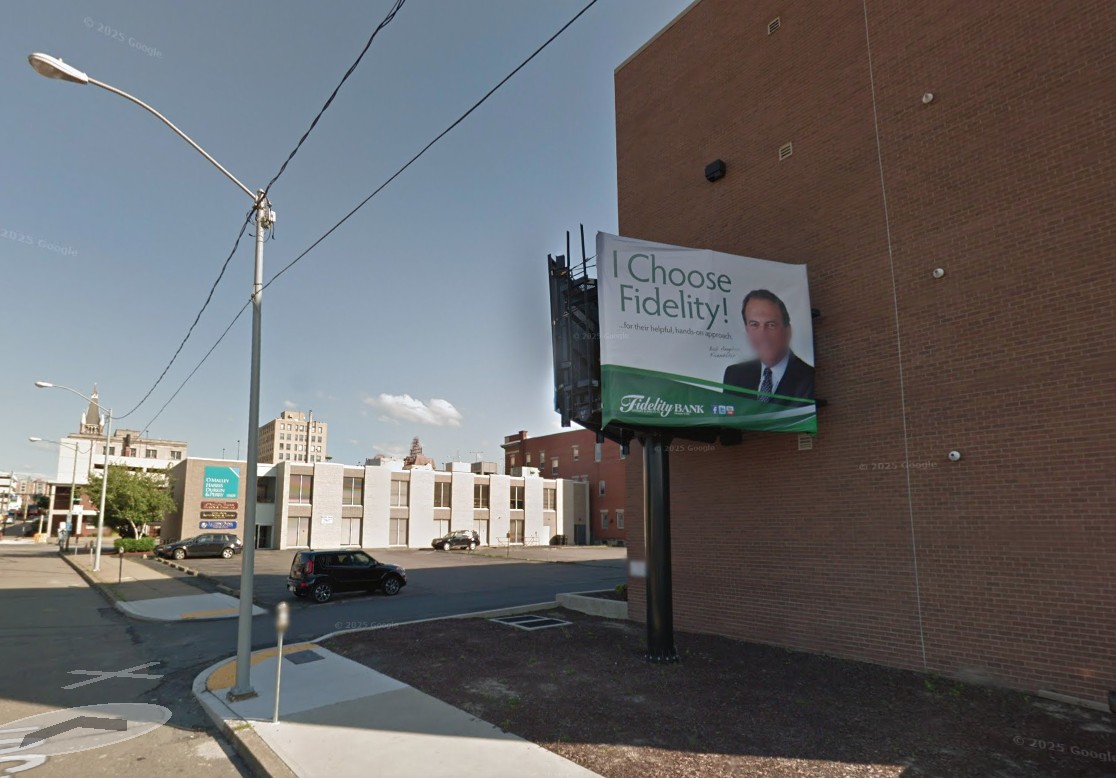
A billboard at 320 Mulberry St. in Scranton in May of 2012. (IMAGE SCREEN GRAB / GOOGLE STREET VIEW)
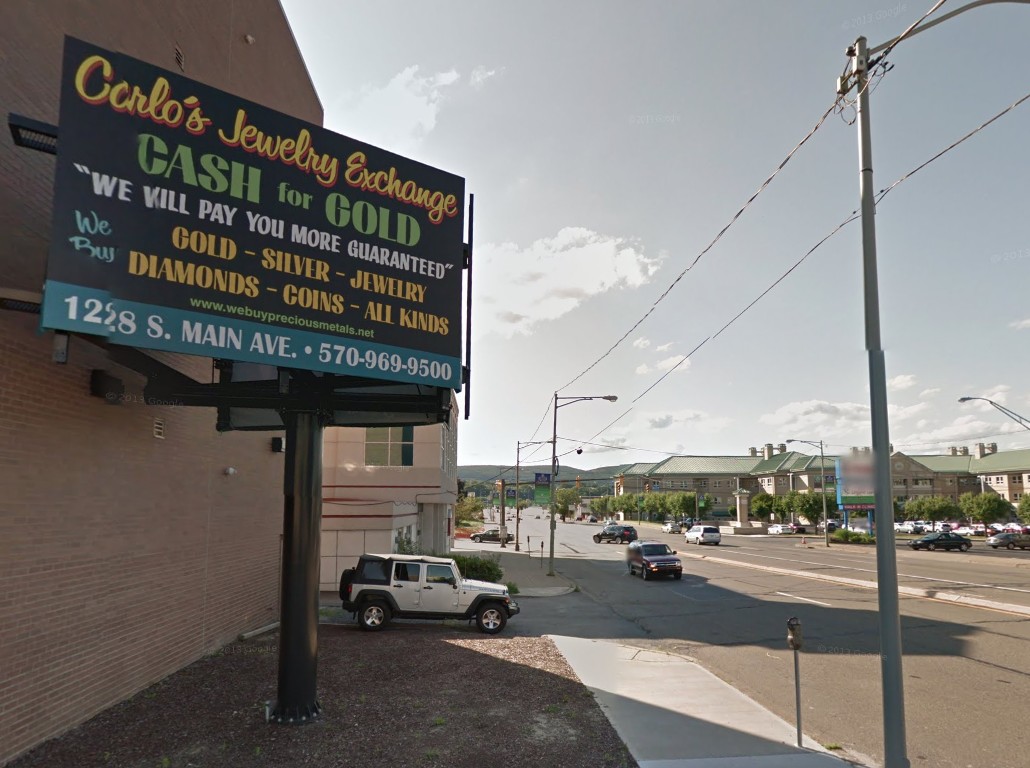
A billboard at 320 Mulberry St. in Scranton in May of 2012. (IMAGE SCREEN GRAB / GOOGLE STREET VIEW)
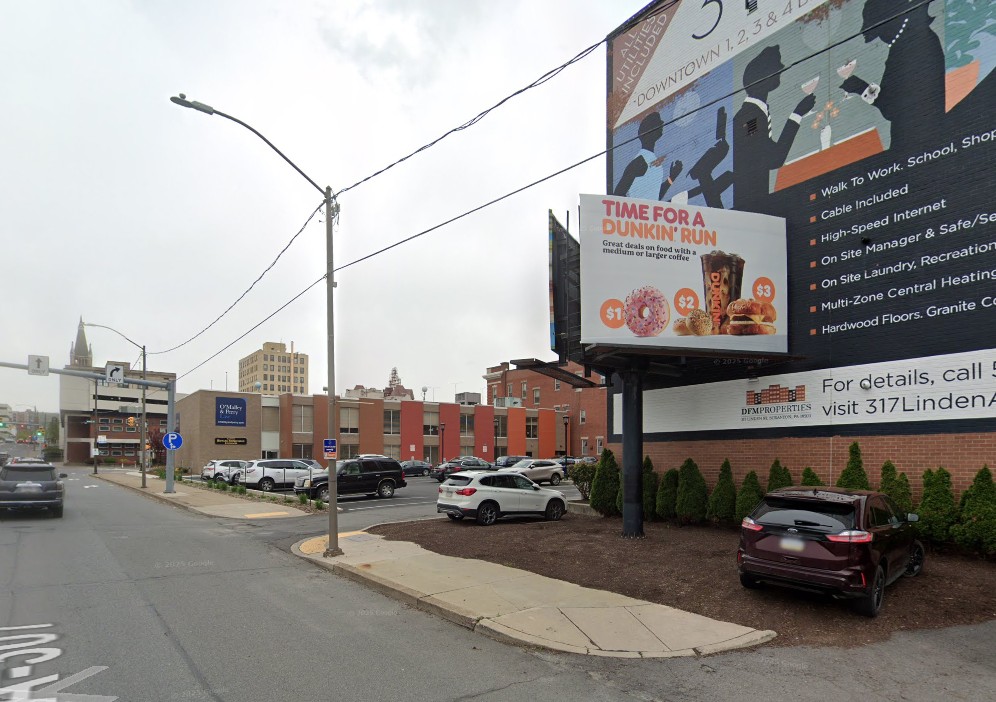
A billboard with a Dunkin’ ad at 320 Mulberry St. in Scranton in April of 2023. (IMAGE SCREEN GRAB / GOOGLE STREET VIEW)
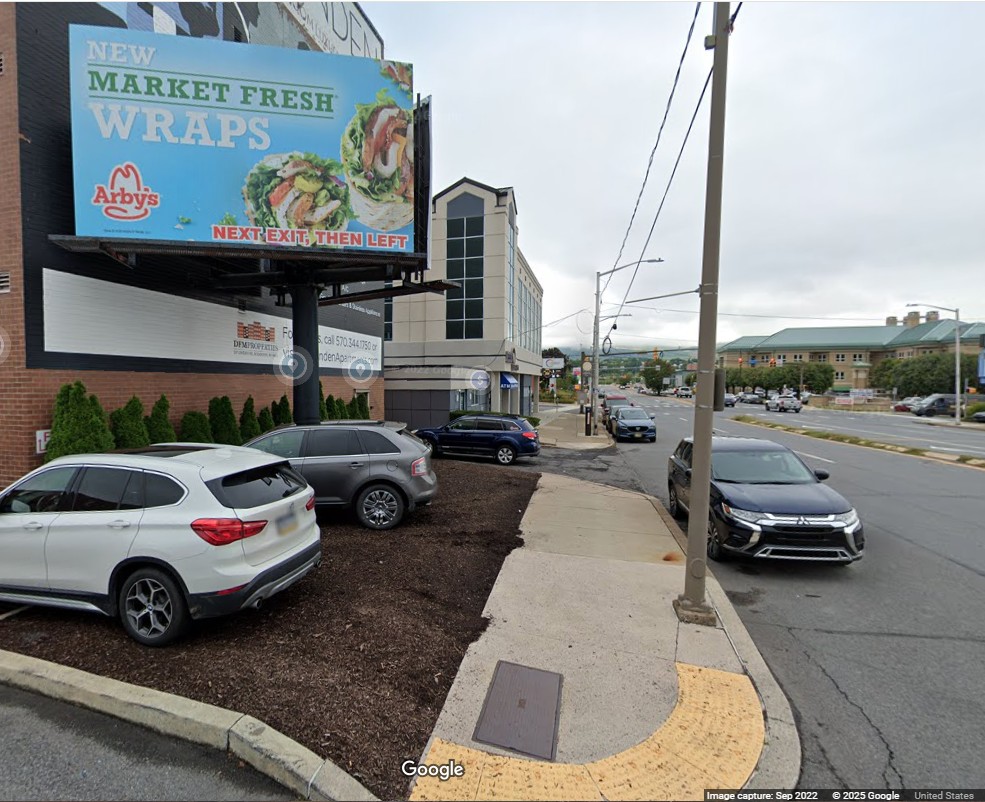
A billboard at 320 Mulberry St. in Scranton in Nov. of 2022. (IMAGE SCREEN GRAB / GOOGLE STREET VIEW)
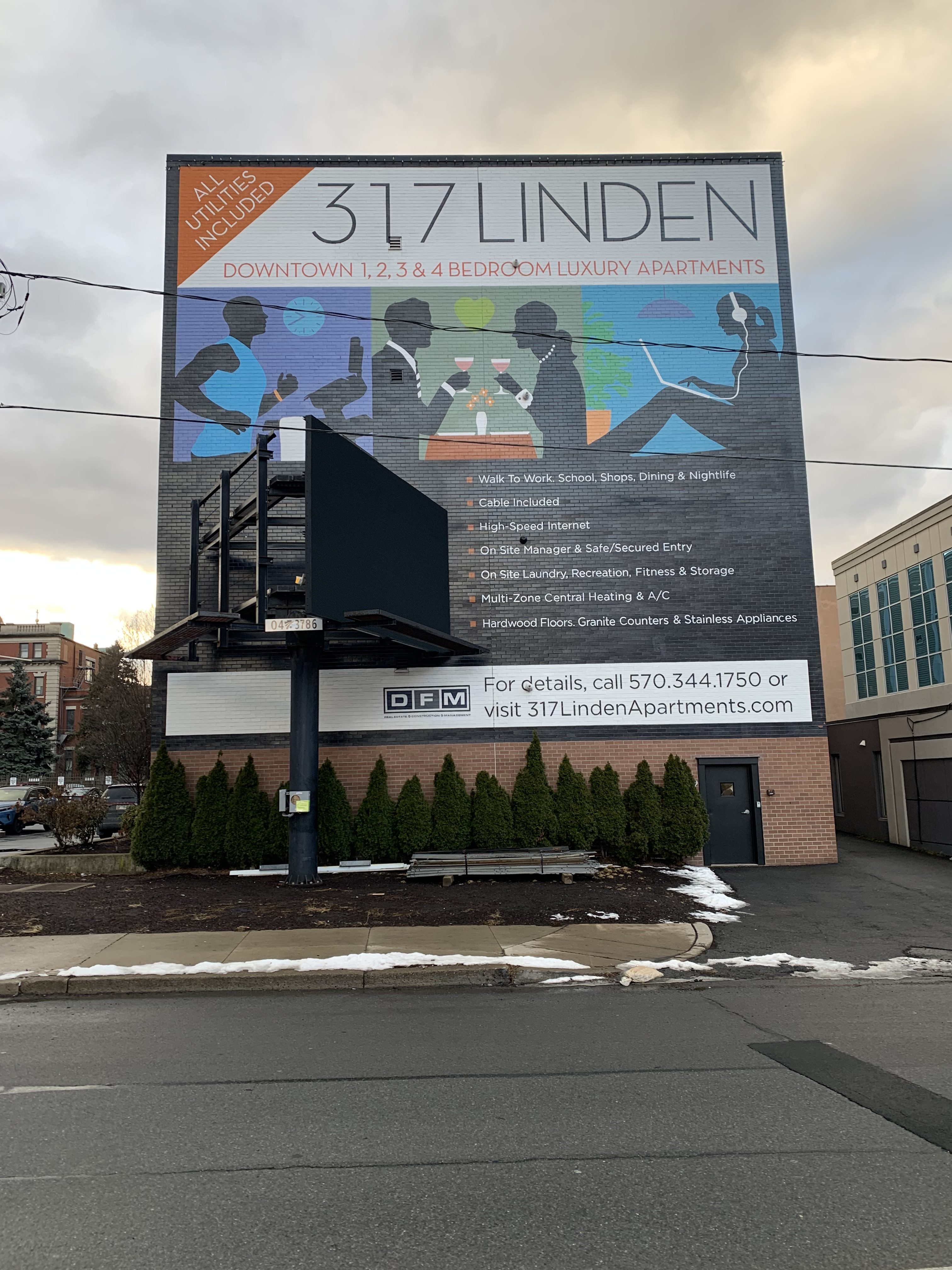
A two-sided billboard at 320 Mulberry St. in Scranton on Thursday, Feb. 13, 2025, in front of the north wall of a four-story building along Oakford Court and that fronts on 317 Linden St. (JIM LOCKWOOD / STAFF PHOTO)
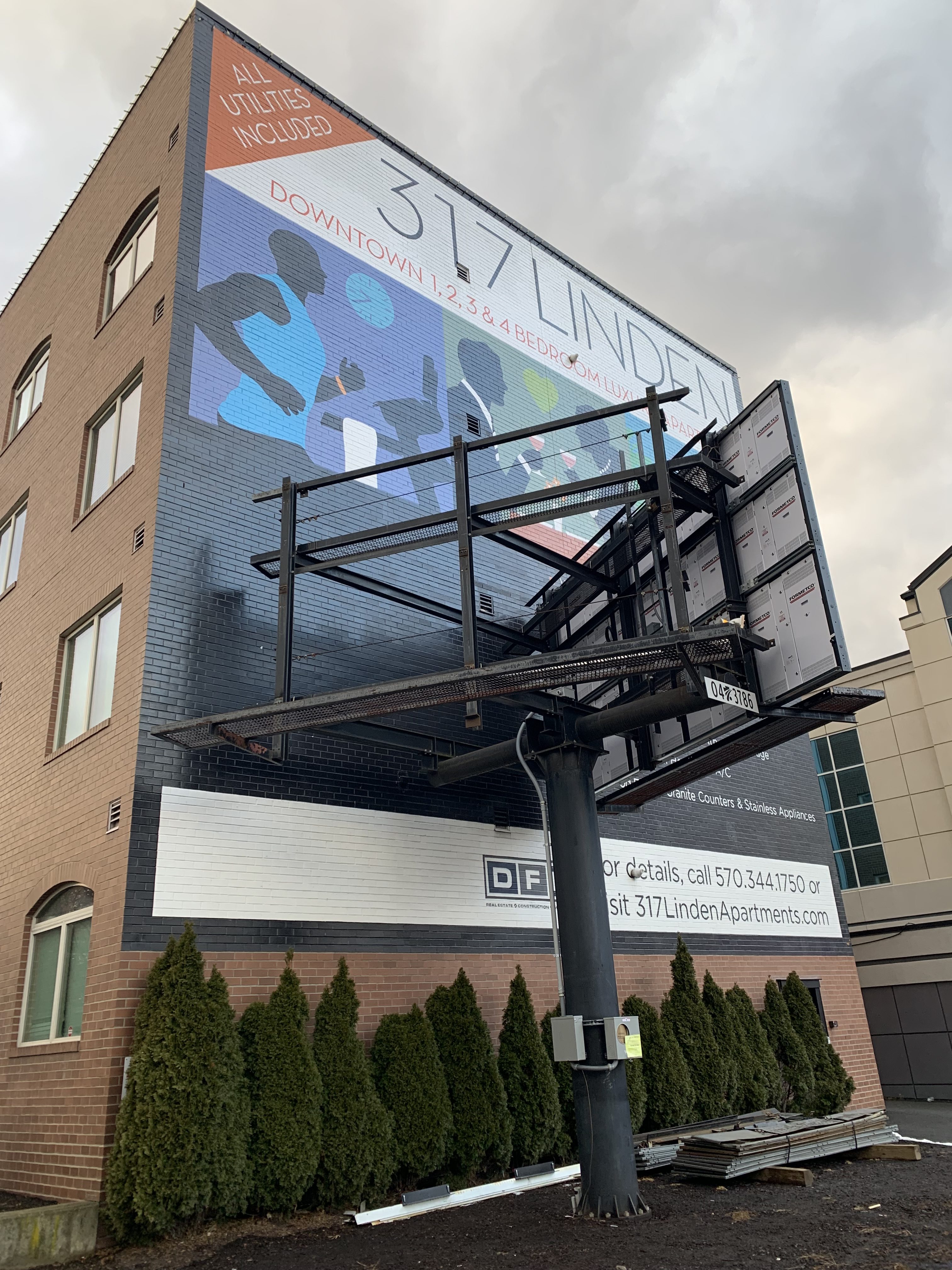
A two-sided billboard at 320 Mulberry St. in Scranton on Thursday, Feb. 13, 2025, in front of the north wall of a four-story building along Oakford Court and that fronts on 317 Linden St. (JIM LOCKWOOD / STAFF PHOTO)

One side facing west of a two-sided billboard at 320 Mulberry St. in Scranton on Thursday, Feb. 13, 2025, in front of the north wall of a four-story building along Oakford Court and that fronts on 317 Linden St. (JIM LOCKWOOD / STAFF PHOTO)
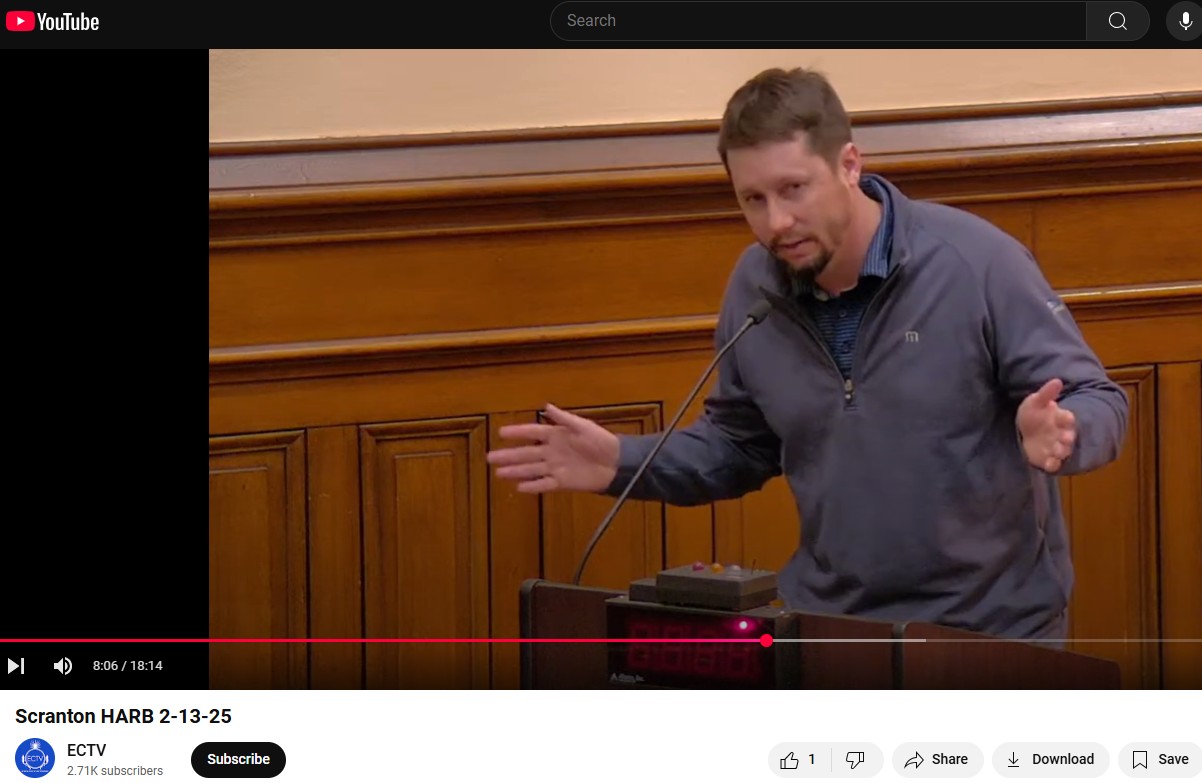
Scott Kegerreis of Kegerreis Outdoor Advertising speaks about a billboard at 320 Mulberry St. in Scranton during the city’s Historical Architecture Review Board meeting on Thursday, Feb. 13, 2025. (IMAGE SCREEN GRAB / ELECTRIC CITY TELEVISION VIA YOUTUBE)
Show Caption
1 of 8
A billboard at 320 Mulberry St. in Scranton in May of 2012. (IMAGE SCREEN GRAB / GOOGLE STREET VIEW)
That rejection went to council in May, in the form of a resolution from the administration of Mayor Paige Gebhardt Cognetti, for council to uphold or reverse HARB’s advisory opinion. On May 13, council backed HARB in a 5-0 vote — with council President Gerald Smurl, Bill King, Mark McAndrew, Jessica Rothchild and Tom Schuster all in favor — to introduce a resolution accepting HARB’s denial of a conversion of the static signs on the two-sided structure into digital signs. Council then adopted the resolution at a May 22 meeting, with Smurl, Rothchild and Schuster voting in favor of it, and King and Mark McAndrew absent.
The makeup of council has since changed in 2026, with the departure of Smurl and King and the addition of Sean McAndrew and Patrick Flynn.
Kegerreis’ lawsuit took the form of a “mandamus” complaint, which claimed that because the city missed its own “45-working-day” deadline under the city code to act on the HARB decision, the court must mandate that the digital signs are approved and the city must provide the permits to Kegerreis for the digital conversion.
Council received HARB’s written decision on March 14, 2025, and the 45-day deadline expired May 16, but council’s vote on adoption did not occur until May 22, according to the lawsuit. It also contended the issuing of a permit is purely ministerial and does not involve any discretion by the city, Kegerreis has a clear right to the permit via the deemed approval and the city has a corresponding duty to issue the permit. The lawsuit sought a writ of mandamus compelling the city to approve the digital billboards.
At Tuesday’s council meeting, Councilman Sean McAndrew said he believes the city “settled” the Kegerreis lawsuit and now the digital billboard is approved and Kegerreis has a permit for it. He called for council to ask the administration “what happened there, why did they settle and provide us some information why now they (Kegerreis) have a permit and they are able to put up these digital billboards.” McAndrew also said of the administration, “Sometimes they need to be a little more proactive. So going forward when they have settlements in general, can they please provide us some information.”
The court docket of the lawsuit contains only two items: the complaint filed July 8 and an acceptance of service filed July 21. The docket does not contain anything else filed by either side, or anything reflecting a resolution, settlement, withdrawal or dismissal, or any order of the court.
The Times-Tribune asked the administration about the status of the lawsuit and digital billboard. On Wednesday, Assistant City Solicitor Mariclare Hayes replied: “The Mandamus action filed by Kegerreis Outdoor Advertising is no longer active, however, the formal discontinuance has not yet been filed by Plaintiff’s counsel on the docket. This lawsuit did not involve a request for, nor payment, of any monetary damages. After a close review of this matter, it was determined that the facts surrounding this particular application did fall within a loophole which would allow this billboard to go forward. After all additional required documents were submitted to the City, permits were issued on January 6, 2026. At this point, the City does not have any ongoing involvement with the billboard or knowledge of when it may become actively used by Kegerreis.”
The newspaper asked for clarification on the nature of the “loophole” allowing the billboard. Hayes replied, “The City determined that it was in its best interest to resolve this matter. Therefore, permits were issued once the required plans were received by the City.”
Efforts on Thursday to reach Scott Kegerreis were unsuccessful.