
In 1776, a group of men gathered in Philadelphia to write a document that declared their independence from the British Empire.
Thinking about the Declaration of Independence? You’re right, of course. But two blocks away at Carpenters’ Hall, another group (with some overlap) was crafting their own radically democratic break-up note to King George III: Pennsylvania’s first constitution.
Representatives from Bedford, Berks, Bucks, Chester, Cumberland, Lancaster, Northampton, Philadelphia, Westmoreland and York counties — all 10 PA counties that existed back then — developed the document in September 1776, the same month the British occupied Manhattan and executed American soldier Nathan Hale.
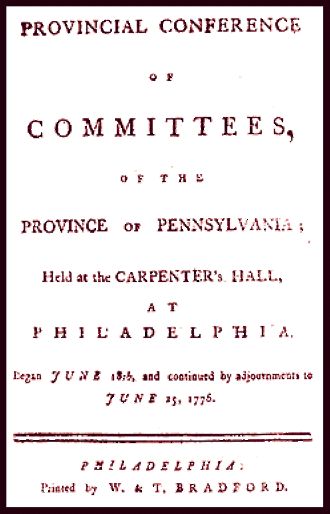
The whole thing started that June, when about 100 PA delegates gathered at the old guild hall. They called themselves the Pennsylvania Provincial Conference. Their purpose: Double-down on declaring independence from Britain, mobilize PA’s militia for the revolution and select writers of the Commonwealth’s first constitution. The lucky authors included Benjamin Franklin, George Bryan, James Cannon and Common Sense scribbler Thomas Paine.
The result: “The most democratic constitution in the world at that point,” says Dr. Christopher Pearl, associate professor and history department chair at Lycoming College.
This spring and summer, Carpenters’ Hall is commemorating the Pennsylvania Provincial Conference and the Keystone State’s original constitution with a series of virtual lectures, four public town halls on our present-day constitution, and a virtual poll gauging citizens’ opinions on how the living document should change today. The events kick off with a virtual lecture from Pearl on how colonial PA politics and the Commonwealth’s influence on a yet-to-begin nation on March 18.
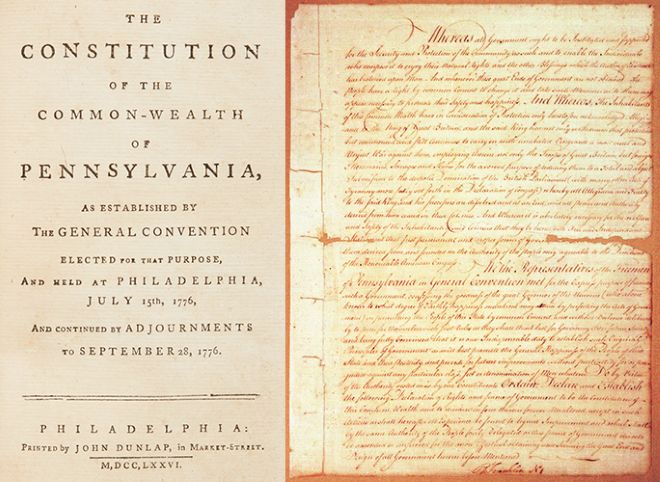 The Pennsylvania Constitution A radically democratic state constitution
The constitution PA adopted in 1776 isn’t our current one (we’re on version number five), but it did shape both the revolution and our country’s founding docs — a piece of Philadelphia history often overshadowed by the penning of the Declaration of Independence and the U.S. Constitution 11 years later in 1787.
“I find the idea of how PA itself came into existence as a state, as a Commonwealth, during this incredibly volatile period in some ways just as fascinating as what was happening with the Continental Congress and the Declaration,” says Carpenters’ Hall Executive Director Michael Norris, who spearheaded the series. A proud, longstanding history nerd, Norris grew up in Chester County during the bicentennial, and recalls visiting the Freedom Train when it stopped in Paoli.
“We want to make people aware of the history of the event, but also tap into what it means today and the importance and relevance of state constitutions, which we don’t often think about,” says Norris.
The First Continental Congress charged the 13 colonies to develop their own state constitutions, as a sort of “cover for their own eventual vote for independence,” Norris says.
New Hampshire completed theirs first, in January 1776. A handful of other states soon followed including PA in September. Ours was considered wildly progressive, as it guaranteed all tax-paying men the right to vote, even if they did not own property, and called for both a governor-less state administration — opting for an executive committee — and a unicameral rather than bicameral legislature (no separate house and senate).
“It was the most radically people’s-oriented state constitution of all of them during the founding decade,” says Robert F. Williams, distinguished professor of law emeritus at Rutgers and expert on state constitutions. He too will speak as part of Carpenters’ Hall’s series.
That’s obviously very different from the government PA has today — and the reception wasn’t all positive. “It frankly scared the daylights out of elite people who were used to having their way during the colonial period,” Williams says. The federal government ended up adopting Massachusetts’ constitutional model, with two congressional and one executive branch. (PA followed suit in our second constitution in 1790.)
But our first did have a Declaration of Rights, guaranteeing freedom of religion, freedom of speech, and other freedoms many will recognize from the Bill of Rights, adopted in 1791.
“One of the things that Pennsylvanians could be proud of is the idea of a constitution that draws its power from the citizens,” Williams says.
“We want to make people aware of the history of the event, but also tap into what it means today and the importance and relevance of state constitutions, which we don’t often think about.” — Michael Norris, Carpenters’ Hall
Past, present, future
Carpenters’ Hall is taking a past, present, future approach to its commemoration of PA’s 250th.
In addition to Pearl’s lecture, Dr. Joel Fishman, adjunct instructor at Duquesne University’s Thomas R. Kline School of Law and co-director of its PA Constitution website, will speak on PA’s governing documents from 1682, when William Penn first set foot here to today.
Bridging the gap between past and present are in-person town halls, held in partnership with country bar associations, that aim to create dialogue between the first and current constitution. Town Halls take place on March 30 at WHYY, travel to Harrisburg on April 15, Pittsburgh on April 29, and Erie on April 30.
In May, Marie Miller, an attorney with the Institute for Justice, gives the final virtual lecture, “The Increasing Importance of State Constitutions in American Political and Legal Life,” bringing the series to the present day.
On June 18, Carpenters’ Hall teams up with the Historical Society of PA to exhibit original founding documents, plus another lecture from Pearl — and gets a new historical marker that recognizes the Pennsylvania Provincial Conference, 250 years to the day when the meeting began.
As for the future, folks can share ideas about what they believe works — and what should change — in PA’s constitution via online and in-person polling during the city’s days-long semiquincentennial.
They’ll release the poll results at the Free Library on September 28, where Williams will close the series with a lecture on how PA’s constitution influenced the U.S. Constitution.
Why should I care about the state constitution?
Few Americans pay much attention to their state constitutions — one Johns Hopkins survey found more than half of us didn’t know state constitutions existed.
But “many of the really important rights that people have don’t spring from the U.S. Constitution, but from their state constitution,” says Brent Landau, executive director of Public Interest Law Center, a collaborator on the town hall series. “So much of the work that we do at The Public Interest Law Center is involving cases brought under the PA Constitution.”
PA’s constitution guarantees all residents the right to a free and equal education, which, in 2023, allowed Landau’s center and others to sue the state over the funding gap between high-wealth districts and low-districts — and win. We’re also one of six states whose constitutions guarantee the right to a clean environment.
In recent years, state constitutions have become increasingly important safeguards of personal rights. Since the overturning of Roe v. Wade, 10 states have added constitutional amendments protecting the right to an abortion. Thirty states require elections to be “free” and PA is one of 18 that require them to be “free,” “equal” and “open” — something that played a role in protecting our election in 2020. To the historians involved with Carpenters’ Hall, this is not just how a democratic society should work: It’s also like déjà vu all over again. A quarter millennium ago, PA’s constitution served to protect residents from British overreach.
“The states do have the overwhelming ability to affect our daily lives,” Pearl says. “I think we come to that realization sometimes too late, because we’re so focused on national policy rather than our own state policies.”
 MORE PHILADELPHIA HISTORY AND THE NATION’S 250TH
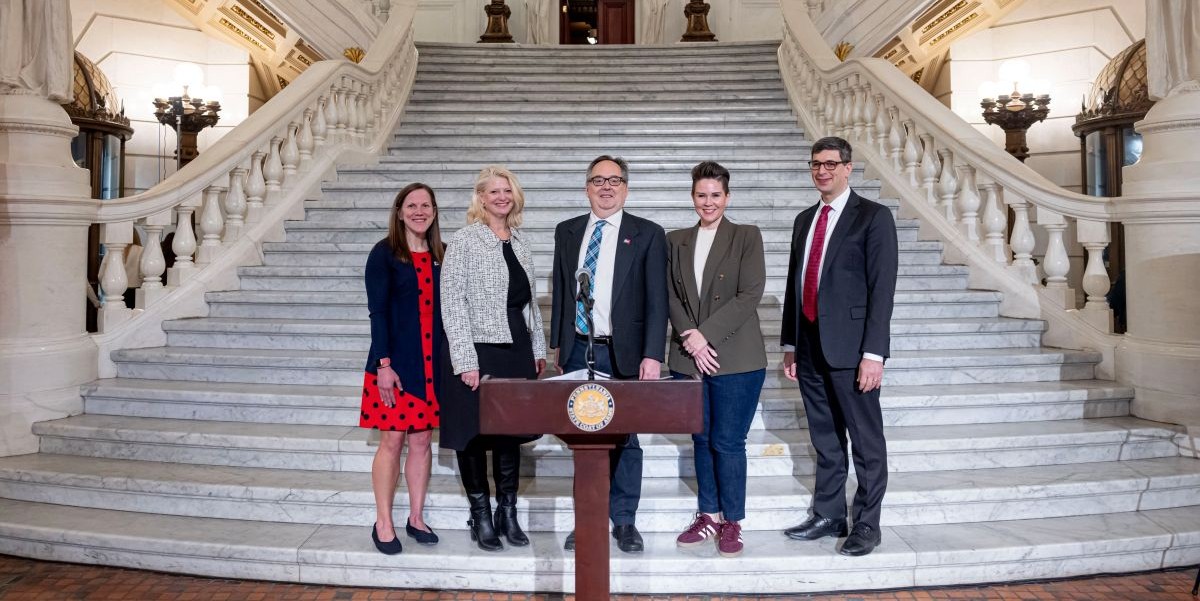
The press conference announcing Carpenters’ Hall’s commemoration of the Pennsylvania Provincial Conference with members of the Pennsylvania Senate Democratic Caucus