
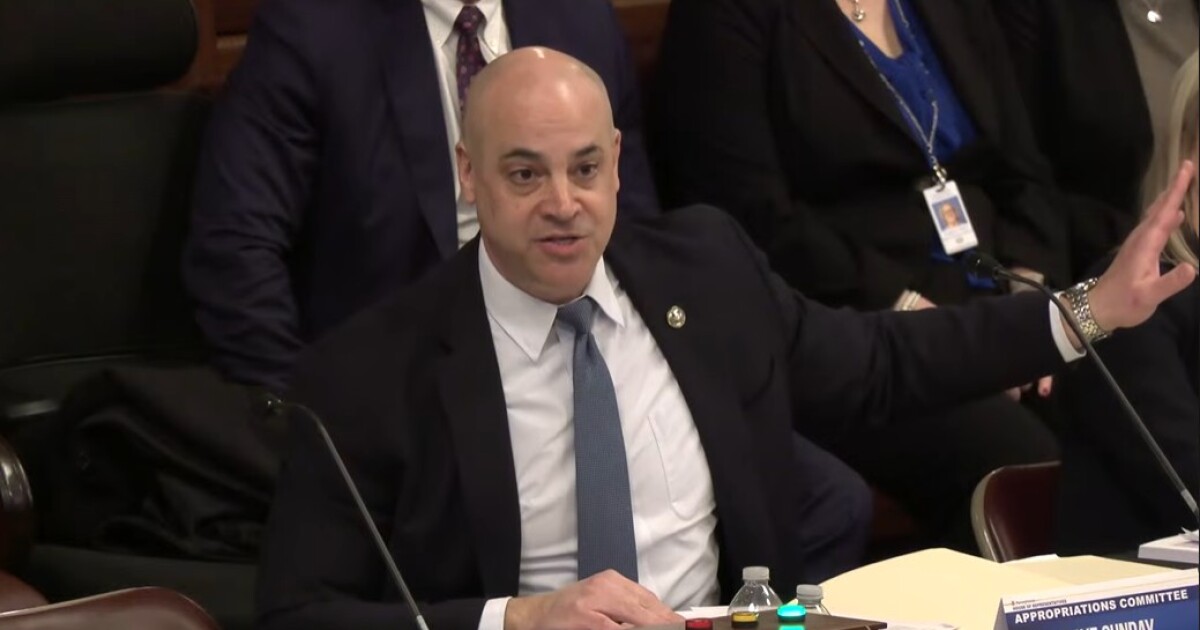
Pennsylvania Attorney General Dave Sunday says he plans to continue with a lawsuit against music-industry giants Live Nation and Ticketmaster, a move made in concert with dozens of other attorneys general but one that parts ways with a settlement reached by the Trump administration.
“While the federal government has chosen to settle, Pennsylvania and our partner states are committed to continuing this case to hold Ticketmaster accountable and restore competition to the entertainment marketplace,” Sunday said in a statement announcing the move last week.
The federal Department of Justice’s proposed settlement — $280 million to the states, allowing other ticket sellers access to the venues, and a cap on service fees — “falls far short of protecting consumers,” the statement added.
It’s a rare if limited rebuke of the White House from Sunday, a Republican who has sat out fights between the administration and the state itself.
The federal lawsuit was launched under President Joe Biden, alongside suits filed by officials in 40 states. Live Nation, the parent company of ticket-seller Ticketmaster, owns 60% of amphitheaters in the U.S., and the suits argue that allows the company to keep out competing promoters from booking events there, essentially acting as an entertainment monopoly. Live Nation, which denies the allegations, operates three Pittsburgh venues: Roxian Theatre, The Pavilion at Star Lake, and Citizens Live at The Wylie.
Opposition to the settlement is bipartisan, and Sunday is far from the only Republican attorney general listed in the complaint. And State Democrats, at any rate, seem unlikely to credit Sunday for independence.
“From tariffs that cost Pennsylvanians $4 billion to drastic cuts to health care, agriculture, and education funding, Sunday has failed to do his job and stand up to the Washington chaos that is hurting people across the Commonwealth,” said Jack Doyle, a spokesman for the state Democratic Party.
As WESA first reported last year, Sunday’s office has repeatedly passed over the opportunity to sue Trump’s cabinet over lost federal funds, instead leaving the task to Democratic Gov. Josh Shapiro and his legal team. (Shapiro’s office, meanwhile, has sued the White House dozens of times since the start of Trump’s second term, and Shapiro was also a thorn in the side of Trump’s first administration, which overlapped Shapiro’s own stint as AG.)
Sunday has said he’d oppose the Trump administration should it challenge Pennsylvania’s artificial intelligence laws, after the president signed an executive order last year limiting state-level AI regulations.
Democratic grievances with Sunday flared up earlier this month, when lawmakers called on him to explain why he hadn’t challenged Trump moves that have meant cuts to social-service and other programs that benefit the state.
Pittsburgh-area House Democrat Emily Kinkead, for one, noted that the attorney general’s office generally defends state agencies and state laws from legal challenges.
“Can [you] talk about why, where the Attorney General’s Office would normally be the office to step in and protect the rights of Pennsylvanians … why your office has not been doing that and has been deferring to the office of the Governor?” she asked.
Sunday avoided discussing the politics of the dispute. He said instead that suits involving the Trump administration had been turned over to the Office of General Counsel, a legal department within the governor’s office, “at the governor’s request.”
That arrangement made sense in a world of limited resources, he said: “There are some things that OGC can do that we also can do, but there are tons of things that I do that they can’t do.”
There is precedent for an attorney general to let the OGC take politically charged cases: In 2013, for example, former Democratic AG Kathleen Kane said she would not defend a state ban on same-sex marriage, because she thought it was unconstitutional. The task of defending the law fell to Republican Gov. Tom Corbett’s attorneys instead.
But Kinkead noted that Sunday is defending the legality of a state ban on using Medicaid dollars to cover abortion services. (Oral arguments on the matter were heard in Commonwealth Court in November.)
“We are gonna defend every statute that is passed by this body, that’s signed into law by the governor,” said Sunday, who noted that the ban on Medicaid funding or abortion would remain on the books unless the court ruled it was unconstitutional.
“I promise you,” he added, “in my first year, I have successfully irritated the entire political spectrum, by adhering to that.”