
By Jack Tomczuk
Philadelphia’s new prison oversight system has moved a step closer to becoming a reality.
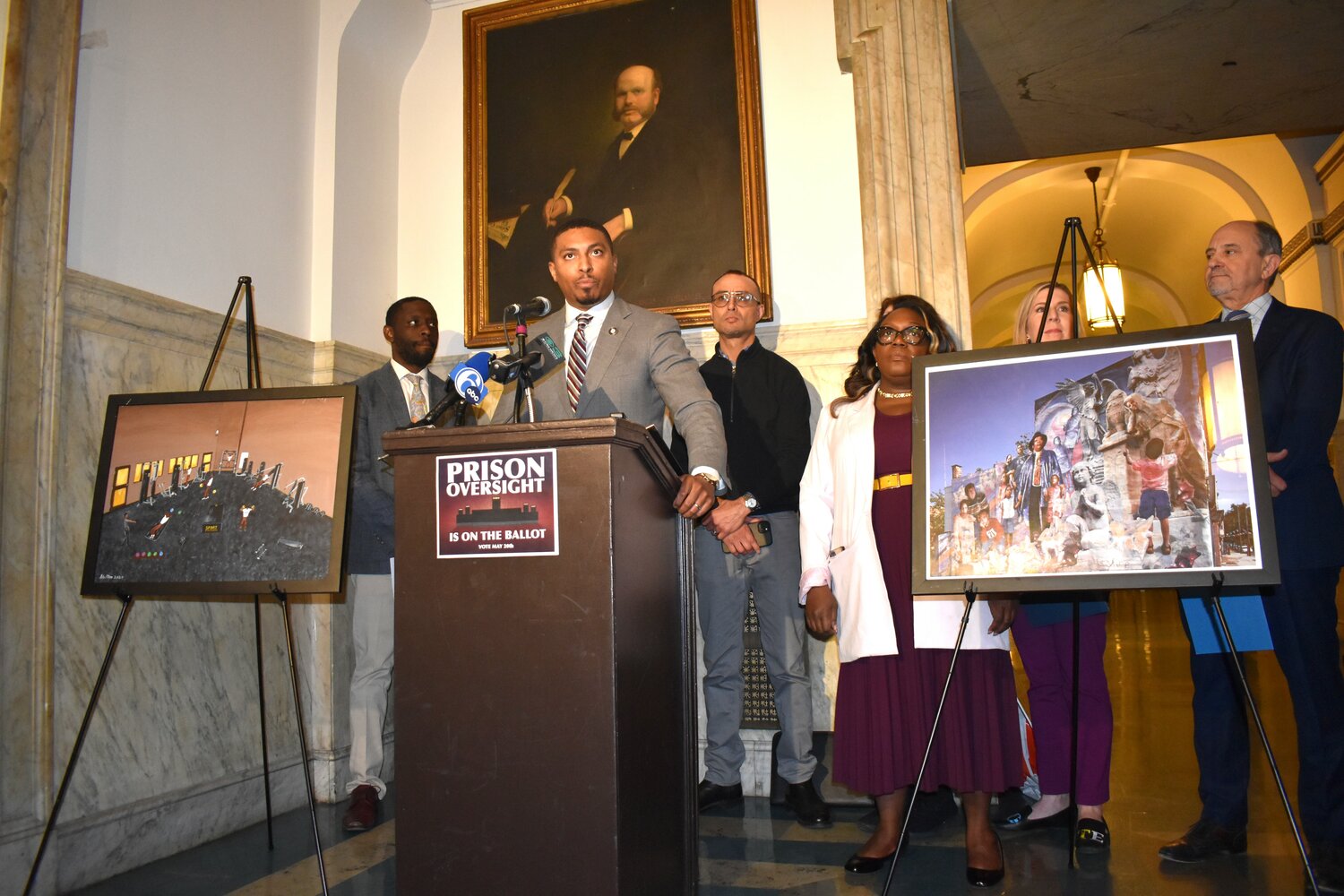
City Council advanced legislation Monday outlining the role of the Office of Prison Oversight and the Prison Oversight Community Board, both of which were authorized through a ballot question in last year’s primary election.
Establishing the office and board would culminate a yearslong legislative effort to increase accountability and transparency at the Philadelphia Department of Prisons, which was plagued by a severe staffing crisis, spike in inmate deaths, escapes and violence in the aftermath of the COVID-19 pandemic.
Prisons Commissioner Michael Resnick, during a March 16 Council hearing, said the jails – all of which are located along State Road in Northeast Philadelphia – have “seen considerable improvements over the past two years.”
Nearly 400 more correctional officers are on the job, and the inmate population has dropped from more than 4,800 in September 2024 to under 3,500, he said. Three incarcerated people died in PDP custody in 2025, the lowest number in at least 25 years, according to Resnick.
Medical monitoring bracelets are now being placed on inmates for the first several days following intake, and all prisoners have been given tablets. An initiative to equip guards with body-worn cameras is expected to launch in the next 30 to 45 days, Resnick told lawmakers.
“This administration is prepared to implement this enabling legislation under the guidance of our law department,” he testified. “But for the record, and in case anyone is unaware, there are already numerous entities who monitor, audit and inspect our facilities on a regular basis.”
In 2024, before more than three-quarters of voters cast ballots in favor of the prison board and office, Resnick testified against the proposal, arguing that PDP did not need more oversight.
Tom Innes, director of prison advocacy for the Defender Association, said lawsuits have proven to be the most effective form of oversight. The city’s jails have been under near continuous court supervision for the last 55 years, Innes noted. Currently, a federal judge is monitoring PDP as part of a class action settlement brought by inmates over prison conditions.
“Oversight by lawsuit is reactive, temporary and expensive, but most importantly, it comes too late for the people who suffer in the meantime,” Innes said during the Council hearing.
While he and other advocates for incarcerated people acknowledged positive changes under Resnick’s leadership, they said a permanent structure is needed to ensure accountability, no matter who is in charge.
“Our hope is that the Prison Oversight Board will serve as a real tool for accountability, not symbolic oversight, not delayed action, but meaningful intervention that will prevent not just deaths, but also other human rights violations,” said Saleem Holbrook, executive director of the Abolitionist Law Center.
Holbrook and Councilmember Nicolas O’Rourke mentioned that a jury earlier this month awarded $1.5 million to the family of Louis Jung Jr. after finding the city liable in his 2023 death at Curran-Fromhold Correctional Facility.
“I hope that the Jung family knows that people in City Hall are praying for them as well as working to address these issues,” O’Rourke remarked.
The jail oversight board and office is replacing an existing prison advisory board that has been criticized for lacking authority, transparency and independence.
According to the bill, the Office of Prison Oversight, a staffed city department, will have the power to inspect jails without prior notice; access files and records; collect photo and video evidence; and subpoena witnesses.
It is tasked with investigating concerns over use of force, building conditions and inmate access to out-of-cell time, food and health care. PDP would be required to notify the office of any inmate fatalities, hospitalizations, riots, escape attempts and prolonged lockdowns, the proposed legislation states.
The Office of Prison Oversight is prohibited from addressing complaints that “solely seek individual-level redress;” its purview is systemic issues, according to the bill. It will not handle internal employment matters.
Council is designated to appoint four members to the community board. Another four will be selected by the mayor, and the city controller will designate the ninth member. The body, once up and running, is expected to hold monthly public meetings and receive reports from the office.
Lawmakers on Monday reported the bill out of the body’s Committee on Labor and Civil Service. It could come up for a final vote before the full Council as early as March 26.