
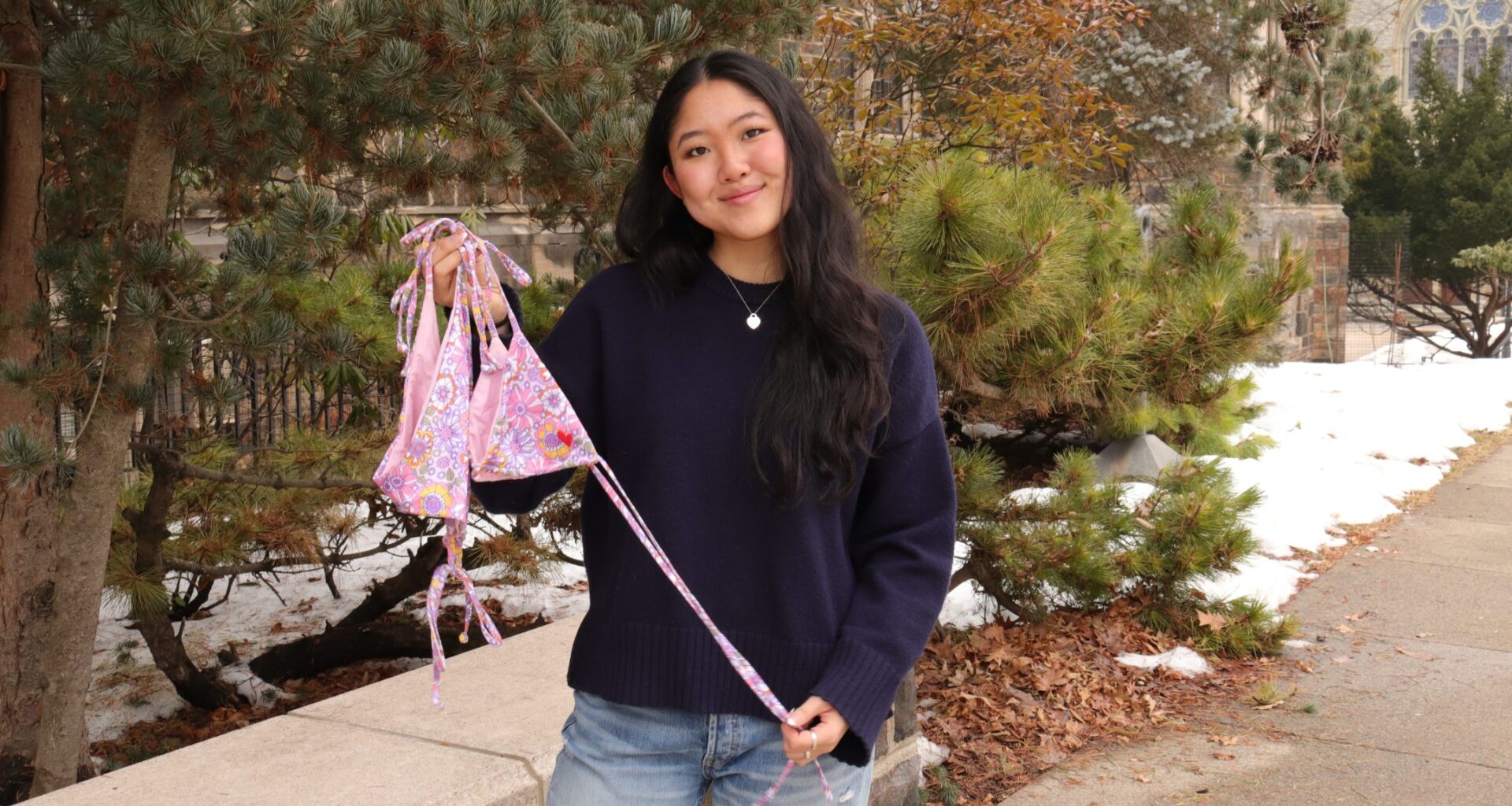
While most high school freshmen spent Thursday nights doom-scrolling through social media or procrastinating on math homework, Sophie Lee, ‘28, was researching eco-friendly clothing manufacturers three time zones away.
She said she striving to protect the ocean by using its materials and created her own company called Ira’s Bikinis.
The idea was sparked by Lee’s frustration with today’s fast fashion market. Like many of her peers, she noticed that swimwear was either affordable but harmful to the environment, or ethical but too expensive for most teenagers.
According to the National Institute of Health, fast fashion is a growing issue because it promotes the overconsumption of low-quality clothing, leading to increased waste while also exploiting workers through mass production and low wages.
“I thought swimwear would be cool to create,” Lee said. “I began doing more research, specifically market research, and thought sustainable swimwear could be a unique and niche idea.”
In curating her own designs, Lee not only had to come up with trendy prints but also incorporate ethics into her decision-making.
For Lee, staying true to her brand’s mission was one of the most important aspects, leading her to the next step in the business process: researching ethical fabrics and production factories.
Lee said she landed on a high-performance fabric made from regenerated nylon and recycled ocean plastics, like fishing nets.
“The fabric of the sets is called Carvico Vita, which is made out of recycled polyester,” Lee said. “It is a lot more sustainable than typical swimwear brands like Shein or Target.”
Once the designs, textiles and prints were finalized, Lee needed a manufacturing partner. It was important to her that the brand remained eco-friendly.
Through additional research, she found a company in Indonesia that created high-quality, sustainable goods and could bring her designs to life. After speaking with their brand coordinators, she secured the partnership and began their collaboration.
“Even if production takes a bit of a longer time and communication is not as clear, it will be worth it,” Lee said.
She said planning and designing the collection took about six months, while the actual production and shipping process lasted roughly four to six weeks.
Once Lee had a finished product, the next challenge was marketing. With her target audience being teenage and college girls, she started locally in Tenafly, New Jersey, by sharing her designs with students at her high school.
Zoe Han, one of Lee’s customers, said she appreciated how each swim set followed current trends while remaining eco-friendly.
“I appreciate the way she puts a lot of thoughts into her designs,” Han said. “She really cared about her target audience and what she’s projecting to them.”
Eventually, Lee expanded her brand to the greater New Jersey area but said she also had ambitions to broaden her customer base. As a senior in high school at the time, she said she knew she needed some form of mentorship.
While flipping through fashion magazines, she came across Ashley Victoria Smith, a swimsuit designer who owns “Vogue Via Swimwear” and reached out for advice.
“When I was starting, I had no idea what I was doing and how the swimwear industry worked,” Lee said. “But Victoria helped me a lot with navigating the industry and providing me with great opportunities.”
Through Smith’s connections with other fashion entreprenuers, Lee began coordinating professional photoshoots where models showcased her designs. She also said she partnered with the Wonder Woman Initiative, a runway show brand that promotes female-run businesses.
In March 2024, Ira Bikinis were featured at Swim Week in Miami, one of the most prominent swimwear fashion shows in the country.
“(Swim Week) is like any clothing founder’s dream to have their clothes on a runway,” Lee stated. “But what was really meaningful was that each brand was female-run, which was an uplifting, inspiring environment to be in.”
When Lee began her freshman year at Lehigh in 2024, she paused the business to focus on her studies. However, she still plans to create new designs in the future. Until then, she’s selling remaining bathing swim sets from her last collection.
Ayla Uram, a student at the University of Illinois Urbana-Champaign, said she’s looking forward to the brand’s comeback.
“With summer coming up, I would be super interested in seeing her new patterns and designs,” Uram said.
Lee credited the mentors and peers who helped her throughout the process. She also credited Lehigh for providing valuable business knowledge through finance courses and student organizations.
“Here at Lehigh, through all the clubs and upperclassmen, I lean on them all the time and they are such a good resource,” Lee said.