
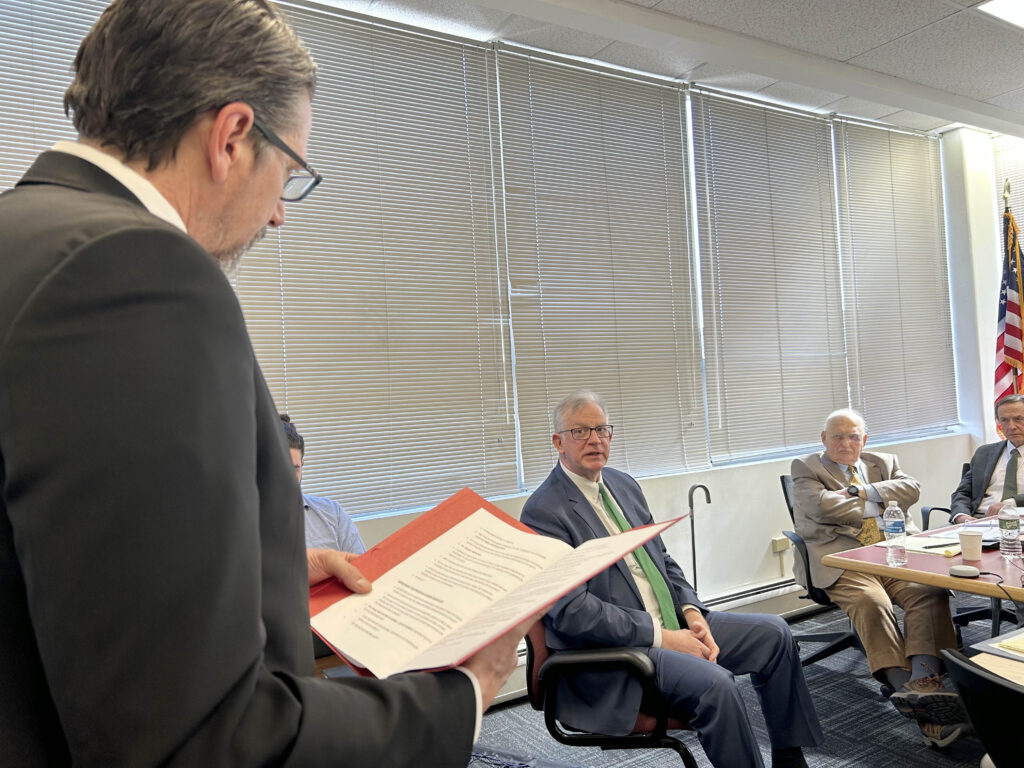
Former state administration director Jim Thorsen swore under oath to the Rhode Island Ethics Commission Tuesday that he never saw the croissants and cold Diet Coke his counterpart, David Patten, demanded a Philadelphia development firm have ready when they arrived for a work trip in March 2023.
Thorsen said didn’t hear Patten, the former state properties director, make inappropriate, sexual remarks to Scout Ltd.’s female founder because Thorsen was talking to another Scout representative at the same time.
And, most importantly, he did not attempt to pay for the $133-a-plate, private meal at a Michelin-star restaurant at the conclusion of a tour of the Bok building in South Philadelphia, which Scout helped revitalize, because Patten told him — verbally and in an email – that he would pick up the tab.
“I know he can’t pay for me, but it was important for him to be paying the bill,” Thorsen told the nine-member panel. “I wanted to position him as being in charge of the project. I would reimburse him afterwards.”
It was the first time the embattled former state cabinet director relayed an account of the now-infamous Philadelphia trip meant to assess the viability of a state contract with Scout to redevelop the Cranston Street Armory building.
“We didn’t want to enter into a bad deal, and we wanted to keep their interest, and the project, alive,” Thorsen said.
The trip meant to determine the future of a long-vacant, historic landmark instead became one centered around allegedly unethical and unprofessional behavior by the pair of state officials, which ultimately ended their careers and the project.
The state ethics code bans public officials and administrators from accepting gifts over $25. Rather than settle the charges stemming from lunch at Irwin’s restaurant, as Patten chose to do two years ago, Thorsen is fighting to clear his name. For the last two years, lawyers for the state and Thorsen have gathered evidence, subpoenaed out-of-state witnesses and prepared to make the case to the ethics commission, which serves as judge and jury in adjudicative hearings.
Thorsen faces up to $52,000 in fines if the ethics commission chooses to impose maximum penalties for each of the three violations of state law: exceeding the gifts limit, breaking a second gift rule specific to goods or services from state vendors, and using his public office for personal gain.
The hearing consumed five-and-a-half hours Tuesday — roughly the same amount of time Thorsen and Patten spent in Philadelphia — but was left unresolved, with post-trial memos by attorneys due no later than April 1. Closing arguments and deliberations will pick back up on April 8.
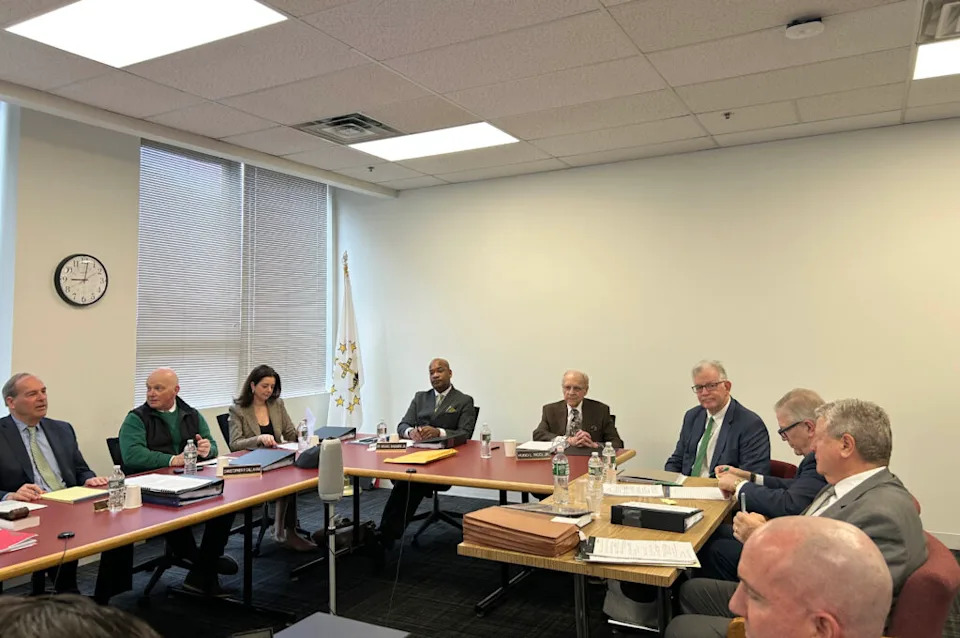
The Rhode Island Ethics Commission meets on Tuesday, March 17, 2026. (Photo by Nancy Lavin/Rhode Island Current)
Presenting the evidence
Thorsen was the only witness called to testify during the courtlike proceedings that unfolded in the Ethics Commission’s eighth-floor conference room in downtown Providence.
Jason Gramitt, executive director for the commission, served as prosecutor, questioning Thorsen for nearly three hours with references to more than 30 exhibits.
“My job to you today is to get as much evidence before you as I can so you can make the decision,” Gramitt told the commission. “I’m the conduit for your evidence.”
Much of the question-and-answer session was spent on events and context outside of the whirlwind trip to Philadelphia, including establishing Thorsen’s role as Patten’s direct supervisor with direct authority over the $15 million contract Scout was vying to secure.
“At the conclusion of the lunch, no bill was brought out, no bill presented to the table, “Gramitt said. “The person in charge, the person who had all the power, didn’t ask for a bill, didn’t say ‘what’s taking so long for the bill to come?’ didn’t ask Scout, ‘are you paying for this? Can I contribute to this lunch?’ Instead he got up, and they left the restaurant. Shortly after, they left the city of Philadelphia.”
Thorsen acknowledged he meant to follow up with Patten on his offer to buy the lunch, but got caught up with other matters. Among them: trying to keep Scout interested in the potential state contract, despite the fact that McKee’s proposed fiscal 2024 budget did not include any of the $15 million needed to complete the first phase of the redevelopment. Even more concerning: managing an escalating personnel problem back at home.
While Thorsen was touring the Bok building to see Scout’s work and talk to tenants, he said he was simultaneously communicating about and mentally preparing for a meeting with human resources leaders. The meeting was to make them aware of Patten’s behavior at a staff gathering the night before at Ladder 133, a Providence bar a half-mile from the State House. Thorsen, Patten, and a half dozen other DOA workers went to the bar for celebratory drinks and appetizers after testifying before the House Committee on Finance on its proposed fiscal 2024 budget.
Thorsen left the bar early, paying the tab before making a quiet exit around 8:30 p.m. to prepare for his early morning flight to Philadelphia. He noticed Patten seemed especially loud, and was “needling” the waitress a bit about slow service, but did not hear or see anything else inappropriate. However, his chief of staff and other workers who stayed out later at the bar later told him about alleged inappropriate remarks and behavior by Patten.
Thorsen set up a meeting with a few staffers to discuss Patten’s behavior after returning to Rhode Island Friday afternoon, with plans for a formal meeting with Patten when they returned to work Monday.
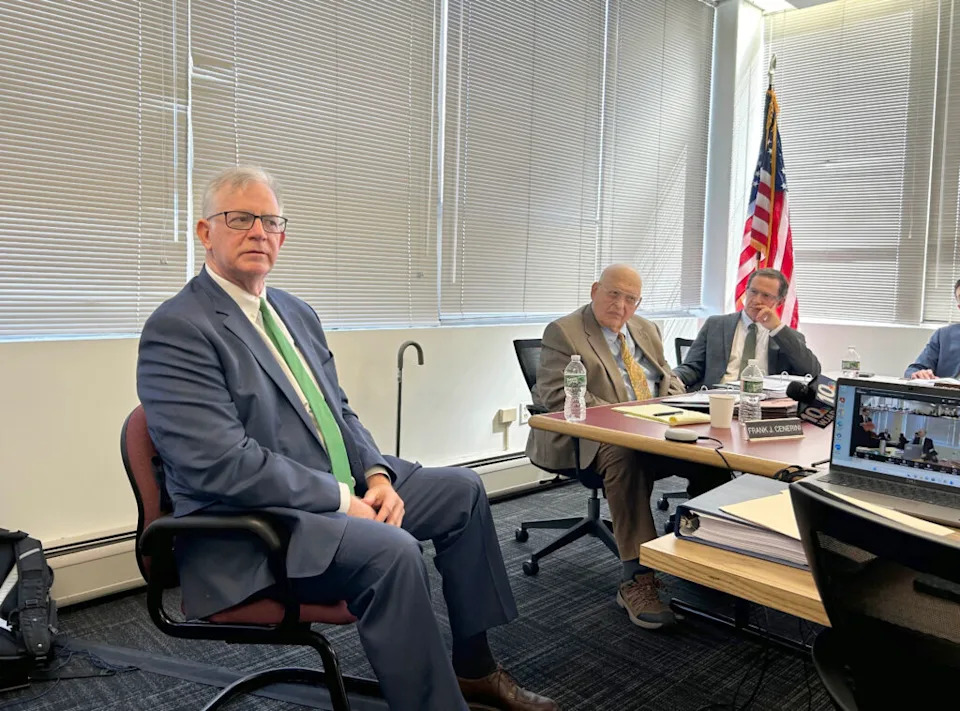
Jim Thorsen listens during oral arguments before the Rhode Island Ethics Commission on Tuesday, March 17, 2026. (Photo by Nancy Lavin/Rhode Island Current)
Picking up the tab
Thorsen’s glimpses into Patten’s behavior in Philadelphia gave him more reason to be concerned. He did not see Patten demand vegan cheese and Italian leather shoes from vendors in the Bok building, but he did hear Patten ask another building occupant, a doctor running a community clinic, about his ethnicity in a way that Thorsen acknowledged was “uncomfortable.”
“At that point, because I hadn’t seen some of the things he was alleged to have done, I thought the relationship could be potentially salvaged going forward,” Thorsen said of the contract with Scout.
He noted Patten’s disappearance for nearly half of the lunch, forcing Thorsen to take the lead in the conversation with the two Scout executives who dined with them. Thorsen said he was taken aback when Patten relayed in casual conversation during their flight home that he had a federal firearms permit, and owned a gun, stored at a relative’s house.
“In light of everything that was unfurling at Ladder 133 and his behavior at Scout, I didn’t give lunch a thought until it was mentioned to me,” Thorsen said Tuesday.
On the Monday morning after their return, Thorsen’s communications advisor relayed a media request regarding trip receipts. Between a pair of already scheduled meetings to discuss Patten’s behavior at Ladder 133, Thorsen called and then emailed Scout to ask for an invoice from the lunch. He received the bill on March 22, and sent a cashier’s check for half — his plate and Patten’s — on April 6.
He left his post as state administration director on April 28 2023, after two years in the position, plus one year leading the Department of Revenue. Thorsen had submitted his resignation notice in mid-February with intent to return to a contract job for the U.S. Department of Treasury. In early June, the Office of Rhode Island Attorney General overruled McKee’s attempt to block the release of emails and text messages revealing Patten’s behavior at Ladder 133 and in Philadelphia.
As vegan cheese and croissants made national news, Patten resigned. The state ethics commission launched probes into Patten and Thorsen. McKee decided to terminate the pending contract with Scout, citing the higher-than-anticipated costs. The historic Armory building still sits empty.
Thorsen was in Indonesia at the time, working on a Treasury project, when the news broke. The government let his contract expire. Suddenly, his padded resume of private and public sector financial work wasn’t enough to persuade employers to hire him.
“Google my name,” Thorsen said when his attorney, Kevin Bristow asked if the ethics complaint against him had hurt his job prospects.
Thorsen has not worked since, he said Monday, except to officiate high school track meets.
Gramitt and Bristow will make closing arguments and the commission will begin deliberations on the findings of ethical misconduct on April 8.
The commission must make its decision public within 30 days, with options to clear Thorsen of the violations, impose fines, or refer the case to the attorney general’s office. Thorsen can appeal the commission’s decision in Superior Court.
SUBSCRIBE: GET THE MORNING HEADLINES DELIVERED TO YOUR INBOX