
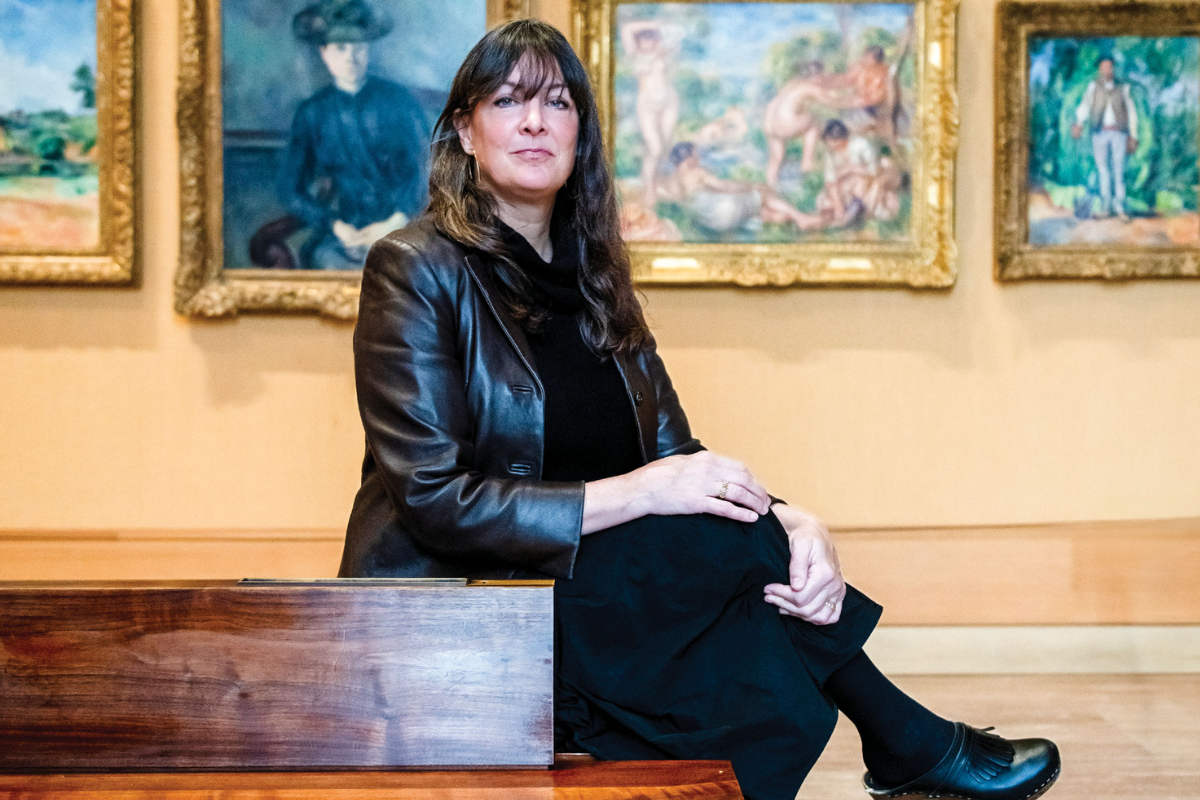
Colleen Joy Hall cherishes her first museum experience—one that came as a student at Downingtown’s Bradford Heights Elementary School. “I thought, ‘Gunpowder? Are you serious? This is amazing,’” says Hall, recalling the field trip to Wilmington’s Hagley Museum and Library, the site of Du Pont’s 19th-century gunpowder works. “It was transformative—a place where you can ask any question, get answers and have your curiosity rewarded.”
To this day, Hall’s husband, Erich, picks a museum to include on every vacation. This past summer, it was a trip to the North Dakota Heritage Center & State Museum coupled with a fossil dig. “Those experiences drive me,” she says. “But it’s also a treasure trove around Philadelphia—and access is so important.”
”Barnes disliked museums’ conventional approach to education, which assumed pre-existing knowledge on the part of visitors.
A 45-year-old photographer and potter who lives near Saint Joseph’s University, Hall is now committed to a new full-time, online graduate program in museum education that’s part of an expanding relationship between the school and the Barnes Foundation. She’s taking courses and eyeing an internship, with the goal of overcoming her prior status as “queen of the final interview.” Prior to enrolling, she made a dozen unsuccessful attempts to land a position at the Barnes and other spots. “Museums have come a long way,” she notes.
The irony, of course, is that Dr. Albert C. Barnes couldn’t stand museums, their directors and the institutionalization and politics of the art world. He deemed it all elitist and disliked museums’ conventional approach to education, which assumed pre-existing knowledge on the part of visitors. “He designed his own way of teaching that didn’t require any background—just the use of your own eyes. A work of art provided all you needed,” says Martha Lucy, the Barnes Foundation’s deputy director for education and public programs and the curator at its Center City headquarters. “It was radical for its time, but he had this mission of accessibility and bringing art to people who didn’t feel comfortable in traditional museum spaces due to their socioeconomic status.”
Lesser known was Barnes’ factory in West Philadelphia dedicated to the production of Argyrol, an antiseptic solution that made his fortune. The some 20 employees there were required to spend two paid work hours per week studying and discussing the art that hung on the factory walls. This was around 1917, when Barnes first met educational pioneer John Dewey. In the early 1920s, the two began corresponding about something on a bigger scale. “We know Albert Barnes cared a lot about education,” says Havertown’s Joshua Power, dean of SJU’s School of Education and Human Development. “He was deeply committed to thinking about art as a means of education.”
With his world-renowned art collection front and center and inspired by Dewey’s philosophy of experiential teaching, Barnes established his foundation in 1922. “He was all about learning by doing, actively engaging with an art object and coming to your own conclusion,” Lucy says.
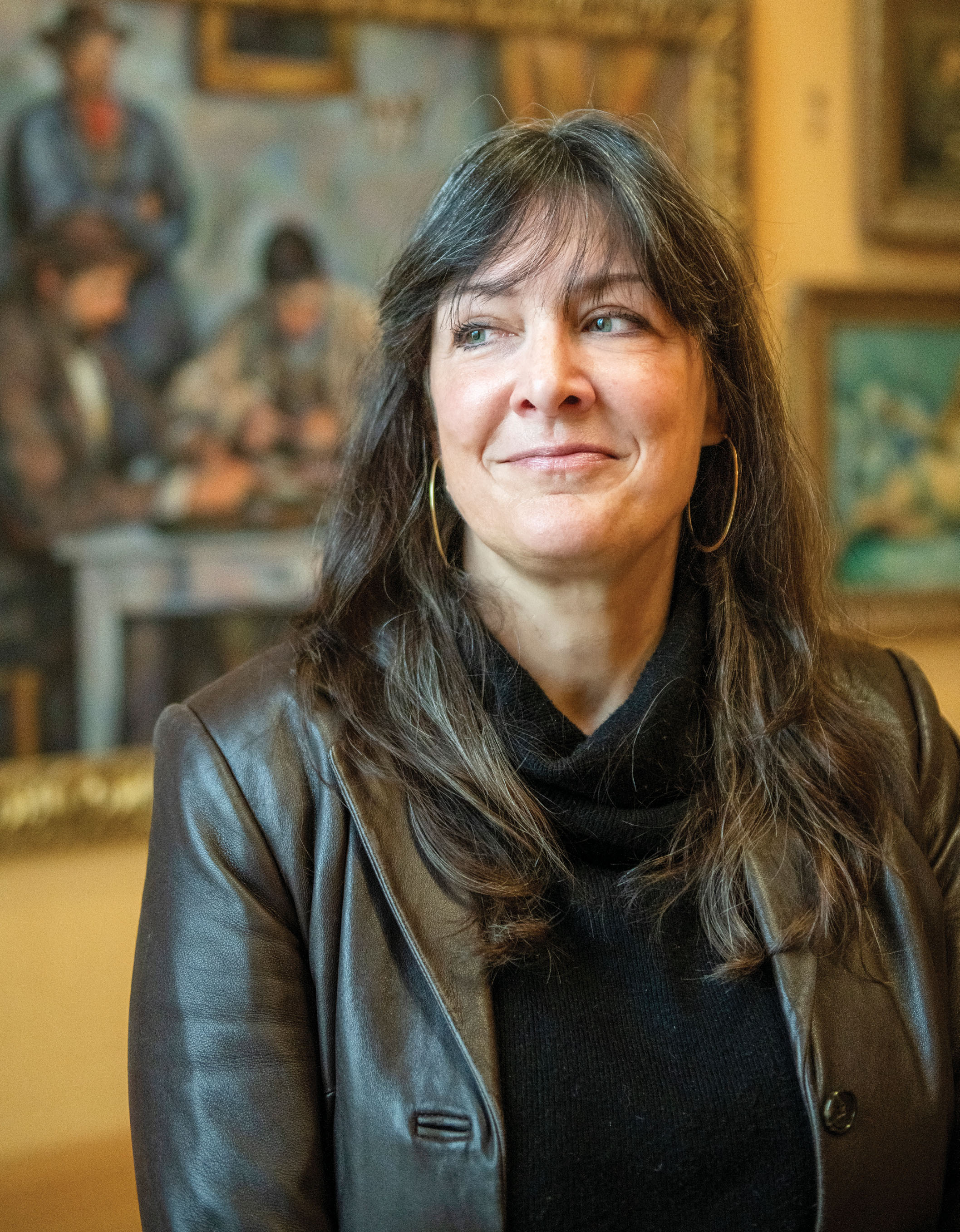
More than 90 years later, about a dozen graduate students are enrolled in the SJU/Barnes program—some in the 12-credit certificate track, others working on their 30-credit master’s degree. Courses are taught by Barnes employees and SJU faculty. Following a launch in the fall semester of 2024, the university expects to have its first certificate graduates in May and its first 10-course alumni by May 2027 or sooner. “I don’t know that Barnes ever dreamed of having a program to teach future museum educators,” says Lucy, who’s teaching a required course in the program.
Though the Barnes offers about 70 of its own adult-education courses annually, the SJU program goes much further. “These aren’t art history courses,” Lucy says. “We’re teaching them how to teach from objects.”
”“Barnes designed his own way of teaching that didn’t require any background, just the use of your own eyes. A work of art provided all you needed.”
—The Barnes Foundation’s Martha Lucy
For its part, SJU hopes to continue finding ways to leverage its affiliation with the Barnes. The relationship began in 2018, when the university became caretaker for the foundation’s arboretum, then took over the original gallery space in Merion, reopening it as the Frances M. Maguire Art Museum in 2023. “The expectations in higher education have changed,” Power says. “This is an exciting example of that change—an example of how we can partner with another significant institution to meet the professional interests of students and feed the workforce development needs of the region.”
Despite recent funding challenges, Lucy remains optimistic about the future of museums—and the job prospects for those like Hall, whose journey back to academia has been an emotional one. For years, she grappled with undiagnosed dyslexia, a common hurdle for artists. “Previously, museums were collections of the rich and the curiosity cabinet of the wealthy,” says Hall. “Part of the reckoning in the museum industry is the move to an ethical curation of these objects, opening them to communities in a more egalitarian way. I’ll be helping open those doors.”
Related: The Latest Stats on Colleges and Universities Around the Main Line