
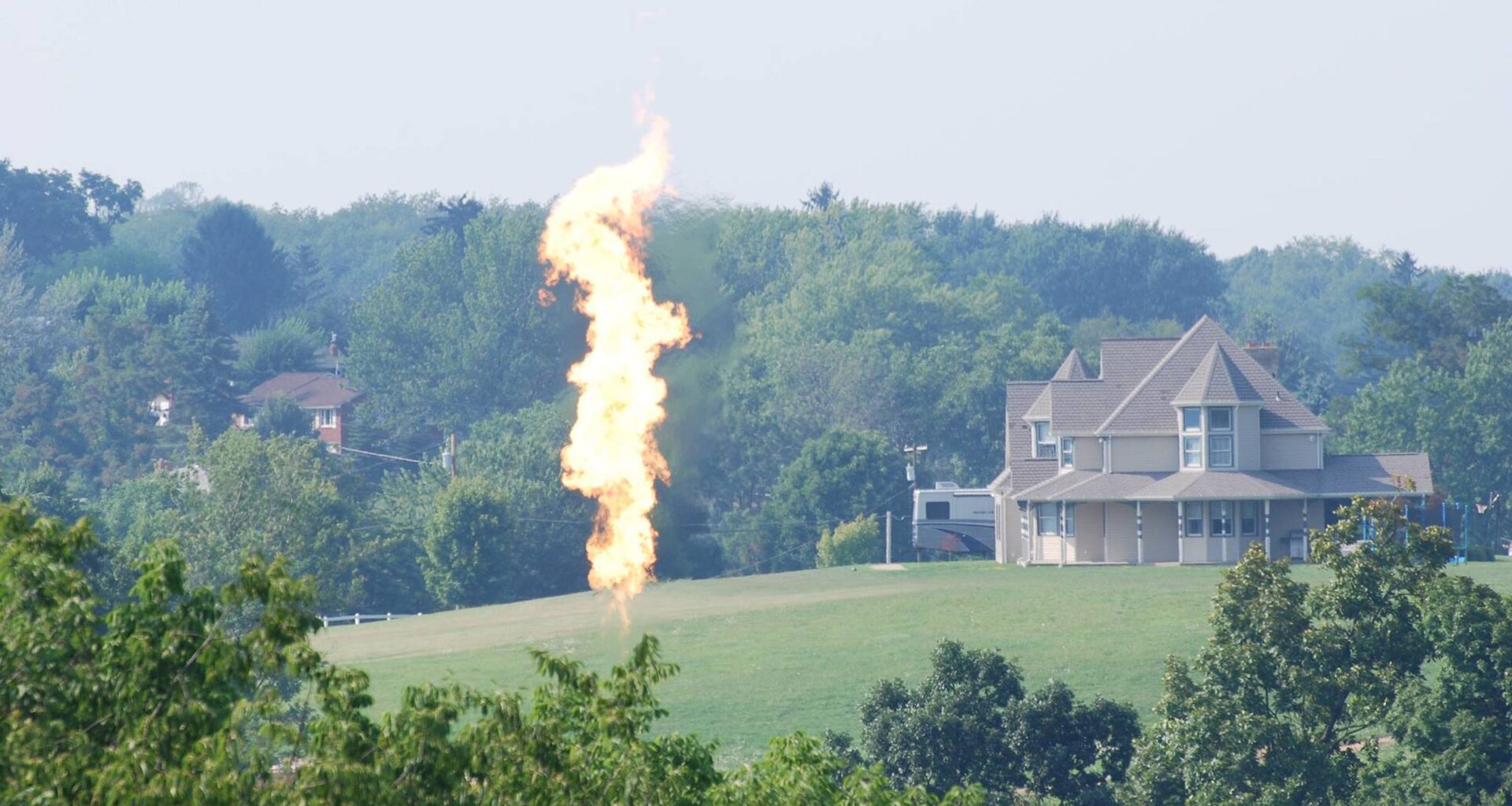
There are 225 active wells located on 30 well pads in Allegheny County, according to data from the Pennsylvania Department of Environmental Protection analysed by the non-profit Fractracker Alliance.
The Allegheny County Board of Health formed a committee on fracking last year to investigate the health impact on residents.
“We know that there are toxic compounds released as part of unconventional natural gas and oil extraction [fracking],” committee member Dr. Graham Snyder told the full board on Wednesday. “We know those compounds can be associated biologically with health effects.”
The committee intends to make recommendations on how the county can better protect residents.
“What we need to do…is [understand] what changes can we recommend in the county, statutorily,” Snyder said, “that would give us the best bang for the buck, figuratively speaking, in improving health outcomes.”
Committee chair Laura Dagley, a registered nurse and writer for Physicians for Social Responsibility, told the board that they’ve been looking at known carcinogens from fracking, like benzene, as well as volatile organic compounds and fine particulate matter, and using an Environmental Protection Agency tool to estimate the air quality and health benefits.
“And there was analysis done looking at what would happen if you added one well pad and then took away one well pad to an area in terms of outcomes,” Dagley said. “[The analysis is] looking at emergency room visits for respiratory issues, infant mortality, asthma onset, etcetera.”
The Allegheny Front requested the analysis and other materials related to the committee’s work, but it has not yet been made available.
A new report compiles years of data about the health risks associated with fracking
At the meeting, board member Dr. Margaret Larkins-Pettigrew, professor and academic chair in the Department of Obstetrics and Gynecology at Drexel University, asked the committee to also look at the health care costs related to fracking in the county.
“What does it cost for an infant to be hospitalized because they’ve experienced this toxin? How much does it cost to actually take care of that infant?” she asked. “What is the cost of the number of deaths that may occur to a head of a household, now sends the entire family into poverty?”

Larkins-Pettigrew said these questions are at the core of the recommendations the health board will make for policy change.
New Investigation Finds Fracking Chemicals in the Bodies of People in Southwestern Pa.
The environmental group Food and Water Watch said in an email that the county could “close the air pollution control loophole which currently exempts gas companies from obtaining standard air quality permits for construction and operation.”
Nagley told The Allegheny Front that the committee hopes to present its recommendations at an upcoming board meeting. If the health board votes to approve them, the next step would be the Allegheny County Council.