
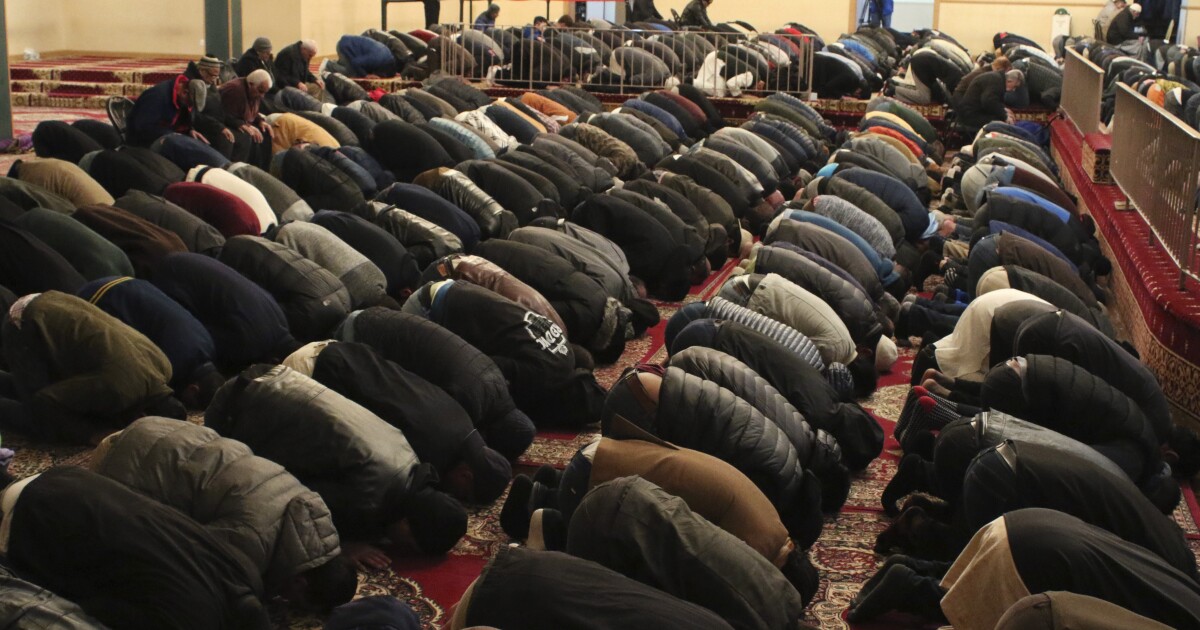
Pittsburgh isn’t a city that stops for Ramadan, but every evening this month, hundreds of Muslims across the city find a way to pause anyway.
Ramadan is the holiest months in Islam, celebrating the first revelation of the Quran to Prophet Muhammad.
This year, Ramadan started in the middle of February. For 30 days, Muslims in Pittsburgh joined those around the world to fast, pray, and gather, all the while continuing daily motions of being both a member of society and local community members.
Pittsburgh is home to eleven mosques and about 20,000 Muslims. Many who participate in Ramadan report feeling a sense of a growing community and humanity this holiday season specifically.
At the center of the community is the Islamic Center of Pittsburgh, tucked into the North Side, where nearly 500 people gather every evening to break their fast together.
A chance to reset
Mohcine El-Joufri, the center’s executive director, has watched the city’s Muslim community grow since he moved here in 2003..
He says Ramadan is a chance to reset.
“You know how you get those notifications on your iPhone for a software update? That’s how it feels to me,” he said. “It’s a chance to step back from the hustle and the bustle and connect with God with purpose.”
His days during Ramadan are long. Before dawn, he wakes up his family, and together they prepare suhoor — a quiet pre-dawn meal eaten before the fast begins. Then comes a full workday at ICP, fasting through meetings and responsibilities. At sunset, he breaks the fast with a date or water, prays, and then does it all again — late-night prayers, community gatherings, and sometimes a stop at a local halal restaurant before the cycle resets.
“It teaches me discipline, gratitude, patience, empathy — especially for those who are struggling more than anything.”
Most evenings, El-Joufri breaks his fast at the mosque, surrounded by hundreds of people from across Pittsburgh — many of whom have come from places around the globe like South Asia, the Arab world, and Bosnia.
“What stands out is the diversity — multicultural people from different backgrounds, all the languages, all sitting together and sharing a meal,” he said. “It feels like family. There is a strong sense of belonging and generosity.”
Community sponsors provide this nightly meal — called iftar — at ICP. But people also bring dishes from home. Food is often passed between strangers who don’t always even share a language. El-Joufri says that the image of sharing defines the month for him.
And he says over his time in Pittsburgh, he’s watched that table grow.
“The community has grown not just in numbers, but in organization and engagement,” he said. “It’s becoming more visible and more rooted in the broader fabric of Pittsburgh.”
Strengthening interfaith ties
That growth is visible across the city. In Gibsonia, Adnan Chawdhry has watched it unfold from a different vantage point. As president of the Muslim Association of Greater Pittsburgh (MAP) and a Pittsburgh native, he remembers when the entire Pittsburgh Muslim community fit into one room.
“When we were younger, it wasn’t as large. All of Pittsburgh, we all met at Trees Hall up at the University of Pittsburgh,” he said. “It was exciting — parking was a pain, but from a kid’s perspective, it just made it exciting. I have very fond memories of it being smaller, feeling more intimate.”
Now, MAP hosts iftar on Friday, Saturday, and Sunday evenings. This year, their mosque and a neighboring one are co-hosting the annual celebration that marks the end of the month of fasting. The joint Eid celebration will take place at the North Park Sports Complex Dome — last year, about 1,800 people attended.
Amro Elaswali, a local Imam, has been part of Pittsburgh’s Muslim community since 2010.
“The community is growing and it’ll keep growing strong,” Elaswali said. And he said he’s seen ties with other local religious communities grow stronger as well, especially in the wake of intensified federal Immigration and Customs Enforcement operations. Elaswali said pastors have been checking in — some of which he had only ever met once.
“I didn’t expect to get a message of support from them,” he said. “But I think as a Muslim community, we would be stronger with bigger and stronger connections to the non-Muslim community.”
The mosque typically hosts an interfaith iftar, but was unable to do so this year as iftar fell early, making weeknight gatherings difficult for working families. A pastor at a nearby church showed up anyway.
“He said, ‘I like to be around people from different cultures and backgrounds,'” Elaswali recalled. “He came and had iftar with us, and we welcomed him. It is beautiful to be together.”
But he says this Ramadan, the gathering is also happening under extra cultural and societal weight. Just this week, a Pittsburgh-area mosque received a terroristic threat during the holy month.
But Chawdhry said other people keep showing up in positive ways. Charitable organizations have shown up at iftar after iftar, raising funds for Palestinians in Gaza and those affected by conflict in Sudan.
“One of our speakers correlated how we are fasting and not eating to kids in Gaza who don’t have any food,” Chawdhry said. “It’s not that they’re fasting — they just do not have food. It becomes very relatable, very empathetic. You really want to do more.”
El-Joufri said he’s noticed people’s prayers become heavier and more intentional.
“It’s definitely felt,” he said.
A call for peace
Chawdhry said spiritual renewal and collective grief can coexist.
“Ramadan actually makes space for both,” he said. “It doesn’t ignore hardship — trials and tribulations are part of life. It invites you to bring it into your prayers and your reflection. At the same time, it builds resilience by strengthening your faith and your patience and your connection to others.”
For non-Muslim Pittsburghers, he has a straightforward ask.
“At its core, Ramadan is about becoming better — a better person, a better neighbor, a better friend,” he said. “It’s not just about fasting from food, but from negativity, from harm, from anything that distances us from what is good. This year especially, it’s a time where many are turning inward to strengthen themselves so they can contribute positively to the world around them. Because we need peace in this world.”
Chawdhry puts it simply: “Islam’s full guidance is peace. People may not always realize that, but it’s meant to be a very peaceful religion.”
When asked what gives him hope right now, El-Joufri didn’t hesitate.
“What gives me hope is people — the way communities come together, the generosity you see during this month, the sincerity in people’s prayers and actions, even in difficult times. You see acts of kindness, solidarity, and faith. That reminds me that there is always goodness.”