

Scranton hopes a recent court-ordered reinstatement of a Federal Emergency Management Administration program eliminated last year by the Trump administration means restoration of city efforts to get $2.8 million for disaster relief and buyouts of 21 flood-prone properties that were swamped by flash floods in 2023.
A federal judge recently ruled that FEMA’s canceling in April of the Building Resilient Infrastructure and Communities (BRIC) pre-disaster mitigation program was unlawful and ordered the restoration of the program.
Before BRIC’s elimination, Scranton had two funding applications totaling $2.8 million advancing, including $2.7 million to acquire and demolish 18 homes and three vacant lots on North Merrifield Avenue and Leggett, Mary and Jackson streets in the Keyser Valley and North Scranton areas that were rendered uninhabitable by the severe flash flooding event of Sept. 9, 2023; and $75,000 for updating building codes related to flooding and other hazardous events.
But FEMA last year eliminated BRIC, which began under the first Trump administration in 2018. FEMA had said ending BRIC will help ensure grant funding aligns with Republican President Donald Trump’s executive orders and then-Department of Homeland Security Secretary Kristi Noem’s direction “and best support states and local communities in disaster planning, response and recovery.” FEMA’s announcement of eliminating BRIC added, “The BRIC program was yet another example of a wasteful and ineffective FEMA program. It was more concerned with political agendas than helping Americans affected by natural disasters. Under Secretary Noem’s leadership, we are committed to ensuring that Americans in crisis can get the help and resources they need.”
Democratic-led coalition sues
A coalition composed of 22 states, which includes Pennsylvania, and Washington, D.C., filed an injunction lawsuit in July in federal court to get BRIC restored. The coalition claimed the administration flouted Congress’ authority and unlawfully nixed BRIC, which is FEMA’s largest predisaster mitigation program. The lawsuit was led by Massachusetts and Washington and joined by Arizona, California, Colorado, Connecticut, Delaware, the District of Columbia, Illinois, Kentucky, Maine, Maryland, Michigan, Minnesota, New Jersey, New Mexico, New York, North Carolina, Oregon, Pennsylvania, Rhode Island, Vermont and Wisconsin. The governors of 21 of the states and the mayor of Washington, D.C., are all Democrats, while the governor of Vermont is a Republican.
On Dec. 11 in federal court in Massachusetts, U.S. District Court Judge Richard Stearns agreed with the coalition and ordered FEMA to restore BRIC. As the Trump administration did not identify any congressional act authorizing FEMA to abandon its mitigation duties, “It follows that the termination of the BRIC program was unlawful,” Stearns ruled. At the time of BRIC’s elimination, FEMA said BRIC funds not yet distributed would immediately return either to the Disaster Relief Fund or the U.S. Treasury. Stearns also determined that such shifting of funds amounted to unlawful repurposing and withholding.
“There is an inherent public interest in ensuring that the government follows the law, and the potential hardship accruing to the States in the absence of an injunction is great. The BRIC program is designed to protect against natural disasters and save lives. It need not be gainsaid that the imminence of disasters is not deterred by bureaucratic obstruction,” Stearns said in a summary judgment ruling. “In sum, this is not a case about judicial encroachment on the discretionary authority of the Executive Branch. This is a case about unlawful Executive encroachment on the prerogative of Congress to appropriate funds for a specific and compelling purpose, and no more than that.”
Delays in implementation of the Dec. 11 order followed. On March 6, Stearns issued an enforcement order setting deadlines for certain actions, while at the same time acknowledging that some of the delays can be attributed to staffing shortages resulting from layoffs and a current budgetary freeze, as well as the process underway of appointing a new secretary and transition period. Trump fired Noem on March 5 amid mounting concerns and criticism, including from Democratic and Republican legislators, about her leadership of the Department of Homeland Security.
Scranton affected
Scranton intended to pay for the $3.4 million total buyout cost using about $2.5 million of BRIC grant funding and $849,000 of city funds, as the city’s portion was a 25% contribution. The flood-prone parcels were to have vacant, condemned homes demolished and the properties repurposed for floodplain restoration and green infrastructure.
Scranton Mayor Paige Gebhardt Cognetti, who last year advocated for restoring BRIC or an equivalent funding source, greeted news of BRIC reinstatement with “cautious celebration.” It’s still unclear whether the funding that was cut will be reinstated or if Scranton will have to reapply for eligibility, as FEMA remains impacted by a partial federal government shutdown, Cognetti said in a statement.
“I’m frustrated that this critical program was canceled in the first place. There has always been bipartisan support for BRIC because it saves lives, reduces risk, and helps communities recover. Disaster experts and emergency responders nationwide called its cancellation a dereliction of duty, and they were absolutely right,” said Cognetti, who is a Democrat. “The program should never have been cut. This has been a frustrating and unnecessary waste of time for the American people and for municipal governments across the country that were doing the right thing to protect their residents, first responders, businesses, and infrastructure.”
U.S. Rep. Rob Bresnahan, R-8, of Dallas Twp., whose district includes includes all of Lackawanna, Wayne and Pike counties and parts of Monroe and Luzerne counties, last year contradicted the Trump administration’s contentions that BRIC was wasteful. In May, he also sponsored the “Save BRIC Act” in the U.S. House. On Wednesday, Bresnahan issued a statement applauding the restoration of BRIC while not mentioning the lawsuit by the coalition of states or the federal judge’s rulings.
“This reversal is a direct result of sustained pressure from members of Congress who refused to let this program disappear,” Bresnahan said in his statement. “I’ve seen the detrimental long-term effect natural disasters can have on small towns and cities, and without the necessary resources, that effect only gets worse. From the moment FEMA announced BRIC’s cancellation, I made it clear that walking away from disaster mitigation was the wrong call. I pushed back, raised concerns directly with FEMA, and I introduced legislation to protect this program because communities in NEPA and across the country depend on it. This decision is a step in the right direction, and I will keep fighting to make sure these resources are delivered where they’re needed most.”
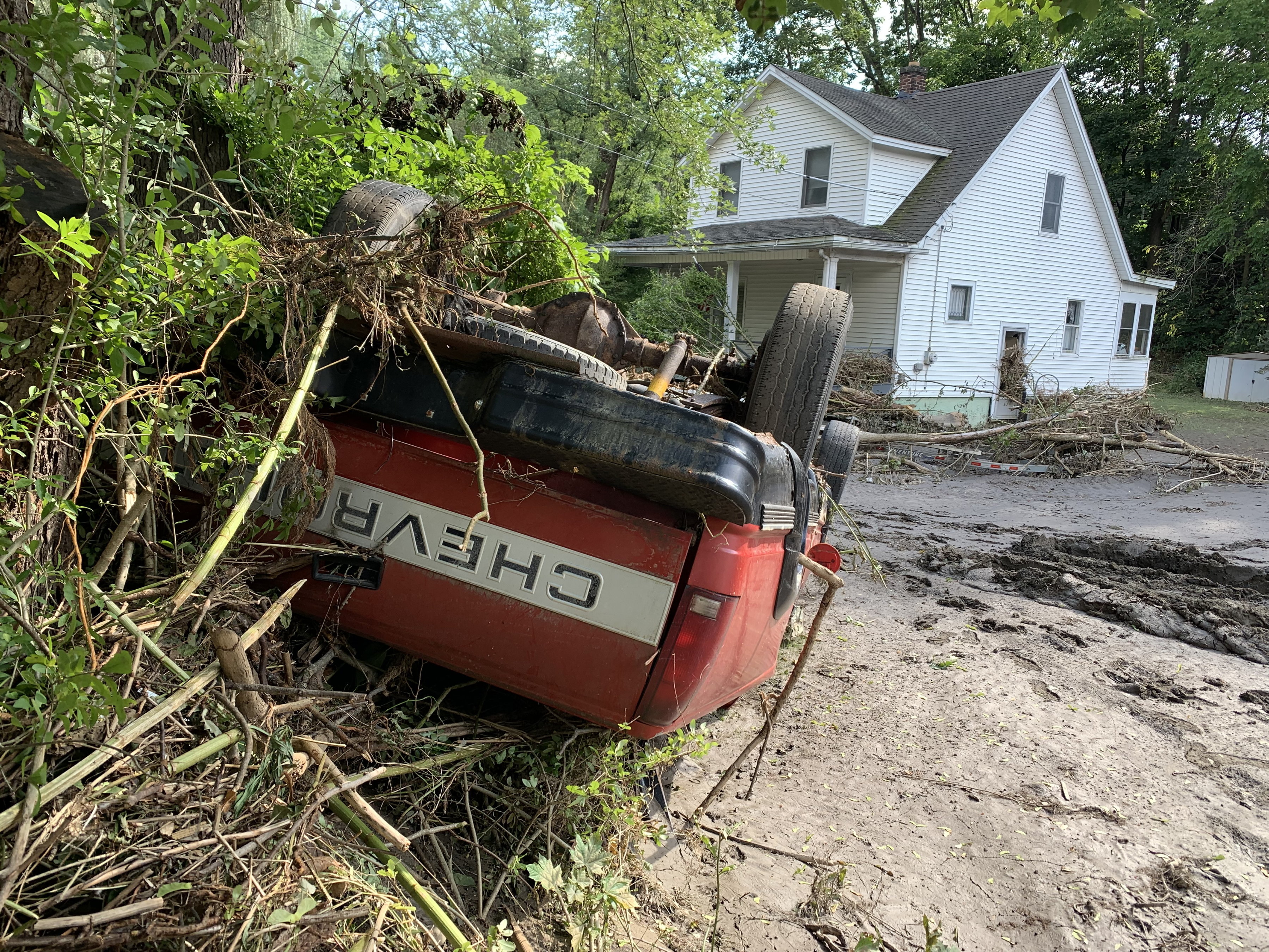
A pickup truck flipped onto its roof by flood waters on Sept. 9, 2023 on Leggett Street in Scranton. Photo taken Tuesday, Sept. 12, 2023. (TIMES-TRIBUNE / FILE PHOTO)

CHRISTOPHER DOLAN / STAFF PHOTOGRAPHER
Scranton firefighters from Rescue 1 arrive in a boat at Jackson Street and South Merrifield Avenue in West Scranton with a woman rescued from a flooded home on Saturday, Sept. 9, 2023.
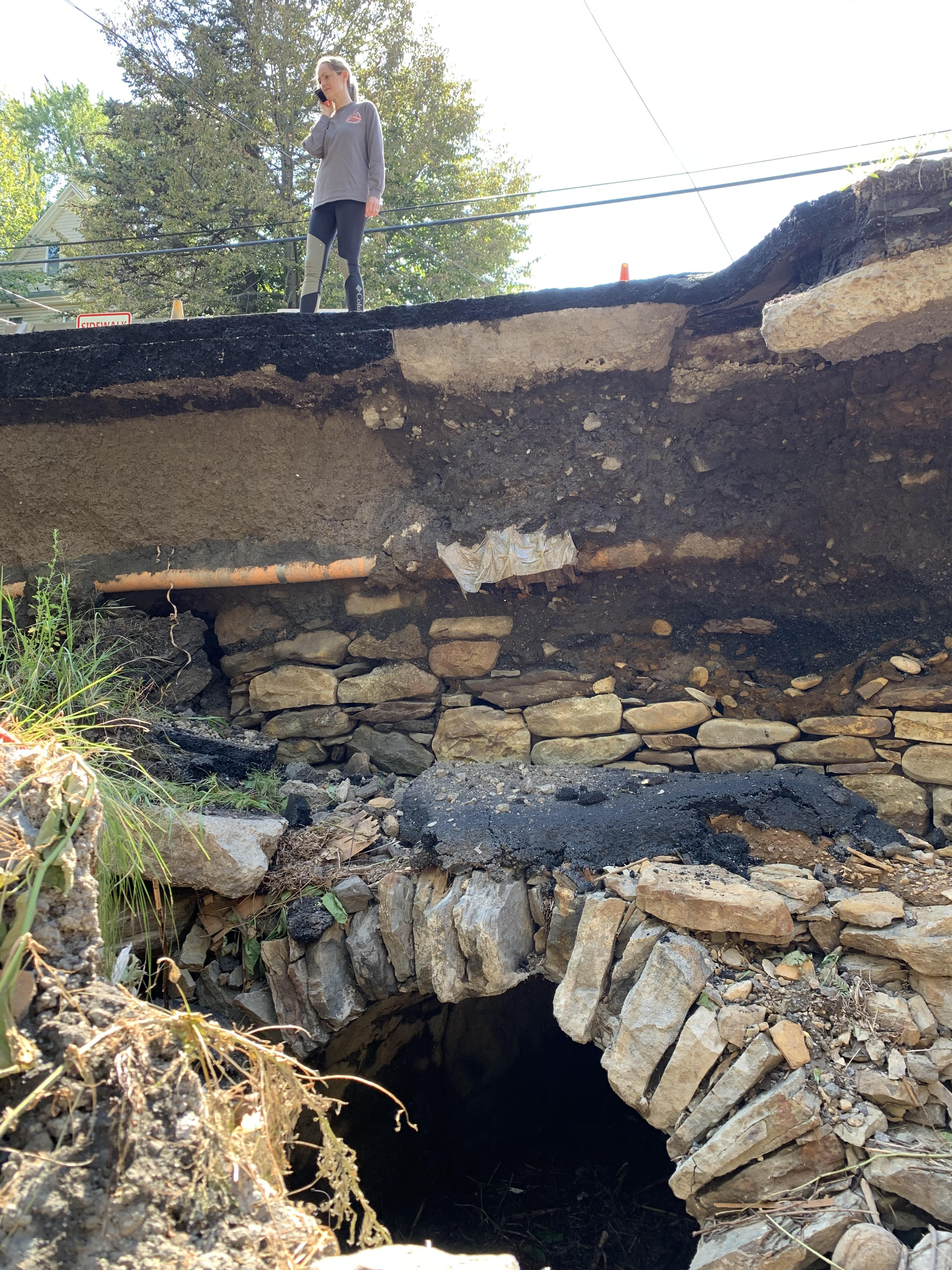
Scranton Mayor Paige Gebhardt Cognetti on Sept. 12, 2023, surveys the destruction of a West Market Street culvert near Yard Avenue that was destroyed in flash flooding of Sept. 9, 2023, when 6 inches of rain fell in a few hours over parts of the city and the Abingtons, overwhelming creeks, roads, motorists and homeowners. The culvert channeled Leach Creek under West Market Street. (JIM LOCKWOOD / STAFF PHOTO)
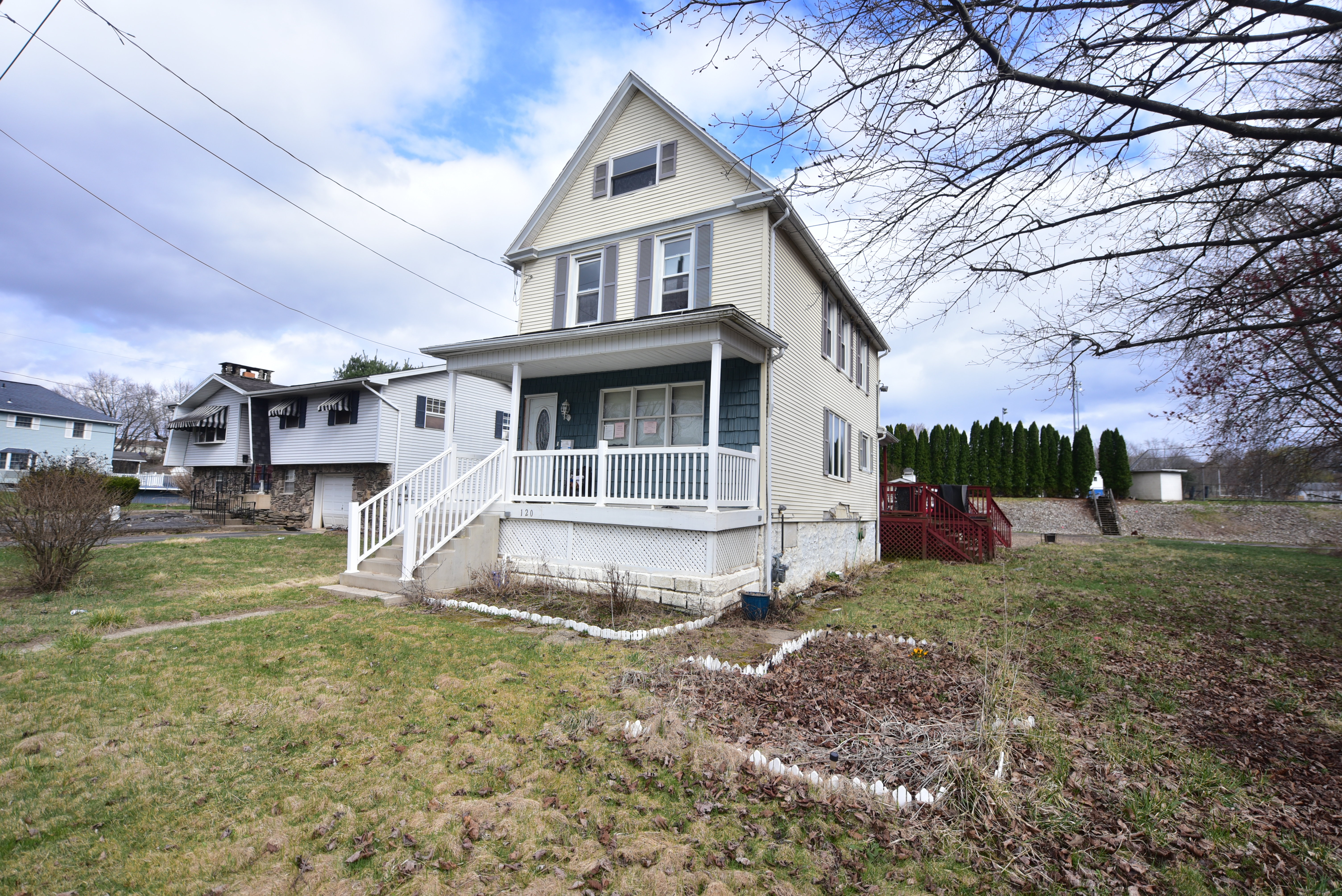
A home impacted by flooding at 120 N. Merrifield Avenue in Scranton. (CHAD SEBRING/STAFF PHOTO)

A home impacted by flooding at 207 N. Merrifield Avenue in Scranton. (CHAD SEBRING/STAFF PHOTO)

A home impacted by flooding at 120 N. Merrifield Avenue in Scranton. (CHAD SEBRING/STAFF PHOTO)

A homes impacted by flooding at 209 N. Merrifield Avenue in Scranton. (CHAD SEBRING/STAFF PHOTO)

A homes impacted by flooding at 121 N. Merrifield Avenue in Scranton. (CHAD SEBRING/STAFF PHOTO)

Homes impacted by flooding at 120 and 122 N. Merrifield Avenue in Scranton. (CHAD SEBRING/STAFF PHOTO)

A home impacted by flooding at 122 N. Merrifield Avenue in Scranton. (CHAD SEBRING/STAFF PHOTO)

Homes impacted by flooding at 120 and 122 N. Merrifield Avenue in Scranton. (CHAD SEBRING/STAFF PHOTO)
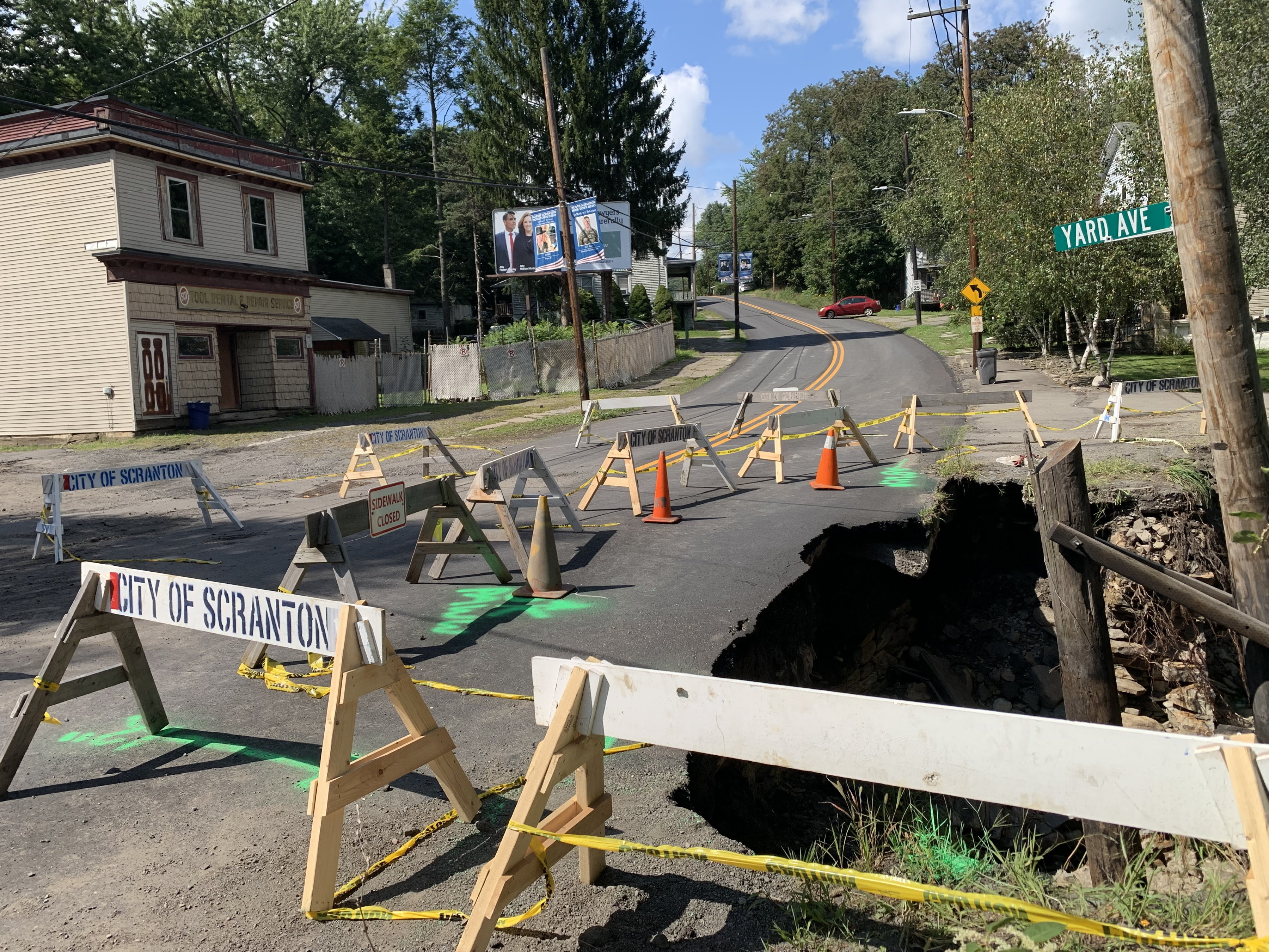
Scranton filed an emergency petition Tuesday, Sept. 12, 2023 in Lackawanna County Court for approval to demolish a condemned building at 501 W. Market St. in North Scranton, on the left in photo, and that has Leach Creek running under the property. The petition claims stormwater debris from heavy rain Sept. 9, 2023 bottlenecked at the property and worsened flooding in that immediate area. Photo shows flood-gouged West Market Street where Leach Creek is channeled in conduit under the road across from Yard Avenue. Leach Creek flows into Leggetts Creek a short distance downstream. (TIMES-TRIBUNE / FILE PHOTO)
Show Caption
1 of 12
A pickup truck flipped onto its roof by flood waters on Sept. 9, 2023 on Leggett Street in Scranton. Photo taken Tuesday, Sept. 12, 2023. (TIMES-TRIBUNE / FILE PHOTO)