
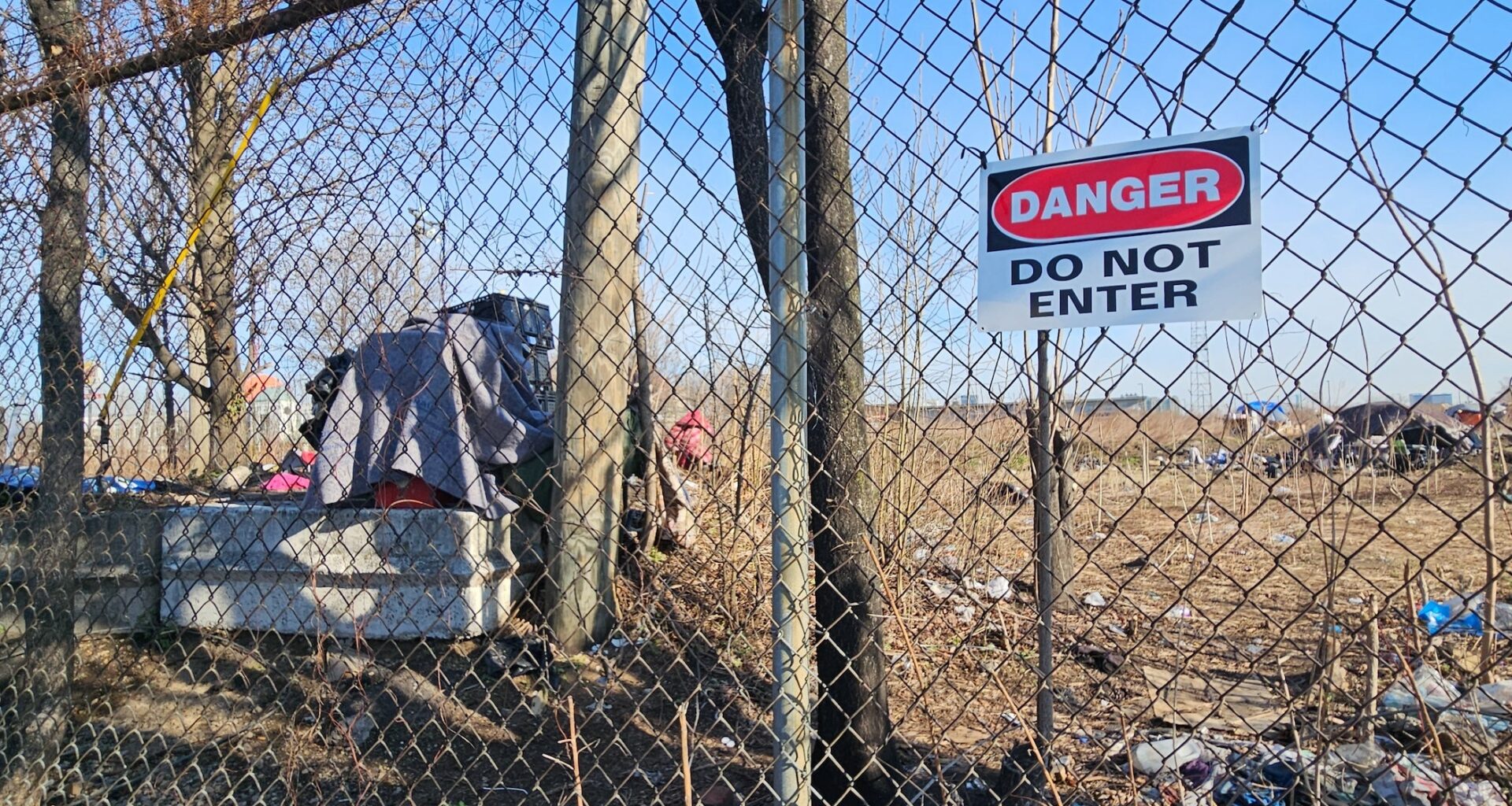
People find protection, support and solidarity by forming their own outdoor communities like Camp Chloe, which is currently located on property owned by real estate developer Bart Blatstein and his company, Tower Investments Inc.
Tower, and the city Office of Homeless Services, did not immediately respond to WHYY News’ requests for comment about the site and Friday’s planned encampment sweep.
Shelters should not be the only option for people who are waiting for housing placements or saving money to rent, Cookman said. Advocates are proposing safe sleep sites that could include bathrooms, showers and a mailing address where social services can easily find them with resources.
They also want to see the city make bigger efforts in bringing people directly off the streets and into permanent housing.
“Housing first instead of shelter first, that’s what we mean when we’re talking about that,” Cookman said. “Don’t make people go into shelters if they can safely habitat out here while they wait for housing.”
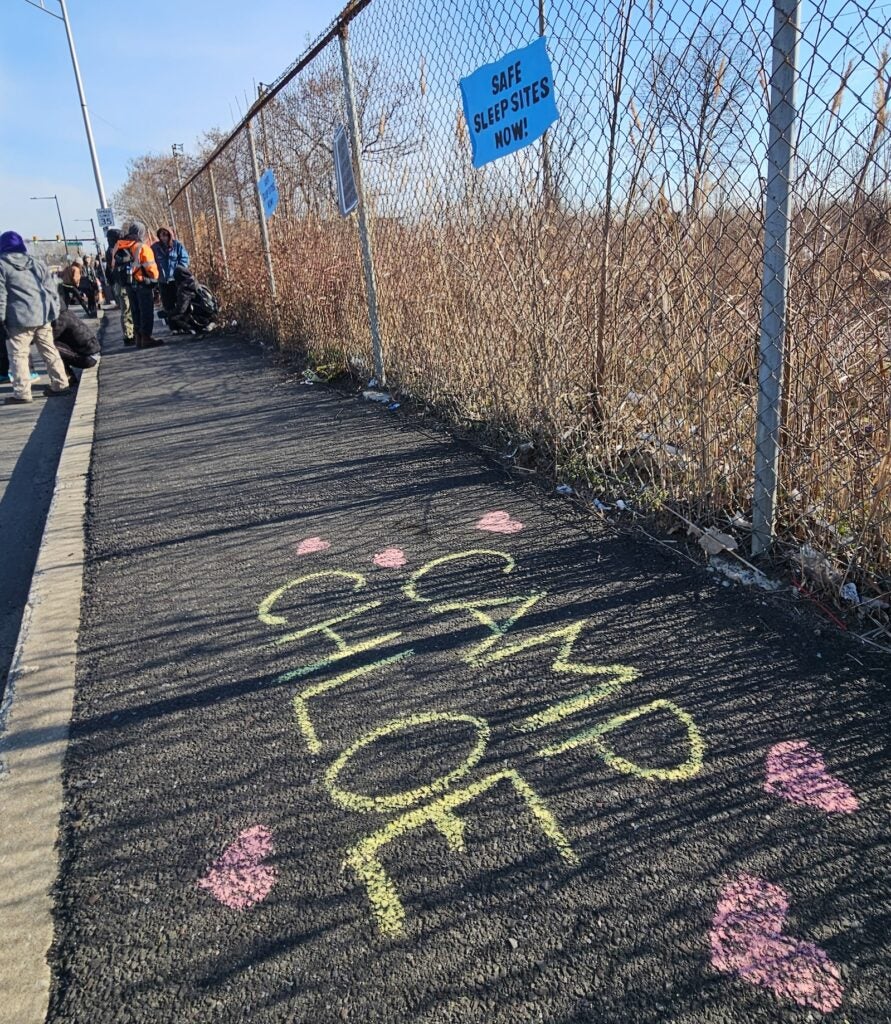 Residents and outreach workers at Camp Chloe, a homeless encampment on a vacant private property in South Philly, are calling on the city for safe outdoor sleep sites and other protections for people who are unhoused. A sweep originally planned for the site on Fri., March 20, was postponed. (Nicole Leonard/WHYY)
Camp Chloe residents and advocates also want city agencies to show more consideration for people’s personal property when sweeps are conducted, as well as the creation of a community oversight board filled by people with the lived experience of homelessness.
Mayor Cherelle Parker announced the city’s “One Philly Plan to End Street Homelessness” in her State of the City address in December. Plans include adding 1,000 additional shelter beds as a “first step” to getting more people off the streets.
Expanding the number of shelter beds across the city can help to some degree, said outreach worker Colleen Stepanian, who has been supporting Camp Chloe residents for about three years with an organization called South Philly Good Not Bombs.
But that strategy alone is not enough to address homelessness in Philadelphia and the complex issues people face, Stepanian said. Constant fear of displacement and a cycle of moves do not put people on a path toward stable housing, she said.
“It requires being in one place that the people living there know they are safe where they are, that they have a support system around them, that whatever issues they’re currently facing, they don’t need to be permanent problems, but they need to feel like they’re safe to deal with those things first,” she said.
Kelsey Leon, a harm reduction researcher and advocate, said she wishes others would see past stereotypical issues often associated with homelessness, like drug use or mental health issues, and instead recognize people for their skills, talents and value as neighbors.
“People think that if you are unhoused, that is somehow a moral failing. We know it’s not, but I don’t think the rest of the city knows that,” she said. “We all have a duty to stand up and protect each other when our structures fail us and we have to figure out how to survive. This is not just a fight for these residents, but it is also a fight for everyone in Philadelphia.”
It’s not yet clear what will happen next for residents of Camp Chloe, but advocates hope city leaders consider more “out-of-the-box” solutions to help people experiencing homelessness.