
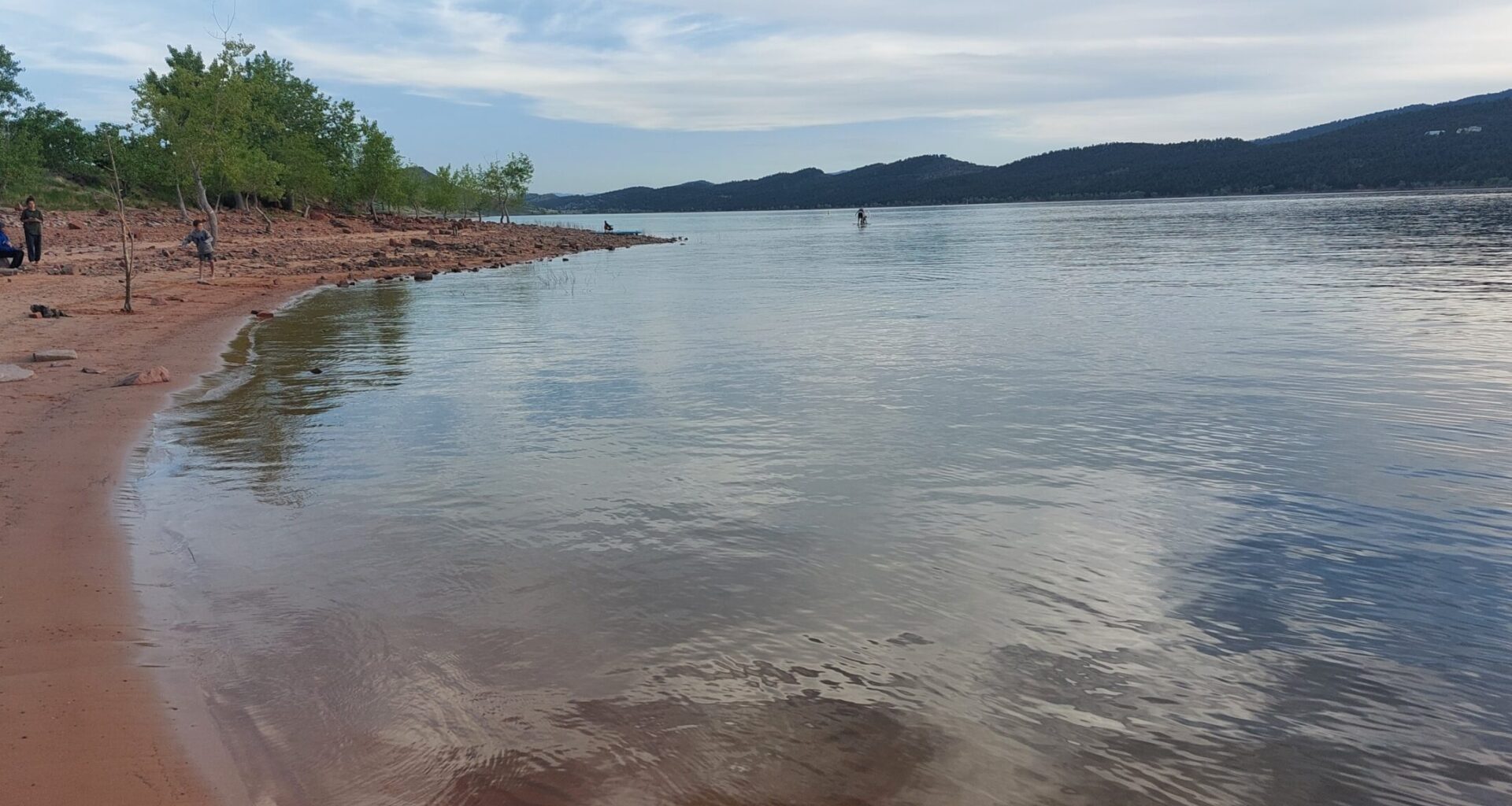
Colorado is entering spring after one of the warmest and driest starts to a year in more than a century of records., with snowpack across the state far below normal and drought conditions expanding across much of the Front Range.
Against that backdrop, the Town of Erie is asking residents, homeowners associations, and businesses to keep sprinkler systems turned off through the end of March as water demand surges beyond what the town’s winter system can supply.
Officials say current water demand is about 30 percent higher than typical for this time of year, largely driven by residents turning on irrigation systems weeks earlier than normal.
If irrigation continues, the town says it may shut off water service at property taps for residents, HOAs, or businesses that do not comply.
For large HOAs, the shutoff would typically affect irrigation systems only. For individual homes or smaller properties, however, the measure could cut water service to the entire household or building.
Town officials say they have been urging residents for roughly two weeks to turn off sprinklers, but demand has continued climbing.
“We really don’t have any buffer room,” town spokesperson Gabi Rae told the Denver Post. “Every day it’s been increasing by 200,000 to 300,000 gallons as people turn on their sprinkler systems. We will hit capacity and run out of water in a couple of days if they don’t stop.”
Erie’s winter water system currently distributes about 3.5 million gallons per day, far less than what becomes available once summer water supplies come online.
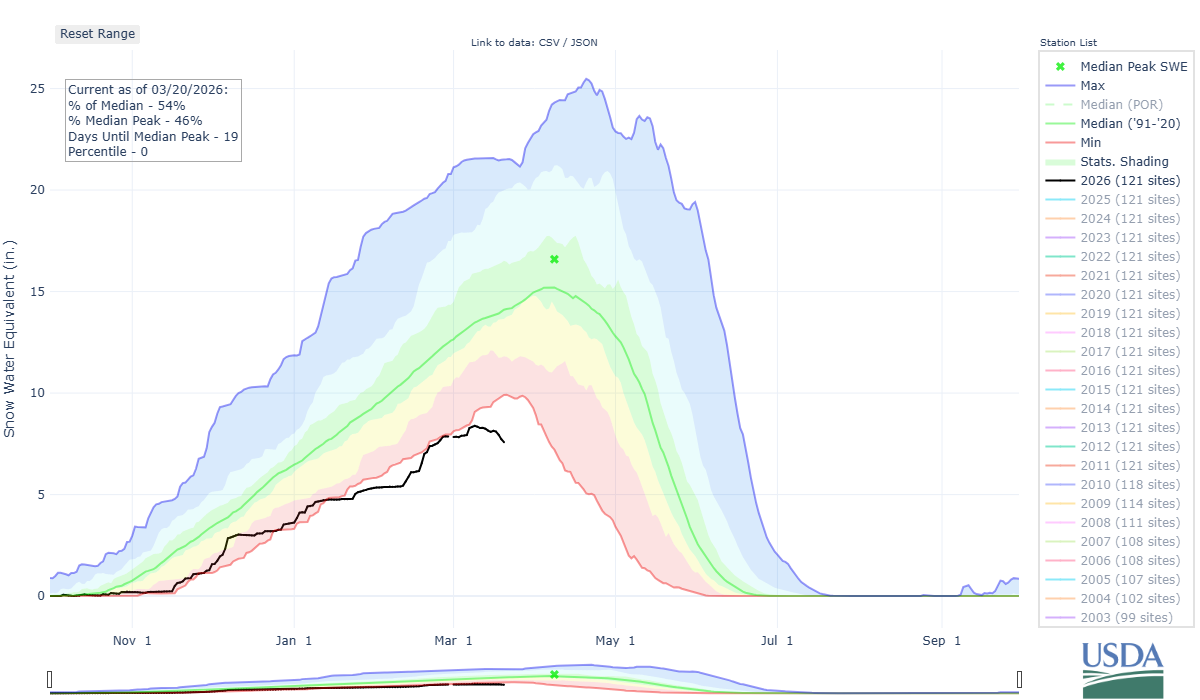
Black line shows 2026 snowpack levels falling below the state’s previously recorded minimum. (Natural Resources Conservation Service)
A Dry Winter Across Colorado
The situation in Erie reflects broader conditions across Colorado.
State data shows Colorado’s snowpack currently sits well below normal, with several watersheds between roughly 38 percent and 65 percent of typical levels for this time of year, according to the Natural Resources Conservation Service.
Governor Jared Polis recently activated the Colorado Drought Task Force, citing record warmth and one of the driest starts to a year in more than a century of statewide records.
According to the U.S. Drought Monitor, moderate to severe drought conditions now cover much of Colorado.
Meteorologists say the unusually warm winter has prevented snowpack from building to the levels normally needed to replenish rivers and reservoirs in the spring.

Photo credit: Longmont firefighter Patrick Kramer
Early Fire Season Concerns
The dry winter is also raising concerns about early wildfire risk along the Front Range.
Warm temperatures, strong winds, and dry vegetation can quickly turn small grass fires into fast-moving blazes, even outside the traditional summer fire season.
The Marshall Fire, which destroyed more than 1,000 homes in Boulder County in December 2021, demonstrated how quickly wind-driven fires can spread across the Front Range during dry conditions.
For communities like Erie, maintaining adequate water supply is not only about household demand but also about fire protection and hydrant pressure during emergency situations.
Town officials noted that upcoming windy conditions could further increase fire danger in the region.
Other Cities Preparing Water Restrictions
Erie is not the only community beginning to respond to the dry winter.
In Aurora, officials are recommending Stage I watering restrictions that could take effect April 7 if approved by city leaders. The proposed rules would limit outdoor watering to two days per week and call for a 20 percent reduction in overall water use.
Nearby Lafayette has also asked residents to refrain from running irrigation systems.
Water managers across the Front Range warn that drought conditions could affect municipal water supplies throughout the coming spring and summer if the region does not receive significant precipitation.
Waiting for Summer Water Supplies
Erie officials say part of the problem is timing.
During winter months, the town receives less water through its supply system than it does during the summer irrigation season. Additional supplies typically arrive in early spring when the Carter Lake canal system begins distributing water.
“That’s what we’re waiting for,” Rae said.
The canal system is expected to open April 1, after which Erie can begin transitioning toward normal irrigation schedules.
Until then, the town is asking residents to delay outdoor watering as long as possible.
At the earliest, Erie recommends:
Even numbered addresses begin irrigation April 4
Odd numbered addresses begin irrigation April 6
Residents may still use a hose to water trees, shrubs, and gardens, but officials are asking the community not to water turf grass.
Regional Water Projects Face Uncertainty
Longer term water supply questions also remain across northern Colorado.
One major project intended to help meet future demand is the Northern Integrated Supply Project (NISP), a proposed reservoir system designed to provide water storage for growing Front Range communities.
However, the project has faced rising costs and increasing scrutiny. In 2025, the Fort Collins Loveland Water District, one of NISP’s largest participants, announced it was reviewing whether to remain involved due to escalating costs and financial risks.
The cost of the project has climbed from an early estimate of roughly $400 million to more than $2 billion.
Other regional water projects, including Windy Gap and Chimney Hollow, have also experienced delays tied to construction issues and environmental concerns.
While those projects are intended to expand long term supply, Erie officials say the current issue is much simpler.
With drought conditions worsening and irrigation starting early, the town’s winter water system simply cannot keep up with demand.
Like journalism like this? Consider becoming a sustaining supporter — and get our print edition delivered to your home each month.
Democracy needs journalism more than ever. For 25 years, we’ve told the truth — your support helps us keep doing it for the next four and beyond. Administrations come and go. Our team stays, ready to lead no matter who’s in charge.