
By Brenda Hillegas
Not many musicals carry a generational legacy like ‘The Sound of Music.’ For over six decades, families have introduced their children to Maria, the von Trapp family, and the songs that have become standards of musical theater.
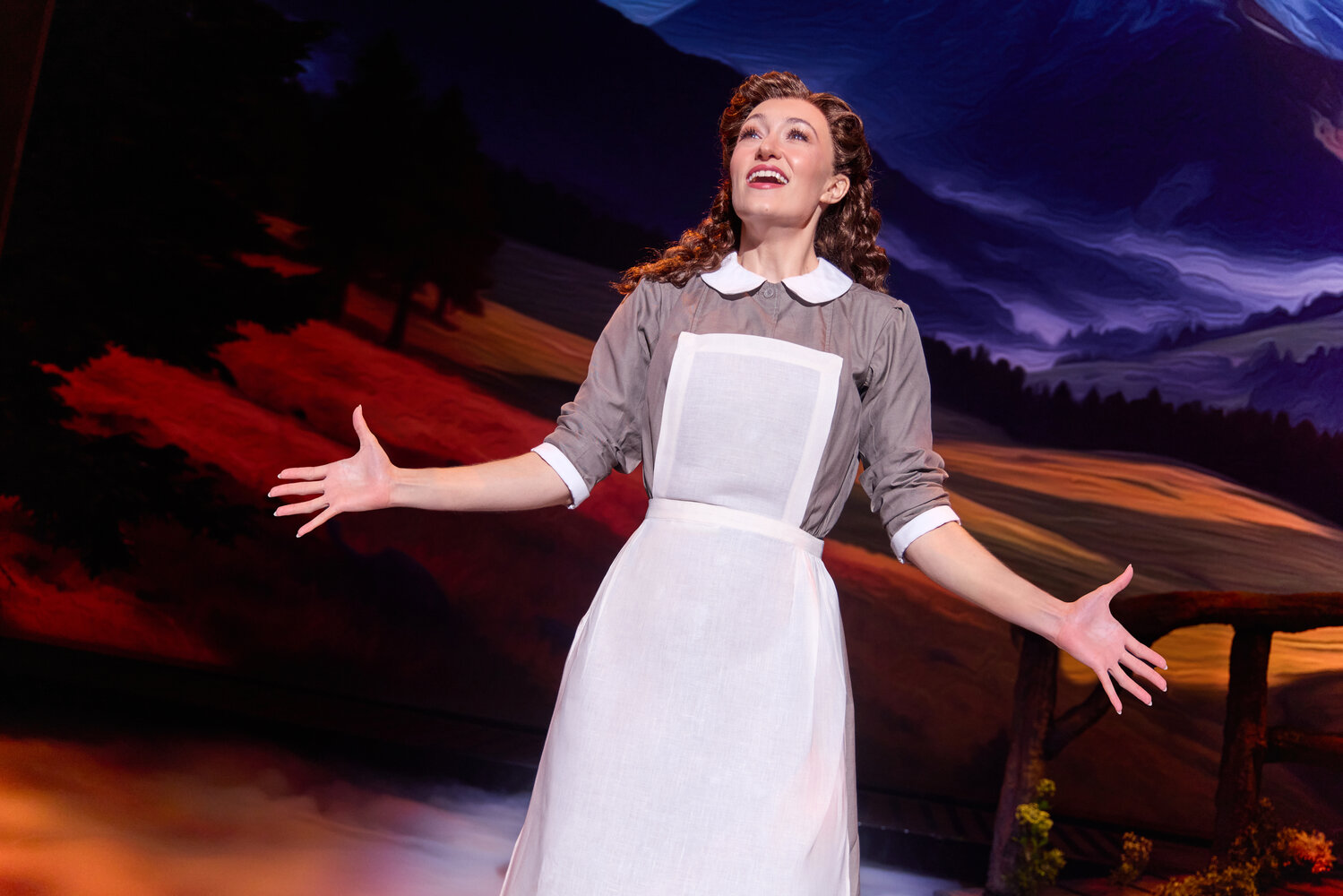
When the 65th anniversary tour arrives at the Academy of Music from March 31 to April 5, Tony Award-nominee Christiane Noll will take on the role of Mother Abbess, a guiding voice who helps Maria discover her true path. Directed by three-time Tony Award-winner Jack O’Brien, ‘The Sound of Music’ explores original staging ideas that shed new light on the beloved classic. For Noll, returning to the story has also meant witnessing how its themes of courage, music, and resilience continue to resonate with audiences today.
Noll recently sat down with Metro to talk more about stepping into the role of Mother Abbess, working with O’Brien on this new version of the story, and why ‘The Sound of Music’ and musical theater in general are so important to young audiences.
Can you tell us a bit about Mother Abbess? What drew you to the character, and why did you want to step into that role?
What’s fun is that she kind of bookends ‘The Sound of Music.’ She’s the first thing you see, and the last thing you see in each act. But she is the person who kind of sets Maria on her path to figure out what kind of life she really wants.
When we meet Maria, she’s a lovely, idealistic young lady who loves music, nature, and she feels like her connection to that has to be through spirit — through the church. That’s all she knew. Mother Abbess recognizes that Maria has more to give, and that perhaps the church should not necessarily be her path to express all the love that she has.
That’s where I come in… and I get to do some big singing! I had spent the last few years doing film and TV work, and some plays, not singing as much. I had spent most of my career singing. It was as if the universe said, ‘Oh, you want to sing? Okay, here you go!’ and I do ‘Climb Ev’ry Mountain’ every night, which is a beast. It’s a challenge worth rising to. I’ve enjoyed every moment of this experience.
You did ‘The Sound of Music Live,’ too. How does it feel to return to the story?
This is the third version that I have done because I also played [the voice of] Maria when the Salzburg Marionette Troupe — they were the marionettes that were featured in the film — did an adaptation of ‘The Sound of Music.’
One of the reasons I love the show so much is watching people enjoy it. It really becomes a family situation in that people remember the first time they saw it as a child, then they grow up and they want to take their children or their grandchildren. They can relive the nostalgia of what it was like to see it as a young person. But now that they’re older, they can see different characters that they might relate to and different perspectives. There’s a reason that it has become such an established part of our musical theater canon. I mean, the music, obviously, is so tattooed on everybody, but I think the story also is indelible as well.
‘Climb Ev’ry Mountain’ is one of the most iconic songs in musical theater. When you’re performing it, where do you find space to make it uniquely your own?
Thankfully, [director] Jack O’Brien is one of the most wonderful, generous, creative, little theater elves that I could possibly imagine. I used to joke that when I remember the film or any version, I think of Mother Abbess as being the embodiment of the mountain, like she’s just there. She is the mountain. And I’m like, “I am nobody’s mountain.”
[Jack] saw something in me to bring to it and we had to find a completely different angle. We created lots of little cues and little stories. I would think that my Mother Abbess maybe would know what Maria is going through, that she maybe sees a lot of herself in Maria. Maybe she had her heart broken or had been in love. So, just acting on that, drawing from that kind of longing, and that she’s a real person. She’s a human being and we’re all messy and complicated. How wonderful to be able to make this woman messy and complicated.
This production incorporates original staging ideas that haven’t been seen before. Is there anything that has surprised you most about Jack O’Brien’s interpretation?
Well, I think it’s his specific take on the different characters, you know. One of the first things he mentioned to me was the idea of how old Liesl was when her mother died. Then, they did the math. That means Liesl went through puberty with an Austrian nanny, which I can only imagine would not be a very loving, supportive journey, and Liesl became the mother figure to the children. She was raising these kids. So, just the idea of asking those kinds of questions. There’s more to uncover.
We always think of the family leaving at the end and doing the little wave as they walk up the mountain. The Nazis were there. We didn’t know what it was going to become, but it was happening. Jack said she’s signing her own death warrant the minute she decides to open those gates to let them out. She doesn’t know that’s what she’s doing, so then there’s a weight to that — the reality of the situation that we’ve never really put it in that kind of context before. It doesn’t make it too heavy, because it’s all subtle. We’re still playing very much what is in the script, and we’re not taking liberties. This is the script that was written and you still have to tell the story that was written. But my goodness, how resonant is this story at this moment in time?
Why else do you think this story remains so powerful?
All of a sudden, you ask all these questions. There’s a reason certain stories keep getting told again and again. We, as humanity, still haven’t learned the lessons of previous generations that we were supposed to have learned. Stories are still relevant, and there and present, and needing to be viewed and digested with the hopes that maybe we’ll learn this time.
When you’re not on stage, do you have a favorite scene or a song that you just like experiencing from afar?
I love ‘Do Re Mi’ because not only do they not have a mother, they barely have a father. They are, as Maria says, just little marching machines. They have not played, they have become troublesome for the governesses they’ve had, they want to create mischief.
With Maria introducing music to them in the manner that she does, and playing with them, it’s staged in the way that she gives them the gift of music. They lap it up like a sponge. They just light up, and the whole theater just erupts because everyone remembers that moment of being able to just be a child and be free to express yourself. It brings a tear to my eye every night when I hear it. Our children are awesome.
For any audience members who may be seeing the show for the first time, what do you hope they take away from the story?
For the parents, or the grandparents, or the aunts, or the uncles, or the cousins, or the great friends that are giving the young people in their lives the gift of live theater in the first place — to be able to be in a big space with lots of people and have your heartbeat sync up with those around you — is unlike any experience. Giving that gift to your young people is tremendous, because for the kids to know that you are now a part of something that’s really special. Whether you are on the stage, behind the stage, in front of the stage, you are a vital ingredient into what is going on. Those ingredients are necessary to make this big soup, and it becomes this magic brew that happens, and you can’t do it if any of those things are missing.
If you see something that you want to be able to go and support for the rest of your life, that’s great. Maybe you want to go make music. Music can connect us, heal us, and get us through some of the scariest parts of our lives. I think that’s a big part of what this show highlights, and for young people to experience on any level, maybe they’ll grow up, and God willing, see versions of this show 20 years from now when they might have a young person in their lives, and say, “Oh gosh, I remember when…let’s go see this!” The cycle continues. It becomes a key to unlocking.
That’s what Maria does for the kids, that’s what any one show can do for any member of the audience. It can unlock a further desire to express themselves, a further desire to learn something. It’s a key, and more people should use it.
‘The Sound of Music’ will be on stage at the Academy of Music from March 31 to April 5. For more information and tickets, visit ensembleartsphilly.org