
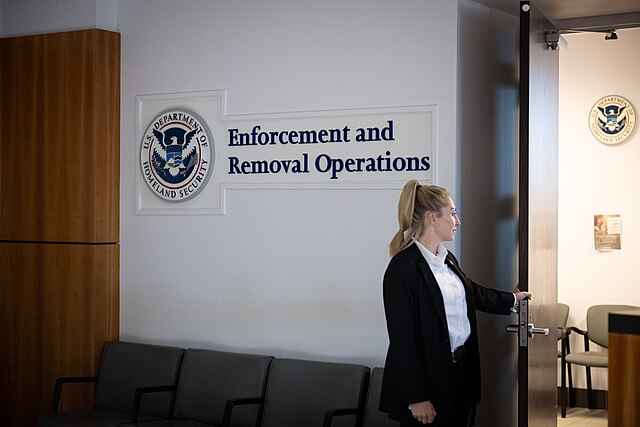
The Allegheny County Council has passed a bill restricting collaboration between county employees and federal immigration authorities.
Following public debate, the bill passed by a vote of 11-3 on March 10. County executive Sara Innamorato signed the bill two days later, which effectively prohibits county employees from sharing information or resources with Immigration and Customs Enforcement.
Innamorato released a statement affirming her support for the legislation but also advised the public to “stay vigilant.”
“It is important to remember that even with the passage of this ordinance, local governments, including Allegheny County, cannot stop ICE’s presence here,” Innamorato said in the statement. “My administration will continue to work alongside immigrant and refugee-serving organizations to support their work.”
Following the bill’s approval, the Republican Committee of Allegheny County published a press release criticizing the decision and urged the council to reverse the legislation.
“It is unlawful and improper to order local law enforcement and county employees not to enforce the law and invoke employment penalties on anyone that does,” the statement said.
Councilperson Bethany Hallam introduced the bill in January following increased ICE arrests in the Pittsburgh area and substantial ICE activity throughout the country. Hallam said the bill applies to all the more than 6,000 county employees.
According to Hallam, most Allegheny County offices did not have prior policy stating whether employees should cooperate with ICE. However, Hallam said it was happening “every single day.”
“We had attorneys who would come to the council meetings and speak about very specific instances of [county employees working with ICE],” Hallam said. “They were detaining people in the courthouse waiting for ICE to get there, and now, they can’t do that anymore.”
Per the bill, county employees are prohibited from sharing any resources with ICE agents, which Hallam said includes their time.
“The jail has so much information about people, [the Department of Human Services] has so much information about people — they can’t give any of that information,” Hallam said. “If ICE asks somebody for directions down the hallway, county employees are forbidden from helping them.”
An amendment to the bill states that county court employees may be exempt only if the president judge of Allegheny County issues an order telling them to cooperate with ICE. Hallam said the amendment eliminated the possibility for “legal challenge” from court employees because it allows the judge to override it.
Several other amendments to the bill were proposed by democrat Aaron Adams, District 9 council representative, and republican Suzanne Filiaggi, District 2 council representative, but did not gain enough votes to pass. One of the amendments proposed by Adams included a sunset clause that would have terminated the bill on Jan. 1, 2029 and exempted certain employees, including those in the courts and district attorney’s office.
Hallam said community members were “overwhelmingly in favor” of the bill based on public comment at Pittsburgh City Council meetings over the last few weeks. Human rights and immigration organizations The Global Switchboard, Frontline Dignity and Pennsylvania Immigration Coalition all posted on social media supporting the legislation.
“This is a vital step forward to ensuring equal access to County services and equal protection under the law for all County residents, without discrimination,” a joint post said.
As far as the bill’s impact, Hallam said she wants to lessen fear among community members who need to access food banks, attend court hearings or meet with caseworkers.
“My biggest hope is that they know they can interact with county services because our job as government, more than anything else, is to provide services for people,” Hallam said. “This, at least, gives them a little bit of security to know that, if they’re interacting with an Allegheny County agency, they’re going to be safe.”