
Sign up for Chalkbeat Philadelphia’s free newsletter to keep up with the city’s public school system.
Philadelphia Mayor Cherelle Parker wants to increase her previously proposed rideshare tax to stave off the school district’s plan to cut hundreds of staff positions.
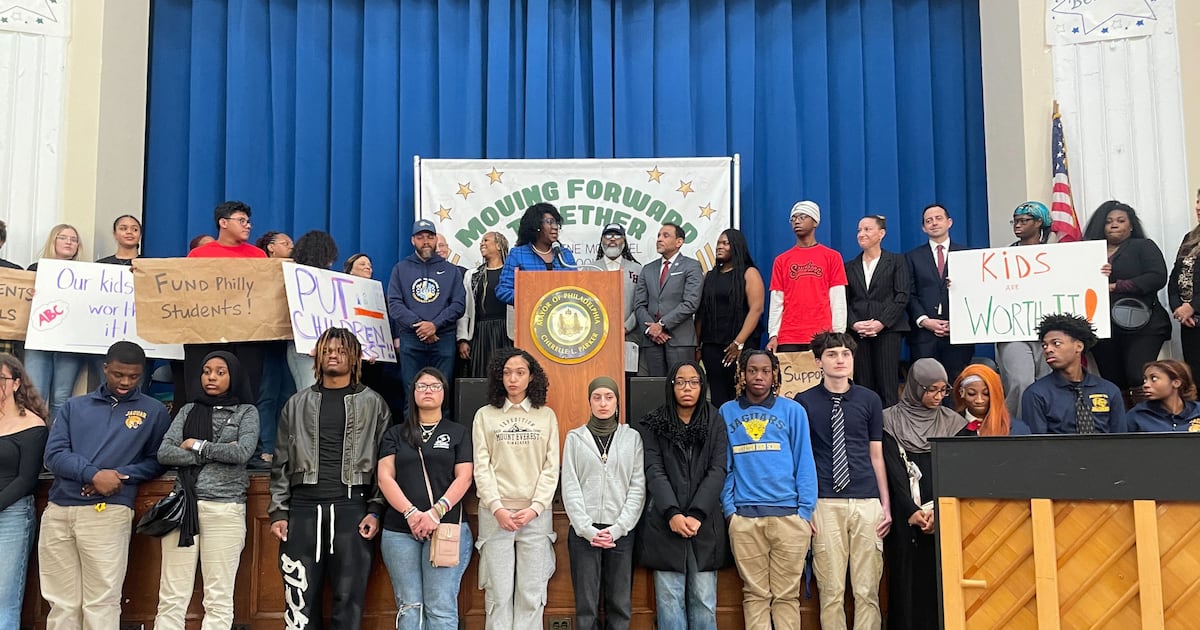
Eliminating all those positions “is not acceptable to me,” Parker said at a press conference at Delaplaine McDaniel School on Monday. “We have to keep these staff members in schools where they’re very much needed.”
Parker’s initial blueprint for next year’s budget, which she released March 12, included a tax of 20 cents per ride purchased through popular apps like Uber and Lyft that originate within city limits. It would have earmarked the estimated $9.6 million in resulting revenues for schools.
Shortly after that announcement, district officials released their initial budget proposal for next fiscal year. It included sweeping cuts, including eliminating 340 school-based positions.
On Monday, Parker said she wanted to increase the rideshare tax to $1 per ride beginning in January, which would save 240 of those school-based positions from elimination, school officials said. That includes approximately 130 teachers, 55 student climate staff, and 55 other school-based positions.
But even the higher tax rate on rideshares wouldn’t solve the district’s budget crisis by itself. After accounting for the $1-per-ride tax, the district would still plan to cut 100 school-based positions in the coming year, as well as 130 central office staff and 220 building substitute positions. Teachers would not be laid off, but would be reshuffled to fill vacant positions.
The rideshare tax would result in $48 million annually for the school district beginning in fiscal year 2028. But the district has a $300 million budget deficit, which Superintendent Tony Watlington said is the result of decades of underfunding combined with the end of federal pandemic relief funds.
Watlington is also looking to fund a proposed $2.8 billion district facilities plan which would close 18 schools and renovate more than one hundred others.
“If we don’t do something, and we don’t get this help from the mayor’s initiative, we know that our expenditures will grow faster than our revenues,” Watlington said at the press conference alongside Parker on Monday.
Parker said she would leave it up to rideshare companies, like Uber and Lyft, to decide whether they would pass the tax onto users.
Parker announced that the new tax would also provide $3 million annually to help fund free SEPTA transit passes for some school staff, including school climate staff, support staff, and maintenance staff. But she didn’t specify what exactly would make staff eligible for the free passes.
Monday’s announcement comes weeks after Parker released her initial budget plan for fiscal year 2027 to the City Council. That plan included the initial rideshare tax increase and a modification to tax calculations for cell towers which Parker’s administration says would bring in an additional $2.4 million annually for schools.
The Philadelphia Parking Authority already charges rideshare companies a 1.4% fee on gross receipts. Two-thirds of that revenue goes to the school district. In 2023, the tax generated $6 million for the city’s schools, according to a parking authority report.
Parker’s proposal is not a done deal. The new tax will need City Council approval. The city’s deadline to pass a budget is June 30. The school district is expected to release its own budget summary for the upcoming fiscal year later this week.
Rebecca Redelmeier is a reporter at Chalkbeat Philadelphia. She writes about public schools, early childhood education, and issues that affect students, families, and educators across Philadelphia. Contact Rebecca at rredelmeier@chalkbeat.org.
Carly Sitrin is the bureau chief for Chalkbeat Philadelphia. Contact Carly at csitrin@chalkbeat.org.