
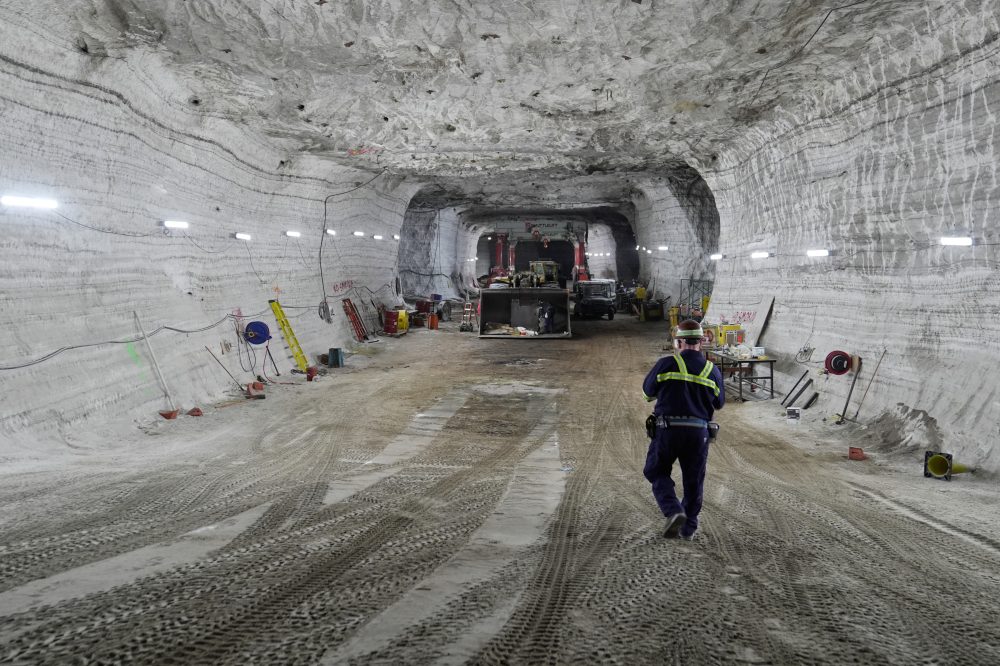
A massive underground salt mine beneath Lake Erie in Cleveland is operating overtime to meet unprecedented winter road salt demand across the Northeast. The facility, located 1,800 feet below ground, produces up to 4 million tons annually but is struggling to keep up with this winter’s harsh conditions.
CLEVELAND, Ohio — Far beneath the streets of Cleveland, workers are toiling in an underground world that most people never knew existed, mining the essential mineral that keeps winter roads safe — salt.
Cargill’s Whiskey Island mining operation, situated deep under Lake Erie, is working to supply road salt throughout the Northeast and Great Lakes regions, where this winter’s unusually cold and snowy conditions have created unprecedented demand. According to Cargill representative Emily Tangeman, many local governments have already depleted salt stockpiles that normally would carry them into spring.
“Our teams have been working overtime since September to support customers across the snowbelt,” Tangeman explained, adding that the early arrival of persistent winter conditions has increased demand industry-wide.
This underground facility, ranking among the largest salt mines globally, typically generates between 3 million and 4 million tons of salt each year, though even this massive output sometimes cannot satisfy demand during particularly severe winters.
Positioned 1,800 feet below the surface, workers reach the mine through Whiskey Island, an industrial district adjacent to downtown Cleveland’s waterfront. Operations began in the 1960s, running continuously throughout the year as crews use drilling and explosive techniques to harvest salt from expansive tunnels carved through deposits left by an ancient sea that evaporated millions of years ago.
The mine’s interior resembles a labyrinth of roughly square-shaped chambers featuring white, chalky surfaces that stretch for miles. Lighting is minimal, often completely dark except for workers’ headlamps and industrial floodlights. The sound of heavy equipment and conveyor systems fills the air while small all-terrain vehicles transport miners through the passages.
George Campbell, who oversees maintenance operations, explained that mining continues without interruption, using any downtime for equipment servicing and repairs to maintain consistent output. Cargill officials say they are focusing on shipping priorities to deliver salt where it’s most urgently needed as winter conditions persist in various regions. Tangeman noted that frequent smaller storms increase salt usage, requiring multiple applications and creating distribution challenges.
The return of severe weather patterns throughout the Eastern United States has led several cities — including Boston, Bangor, Maine, and Ithaca, New York — to endure their coldest winters in over ten years. With winter conditions continuing in many areas, operations at the Cleveland facility remain at full capacity.
Campbell indicated that salt reserves will support mining operations for many years to come.
“I think that we have enough reserves to continue to keep people working for a long time,” Campbell stated.