
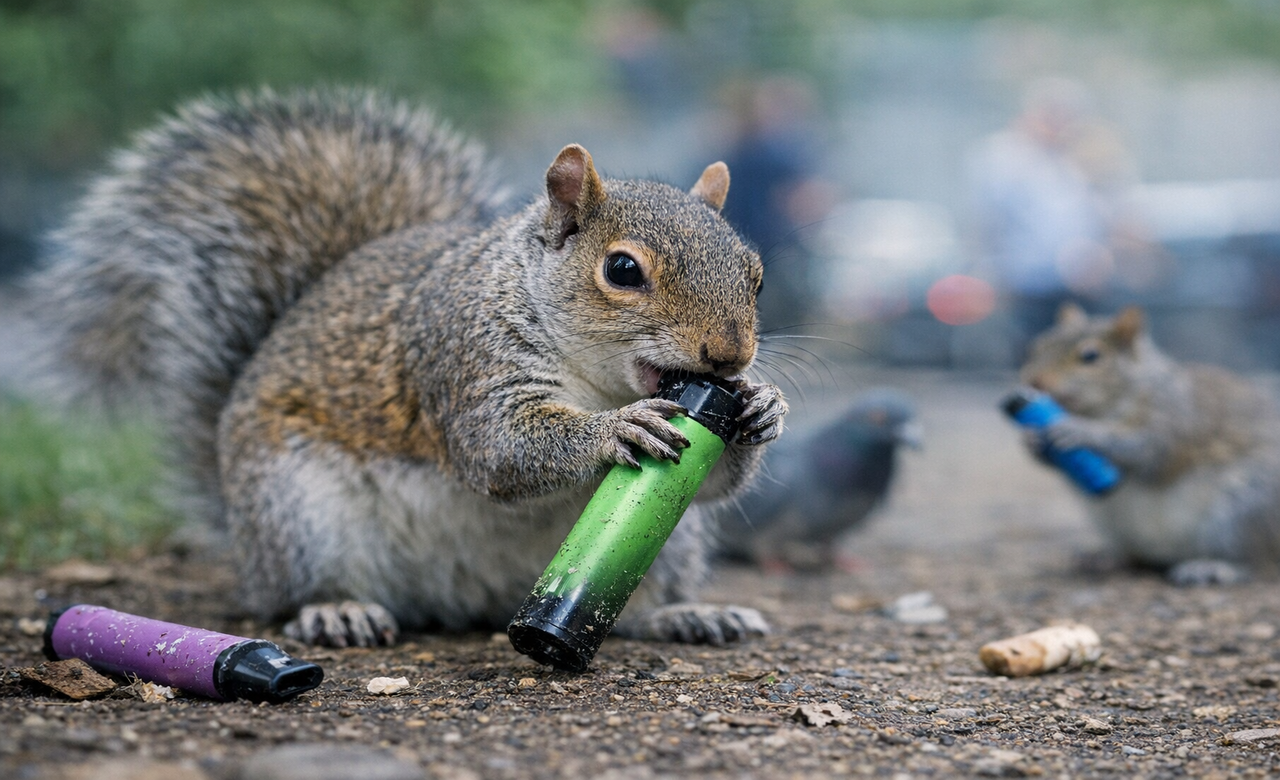
What began as a series of curious videos on social media has quickly evolved into an environmental warning sign. In London and Philadelphia, squirrels have been caught manipulating discarded e-cigarettes a behavior that, far from being anecdotal, reveals a new dimension of the impact of technological waste on urban wildlife. Footage recorded in public spaces such as parks and streets shows these rodents holding and chewing on vaping devices.
At first glance, the behavior may even seem humorous. But behind the viral images, experts warn of a phenomenon with serious public health and ecological implications. According to recent reports, the animals are not seeking nicotine the attraction lies in the scents. E-cigarette liquids contain artificial flavorings, often sweet or fruity, that can mislead wildlife into mistaking them for food.
The hidden problem: microplastics and toxicity
The risk is significant. By chewing on these devices, squirrels are exposed to a dangerous combination of substances: nicotine, heavy metals, and microplastics materials that do not exist in their natural environment and for which they have no biological defenses. Wildlife researchers warn that even small amounts of nicotine can be toxic to small animals.
This is compounded by mechanical risks: plastic fragments or electronic components that can cause choking or internal injuries. The phenomenon is not limited to a few isolated cases. Organizations such as the Royal Society for the Prevention of Cruelty to Animals (RSPCA) have described these incidents as just “the tip of the iceberg,” in a context where millions of disposable devices end up in urban environments every week.
A growing waste crisis
Before recent restrictions in some markets, it was estimated that nearly five million e-cigarettes were discarded each week in the United Kingdom. This figure underscores the scale of the problem: single-use devices that combine plastic, batteries, and highly polluting chemicals.
In densely populated cities like London or Philadelphia, this waste does not disappear. It becomes embedded in the urban ecosystem, where animals such as squirrels, birds, and even household pets come into direct contact with it. In fact, reports document more severe cases: birds dying after ingesting these devices and hundreds of poisonings in domestic animals primarily dogs due to exposure to vape liquids.
Beyond the anecdote: a symptom of the urban environment
For environmental experts, the squirrels’ behavior is not the problem the context is. Urban wildlife is being forced to adapt to an environment saturated with human waste, much of it highly toxic. E-cigarettes are particularly concerning because they combine two factors: widespread proliferation and inadequate disposal management. Unlike other types of waste, these devices contain electronic components and chemicals that significantly increase their hazard level.
A warning for public policy
The phenomenon comes at a time when e-cigarette use continues to expand, especially among young people. Organizations such as the American Heart Association have warned that vaping is not only a risk to human health but also an emerging environmental challenge. What is happening in London and Philadelphia suggests that the impact of vaping extends beyond the consumer. It reaches urban ecosystems, where its waste is beginning to alter animal behavior and introduce contaminants into the ecological chain.
A problem that demands action
Images of squirrels “vaping” may seem trivial, but they encapsulate a broader reality: cities’ inability to manage the waste generated by a new generation of disposable products. In the context of a global environmental crisis, these incidents serve as a clear warning. The issue is not only about cleaning streets, but about rethinking the lifecycle of products that are consumed on a massive scale.
Ultimately, what is at stake is not only the health of urban wildlife, but the balance of ecosystems that cities often without realizing it are actively reshaping.